Why Quay Crane Hoisting Chains Demand a Different Standard
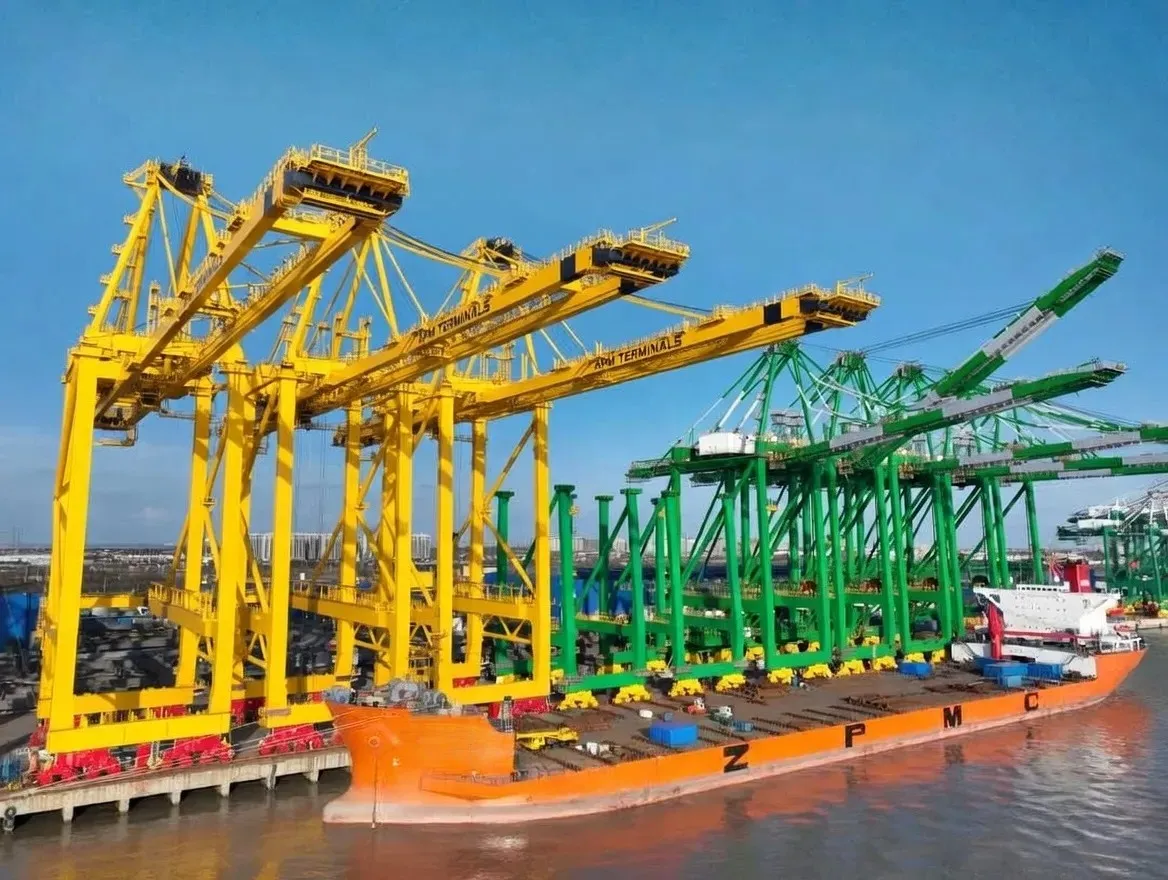 A quay crane — widely referred to as a ship-to-shore (STS) crane or shore bridge crane — sits at the operational core of every container terminal. These towering structures handle payloads exceeding 65 tonnes per lift, operating across three or four shifts daily with minimal planned downtime windows. The hoisting chain wound onto each crane’s drum system is therefore not an ordinary industrial component. It functions as a critical, high-cycle lifting element that must deliver unwavering performance under continuous dynamic loading, relentless salt-air corrosion, and the specific vibration characteristics of waterfront crane structures. Standard industrial chain does not meet these demands. Not even close.
Mega Chain has spent over 18 years developing and supplying specialist hoisting chains built specifically for quay crane applications. Our chains are active at container terminals across the United Kingdom — including the Port of Felixstowe, DP World London Gateway, and ABP Southampton — and are trusted by port engineers and crane maintenance contractors across Europe, the Middle East, and Southeast Asia. Every chain we manufacture is produced to tight dimensional tolerances, subjected to 100% proof load testing, and configured to match the exact drum pitch requirements of all major quay crane builders.
The gap between a generic lifting chain and a Mega Chain quay crane hoisting chain is measurable and significant. It appears in independent fatigue test data, in long-term corrosion resistance performance, in dimensional consistency across every single link of every coil, and — most tangibly — in years of uninterrupted service life at ports where unplanned downtime is measured in tens of thousands of pounds per hour.
The Engineering Principles Behind Every Mega Chain Quay Crane Hoisting Chain
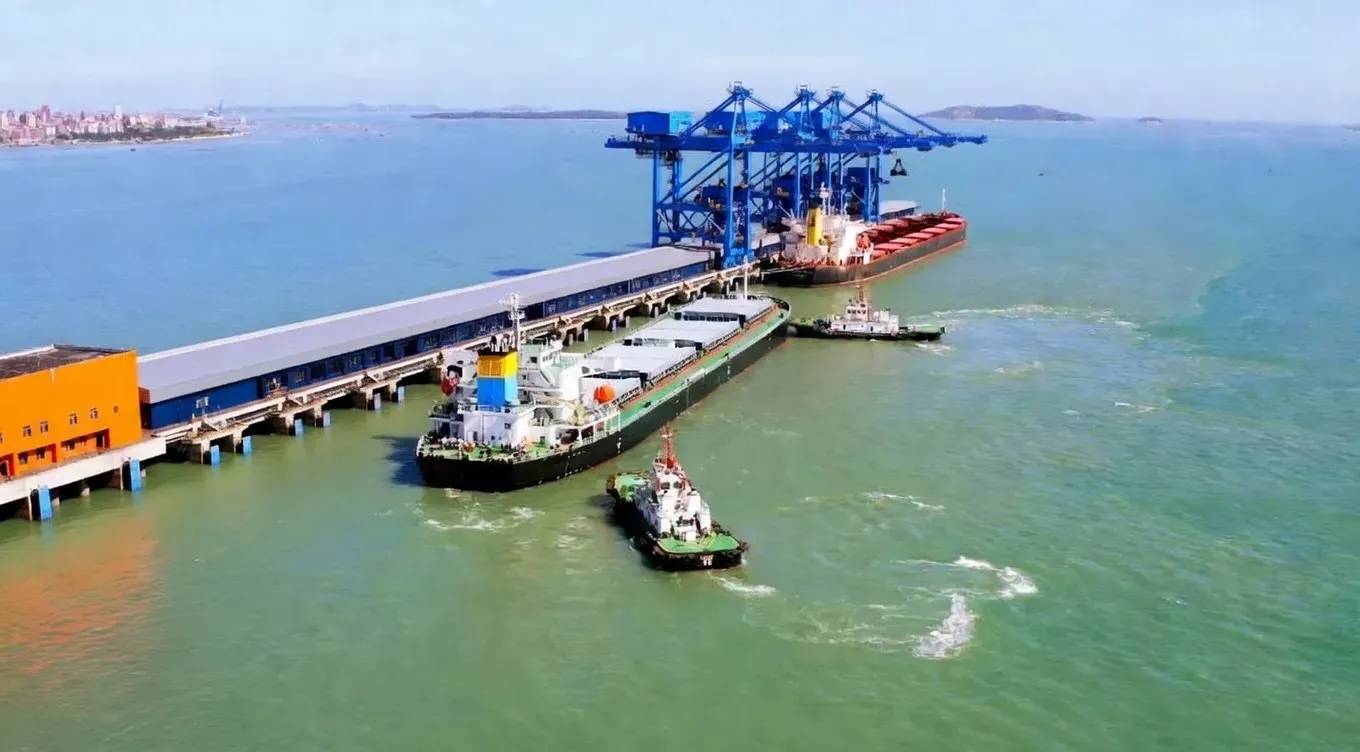 The design thinking behind every Mega Chain quay crane hoisting chain begins with a rigorous analysis of the operational profile specific to shore bridge cranes. Unlike overhead travelling cranes in manufacturing plants or warehouse hoists, quay cranes work within an extremely compressed duty cycle. A twin-lift STS crane operating at a major UK container terminal typically completes 25 to 35 crane moves per hour. Each move means hoisting a fully laden 40-foot container or a pair of 20-foot units — payloads that routinely reach 65 tonnes including spreader weight. Over a three-shift 24-hour period, a single crane may complete over 700 individual hoist cycles. Annualised, that equates to more than 250,000 fatigue cycles at high load fractions. No standard commodity chain is designed for this.
Mega Chain’s engineering team specifies low-alloy high-strength steel grades — primarily Grade 100 and Grade 120 alloys — with precisely controlled carbon and manganese content to achieve the ideal balance of tensile strength and ductile toughness. Every production batch undergoes quenching and tempering to develop the martensitic microstructure that delivers consistent fatigue performance under cyclic loading. The result is a quay crane hoisting chain whose fatigue strength-to-weight ratio measurably exceeds the EN 818-2 benchmark.
Dimensional precision is equally critical. Shore bridge crane drum systems are engineered to very specific pitch measurements. Even modest deviations in link pitch, bar diameter, or inside width translate directly into accelerated wear at drum contact surfaces, uneven load distribution across the chain’s cross-section, and early-stage fatigue crack initiation at link shoulders. Mega Chain’s cold-drawing and ring-forming production lines are calibrated to tolerances of ±0.3 mm on link pitch and ±0.2 mm on bar diameter. This level of precision is standard practice at our facility — not a premium option. It is the reason our quay crane hoisting chains integrate seamlessly with drum systems from ZPMC, Konecranes, Liebherr, and every other major crane OEM in service at UK ports today.
Technical Performance Parameters
Calibrated short-link hoisting chain — tested to EN 818-2 / ISO 3076. All values at nominal bar diameter unless noted.
| Performance Parameter | Grade 80 | Grade 100 | Grade 120 ★ | Unit |
|---|---|---|---|---|
| Min. Breaking Force — 16 mm bar | 100 | 125 | 150 | kN |
| Min. Breaking Force — 22 mm bar | 190 | 236 | 284 | kN |
| Min. Breaking Force — 32 mm bar | 395 | 495 | 590 | kN |
| Yield Strength (minimum) | 800 | 1,000 | 1,200 | MPa |
| Elongation at Break (minimum) | 20% | 20% | 20% | % |
| Link Pitch Tolerance | ±0.5 mm | ±0.3 mm | ±0.3 mm | — |
| Operating Temperature Range | -20 to +150 | -40 to +200 | -40 to +200 | °C |
| Salt Spray Resistance (Dacromet) | N/A | 720–1,000 h | 1,000–1,500+ h | ISO 9227 |
| Certification Standard | EN 818-2 | EN 818-2 / ISO 3076 | EN 818-2 / ISO 3076 | — |
★ Grade 120 recommended for twin-lift STS cranes exceeding 20 moves/hour at UK container terminals. Custom bar diameters from 10 mm to 36 mm available. Contact [email protected] for application-specific data sheets.
Six Reasons UK Port Engineers Specify Mega Chain
Clear, measurable performance advantages that separate Mega Chain from standard lifting chain distributors.
Grade 120 High-Strength Alloy Steel
Mega Chain’s Grade 120 quay crane hoisting chain delivers a minimum breaking force 50% higher than standard Grade 80 at the same bar diameter. This allows engineers to select a thinner chain for identical rated capacity, reducing rotating mass on the hoist drum, cutting energy consumption per lift cycle, and lowering long-term wear on drum grooves and sheave wheels. For twin-lift STS cranes handling 65-tonne payloads at Felixstowe or London Gateway, the weight reduction across the full reeving system translates directly into faster hoist speeds and lower drive motor maintenance costs over the crane’s service life.
Marine-Grade Corrosion Protection
UK port environments rank among the most aggressively corrosive industrial settings in Europe. North Sea salt spray at Immingham and Felixstowe, tidal estuary conditions at Tilbury and Avonmouth, and the relentless Atlantic moisture at Liverpool and Glasgow all accelerate oxidation on exposed chain steel. Mega Chain applies Dacromet 500 basecoat plus topcoat to all quay crane hoisting chains as standard, achieving neutral salt spray resistance exceeding 1,000 hours to ISO 9227. This coating does not carry hydrogen embrittlement risk — a critical requirement for high-strength steels above 1,000 MPa yield strength — and is fully compatible with our Grade 100 and 120 quenched-and-tempered alloy specification.
EN 818-2 Certified, CE Marked & LOLER Ready
Every production batch of Mega Chain quay crane hoisting chain is tested and certified to EN 818-2 (Short Link Chain for Lifting Purposes) and ISO 3076. Proof load testing is applied to 100% of output — not sampled — and individual coil mechanical test certificates are issued per coil referencing unique heat number traceability. CE Declaration of Conformity accompanies every order, satisfying the requirements of the Lifting Operations and Lifting Equipment Regulations 1998 (LOLER) enforced across the United Kingdom. Third-party witnessed testing through Bureau Veritas, DNV GL, or Lloyd’s Register is available for critical port procurement requirements.
Validated 500,000+ Cycle Fatigue Life
Quay cranes in continuous terminal operation complete over 200,000 hoist cycles per year. Mega Chain conducts pulsating fatigue testing in line with ISO 4778 on representative samples from every production batch, applying cyclic loads at 50% of minimum breaking force at frequencies consistent with real crane operating rhythms. Our Grade 100 and Grade 120 quay crane hoisting chains consistently exceed 500,000 cycles without crack initiation in independently witnessed programmes. This validated fatigue life directly translates to longer planned maintenance intervals, fewer unscheduled crane stoppages, and a provably lower total cost of ownership compared to commodity EN 818-2 chain from generic industrial distributors.
48-Hour Emergency Dispatch to UK Ports
Unplanned crane stoppages at a UK container terminal cost between £8,000 and £25,000 per hour in lost throughput, vessel delay charges, and demurrage fees. Mega Chain maintains strategic inventory of common-specification quay crane hoisting chains at our European distribution hub, enabling confirmed emergency dispatch within 24 to 48 hours to all UK mainland ports — including Felixstowe, Southampton, Tilbury, Liverpool, Immingham, Bristol, and the Port of Tyne. For planned maintenance cycles, our forward stocking programme reserves your specific chain configuration against confirmed annual volume commitments, removing procurement risk from your preventive maintenance schedule entirely.
Full Traceability — Heat Number to Certificate
Terminal maintenance teams and craneage contractors managing LOLER inspection programmes need complete material traceability. Every Mega Chain order includes heat number traceability from raw bar stock through to finished, tested chain. Each coil ships with a unique identification tag cross-referenced to a material test certificate recording full chemical composition analysis, mechanical test results, heat treatment cycle parameters, and proof load verification data. Documentation is provided digitally and in hard copy, formatted to be fully compatible with the LEEA (Lifting Equipment Engineers Association) record-keeping standards used by port operators across the United Kingdom.
Application Scenarios Across UK Port Infrastructure
Mega Chain quay crane hoisting chains are engineered for the full range of shore-side lifting equipment operating at British container terminals, bulk cargo ports, and roll-on roll-off facilities.
⚓
STS / Ship-to-Shore Container Cranes
The primary and most demanding application. Mega Chain supplies drum-calibrated quay crane hoisting chains for Panamax, Post-Panamax, and Super Post-Panamax STS cranes from all major OEMs operating in UK ports — including ZPMC units at Felixstowe and London Gateway, Konecranes configurations at multiple UK and Irish terminals, and Liebherr STS installations at smaller regional container ports. Standard bar diameters from 16 mm to 32 mm are held in stock. Non-standard pitch configurations are custom-engineered to drum measurement data.
🚛
Rail-Mounted Gantry Cranes (RMG)
Container yard RMG cranes at inland facilities — including Felixstowe’s on-dock rail terminal, London Gateway’s automated yard, and UK inland container depots — operate on high-cycle profiles comparable to STS units. Mega Chain’s precisely dimensioned quay crane hoisting chains suit both semi-automated and fully automated RMG systems, where chain pitch tolerance is critical to the accuracy of automated load-positioning sensor systems. Our ±0.3 mm pitch tolerance consistently satisfies automation system calibration requirements.
🚢
Mobile Harbour Cranes
At smaller UK ports and multi-purpose terminals — including facilities in the Humber estuary, along the south coast, and at Scottish highland harbours — mobile harbour cranes handle a wide variety of cargo from bulk grain to heavy project lifts. Mega Chain’s compact coil supply format is well matched to the drum systems of mobile harbour cranes from Liebherr, Gottwald, and Manitowoc. Grade 100 specification handles the demanding combined-duty profiles of bulk cargo operations effectively, and our 48-hour dispatch capability is particularly valued at smaller port facilities without extensive spare parts inventories.
⛏
Bulk Grab Cranes & Unloaders
Coal, grain, and aggregate handling at UK bulk terminals — Immingham, Teesport, Port of Tyne, and ABP’s Humber operations — involves four-rope or two-rope grab systems that introduce severe shock loading as grabs close on cargo. Dynamic loads of 2x to 3x the static chain tension are not unusual in aggressive bulk grab operations. Mega Chain’s Grade 100 impact-resistant hoisting chains are specified with enhanced notch toughness properties to resist the rapid crack propagation that shock loading can initiate in less well-engineered chain steel, providing a measurable advantage in this demanding application class.
Material Specification & Surface Treatment Guide
The base material for all Mega Chain quay crane hoisting chains is a low-alloy chromium-manganese steel developed specifically for high-cycle port chain production. The composition — carbon in the range of 0.26 to 0.34% and a combined Cr+Mn alloying level of 2.0 to 2.8% — delivers precisely controlled hardenability for deep quench penetration on bar diameters up to 32 mm, while maintaining sufficient ductile toughness to resist brittle fracture initiation under the dynamic loading characteristic of container crane operations. The alloy specification is reviewed annually against real-world fatigue data from chains removed from service at our partner terminals.
For UK coastal port deployments, Mega Chain recommends Dacromet 500 as the standard corrosion protection system. This waterborne zinc-flake coating provides electrochemical barrier protection equivalent to 8 to 12 microns of hot-dip galvanising, without the hydrogen embrittlement risk inherent in acid-based electroplating processes applied to high-strength steels. For maximum-protection applications — STS cranes on exposed west-facing berths, estuarine port locations, or tidal harbours — our hot-dip zinc-nickel alloy upgrade achieves salt spray performance in excess of 1,500 hours.
| Coating Treatment | Salt Spray Resistance | Embrittlement Risk | Recommended For |
|---|---|---|---|
| Electro Zinc Plating | 96 – 200 hrs | High | Grade 80 only · Inland, low-humidity sites |
| Dacromet 500 (Standard) | 720 – 1,000 hrs | None | Grade 100 & 120 · Standard UK port deployment |
| Hot-Dip Zn-Ni Alloy | 1,200 – 1,500+ hrs | None | Estuarine & exposed west-coast UK berths |
| 316L Stainless Steel | 2,000+ hrs | None | Offshore / specialist sub-surface applications |
Serving UK Container Ports from Felixstowe to Grangemouth
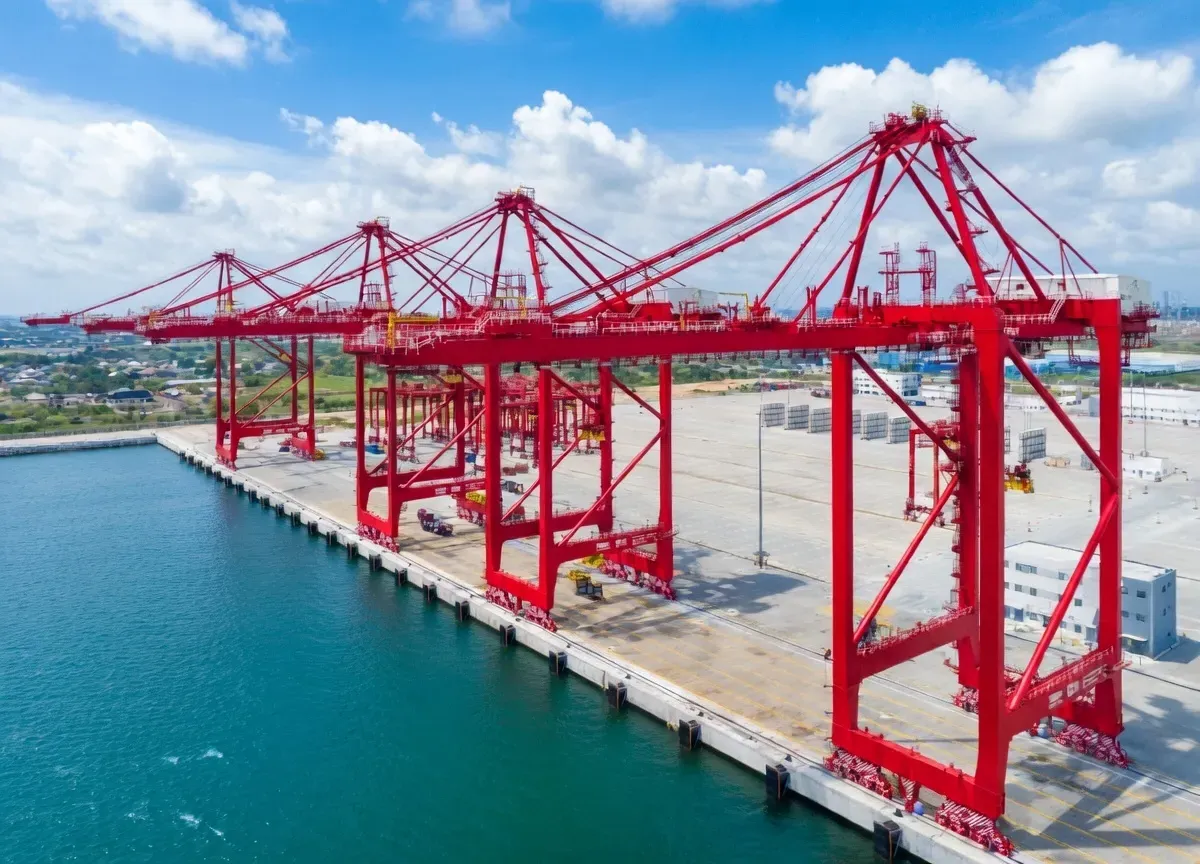 The United Kingdom is home to some of Northern Europe’s highest-throughput container terminals, and quay crane maintenance is a continuous 365-day operational requirement across the country’s major port estates. Mega Chain works directly with terminal engineering managers, port crane maintenance contractors, and lifting equipment inspection specialists across England, Scotland, Wales, and Northern Ireland. Our technical sales team carries application knowledge specific to the crane fleets and environmental conditions at each major UK port cluster.
At the Port of Felixstowe — the UK’s largest container port, processing over 4 million TEU annually — the STS crane fleet includes a mixture of older Panamax units and newer Super Post-Panamax cranes capable of spanning 24-row vessels. Chain specification requirements vary considerably across this fleet, and Mega Chain’s engineering team maintains a cross-referenced catalogue mapping each active drum configuration at Felixstowe to the appropriate chain variant. At DP World’s London Gateway terminal on the Thames Estuary, the combination of tidal salinity and high-traffic crane utilisation makes both corrosion protection grade and fatigue life performance primary selection criteria. Mega Chain supplies Dacromet-coated Grade 120 quay crane hoisting chains to London Gateway’s maintenance team on a standing supply agreement aligned to crane throughput metrics rather than simple calendar intervals.
At ABP Southampton, where a mix of container, vehicle, and cruise operations means crane configurations vary widely across the berth estate, Mega Chain provides chain selection advisory support as part of the supply relationship — ensuring that each crane type is matched to the correct bar diameter, grade, and coating specification rather than defaulting to a single common specification across the whole fleet. Similar supply relationships are active at Bristol Avonmouth, Immingham on the Humber, PD Ports Teesport, and Clydeport operations at Greenock. Northern Ireland container operations at Belfast Harbour are also served from our European hub within the same 48-hour dispatch window.
Customer Success: Hutchison Ports ECT, Rotterdam
A documented case study on Mega Chain quay crane hoisting chain deployment at one of Europe’s busiest container terminals.
34%
Reduction in unplanned crane stoppages due to chain issues
2.8x
Longer confirmed chain service life vs previous supplier
£220K
Estimated annual downtime cost savings (18-month data)
8
STS cranes transitioned to Mega Chain hoisting chains
Background
ECT Delta Terminal in Rotterdam, operated by Hutchison Ports, handles approximately 5 million TEU per year across a fleet of 14 Post-Panamax STS cranes operating across three continuous shifts. In 2021, the terminal’s engineering team identified recurring early-stage fatigue cracking at drum contact zones on eight cranes during routine scheduled inspection. The chain supplier at that time was unable to supply adequate material traceability documentation — a problem for the terminal’s insurance requirements — and replacement lead times were running at 8 to 12 weeks, incompatible with the terminal’s crane availability commitments. The engineering manager initiated a supplier review through ICHCA (International Cargo Handling Coordination Association) contacts.
The Root Cause and Mega Chain’s Assessment
Mega Chain’s application engineering team visited the terminal and conducted physical drum geometry measurement on all eight affected cranes. The assessment identified a consistent 0.7 mm positive pitch deviation in the existing chain supply — a dimensional error that was causing progressive premature wear at link-shoulder drum contact points, accelerating fatigue crack initiation far earlier than the chain’s rated cycle life would suggest. The previous supplier had been delivering chains manufactured to a general EN 818-2 tolerance rather than the OEM drum specification — a difference invisible on a certificate but immediately apparent on a micrometer.
Result
Mega Chain engineered and supplied custom-pitched Grade 120 quay crane hoisting chains with Dacromet 500 coating, with heat number traceability documentation and witnessed proof load certificates, delivered within six weeks. Following the changeover, the terminal recorded a 34% reduction in unplanned crane stoppages attributed to hoisting chain issues over the following 18-month monitoring period. Extended service life confirmed by wear measurement data delivered an estimated annual saving of £220,000. All eight cranes are now on Mega Chain supply under a three-year forward agreement.
What UK Port Engineers Say
“We moved our entire Panamax STS fleet to Mega Chain Grade 120 hoisting chains three years ago and have not looked back once. The service life improvement is not a marginal gain — we are consistently achieving close to three times the crane moves between scheduled replacements compared to what we were seeing before. The material traceability package is exactly what our LOLER inspection team needs, and it arrives without having to ask for it.”
James Hartley
Senior Crane Engineer, Port of Felixstowe, Suffolk, UK
“Our mobile harbour crane fleet at Teesport handles everything from project cargo to bulk grain to steel coil. The shock loading on hoisting chains during aggressive grab operations is severe. Mega Chain’s Grade 100 specification has run on our most demanding grab cranes for over 26 months of continuous service without a single fatigue issue. The 48-hour UK dispatch capability has saved us on two emergency situations where a different supplier would have left us with a crane out of service for days.”
Martin Richards
Port Equipment Manager, PD Ports Teesport, Teesside, UK
“When we upgraded our STS fleet at Southampton, Mega Chain’s technical team reviewed our entire hoisting chain inventory and identified two size ranges where we were over-specifying unnecessarily. They proposed a lighter Grade 120 option that met the capacity requirements with a thinner bar diameter — saving us money on the chain itself while actually improving hoist speed. That kind of supplier-side application knowledge is genuinely unusual in this market.”
Sarah Chen
Terminal Engineering Director, DP World Southampton, Hampshire, UK
Manufacturing & Custom Engineering Capability
No two quay cranes are identical. Our in-house engineering team handles every custom specification from initial drum measurement through to final test certificate and delivery.
🏭
18-Year Production Track Record
Over 18 continuous years of dedicated quay crane hoisting chain production. Our facility operates three cold-draw lines and two ring-forming lines with continuous in-line heat treatment, capable of producing over 2,000 tonnes of finished certified chain per month. No volume too large, no specification too specific.
🔨
Custom Pitch & Dimension Engineering
Non-standard drum pitch, unusual bar diameters, special inside-width or crown-to-crown requirements — our engineering team handles all custom quay crane hoisting chain specifications. Prototype samples are typically delivered within four weeks of drawing approval, with full production following within eight weeks. All custom dimensions are validated against drum geometry before final production run.
📋
Complete Certification Package
EN 818-2 mechanical test certificates, CE Declarations of Conformity, heat number traceability reports, DNV/BV/LR witnessed test options, and LOLER-compatible maintenance record formats — all provided as standard with every order. Custom documentation formats can be produced to interface directly with your terminal’s CMMS or asset management system at no additional charge.
🚚
Door-to-Dock UK Delivery
Stock chains dispatch from our European hub via confirmed next-day freight to all UK mainland port locations. Custom order shipments use sea freight with full DDP delivery terms — Mega Chain handles UK customs clearance under our established HS code classifications, so you receive on-dock delivery without dealing with import paperwork, duties, or tariff administration.
Frequently Asked Questions
Common questions from UK port engineering teams about quay crane hoisting chain selection, supply, compliance, and cost.
What is the best grade of quay crane hoisting chain for a UK container port handling 65-tonne twin lifts at 25 or more moves per hour?
For twin-lift STS crane applications handling 65-tonne payloads at UK container ports running 25 or more moves per hour, Mega Chain recommends Grade 120 specification as the strongly preferred choice. The higher minimum breaking force of Grade 120 — 50% above Grade 80 at identical bar diameter — allows engineers to specify a smaller-diameter chain for the same rated working load. The weight reduction on the drum system reduces hoist motor demand, lowers energy consumption per lift, and decreases wear across sheaves and drum grooves over the crane’s service life. Independent fatigue testing confirms Grade 120’s suitability for STS crane duty cycles running above 200,000 cycles per year. Where existing drum geometry is fixed for a specific bar diameter, Grade 100 delivers a meaningful fatigue life improvement over Grade 80 without requiring drum modification.
How quickly can Mega Chain deliver a replacement quay crane hoisting chain to the Port of Felixstowe or Southampton after an emergency crane failure?
Mega Chain holds strategic stock of the most common quay crane hoisting chain specifications — bar diameters from 16 mm to 26 mm, in Grade 100 and Grade 120, covering standard pitch configurations for ZPMC and Konecranes drum systems — at our European distribution hub. For confirmed emergency orders on stocked specifications, dispatch is achievable within 24 to 48 hours with UK next-day freight routing to all major port locations including Felixstowe, Southampton, Tilbury, Liverpool, and Immingham. To confirm stock availability for your specific crane model and bar diameter before a crisis arises, we recommend sending your crane OEM, drum diameter, bar diameter, and current chain pitch to [email protected]. Our technical team will confirm availability and agree a standing emergency supply protocol for your fleet.
Does Mega Chain’s quay crane hoisting chain comply fully with UK LOLER regulations and current lifting equipment certification standards?
All Mega Chain quay crane hoisting chains supplied to UK customers are manufactured and tested to EN 818-2 (Short Link Chain for Lifting Purposes — Fine Tolerance Hoist Chain) and ISO 3076, the applicable standards for chains used in lifting equipment subject to the Lifting Operations and Lifting Equipment Regulations 1998 (LOLER). CE Declaration of Conformity is issued with every order. 100% production proof load testing is performed — not sample-based — with individual coil test certificates recording chemical composition and mechanical properties referenced to heat numbers. For port operators requiring third-party witnessed testing to satisfy insurance programme requirements, Mega Chain offers witnessed proof load and destructive test services through Bureau Veritas, DNV GL, or Lloyd’s Register, all of whom have inspection offices in the United Kingdom. Documentation is LEEA (Lifting Equipment Engineers Association) format compatible as standard.
What is the typical price difference between Grade 80 and Grade 120 quay crane hoisting chains, and is the cost premium justified for UK port terminal operations?
Grade 120 quay crane hoisting chain typically carries a purchase price premium of 20 to 35% over Grade 80 at equivalent bar diameter, reflecting higher alloy content and additional heat treatment and testing requirements. For UK port terminal applications, this premium is almost always recovered within the first replacement cycle when a proper total cost of ownership analysis is applied. The service life advantage of Grade 120 — typically 2.5 to 3 times the crane move count of Grade 80 under equivalent load fractions — means reduced chain replacement frequency. Add to this the avoided crane downtime associated with the more frequent fatigue failures seen with Grade 80 at high-cycle terminals — where a single unplanned stoppage costs between £8,000 and £25,000 per hour — and the economics are clear. Mega Chain’s technical team will prepare a site-specific cost-of-ownership comparison for your fleet if you send operational data to [email protected]. The exercise typically takes less than one working day to complete.
Which quay crane manufacturers’ drum specifications does Mega Chain hold reference data for, and can you supply custom-matched hoisting chains for older OEM crane fleets in UK ports?
Mega Chain maintains a reference library of hoisting chain drum specifications for all major quay crane OEMs currently operating at UK and European ports. This covers ZPMC (the dominant STS crane supplier at Felixstowe, London Gateway, and multiple European terminals), Konecranes, Liebherr, Manitowoc, and Gottwald configurations across a range of crane generations spanning back to equipment manufactured in the mid-1990s. For older cranes where OEM documentation is unavailable or outdated, our field engineers can conduct a physical drum geometry survey at the port location, or extract the specification from dimensional measurements provided by the terminal engineering team. All custom specifications go through a prototype and validation stage before full production, ensuring drum engagement geometry is confirmed before a full coil is committed to manufacture.
How does the UK coastal marine environment affect quay crane hoisting chain corrosion rates, and when should I upgrade to enhanced coating protection?
The corrosive conditions at UK coastal port locations vary significantly by geography and berth orientation. East coast ports — Felixstowe, Immingham, Tilbury — experience North Sea salt spray with predominantly dry easterly wind patterns; Dacromet 500 standard coating provides adequate protection in most conditions. West coast facilities — Liverpool, Bristol Avonmouth, Clydeport — face Atlantic exposure with higher annual rainfall and stronger salt-laden wind loading; Mega Chain recommends reviewing the coating upgrade at these sites. The most aggressive UK environments are estuarine locations: London Gateway on the Thames and Avonmouth on the Severn combine salt exposure with tidal mud contamination and near-continuous moisture. Mega Chain’s standard recommendation for all estuarine UK ports and any STS crane on a west-facing berth is the hot-dip zinc-nickel alloy upgrade, which achieves over 1,500 hours salt spray resistance and eliminates the risk of under-paint corrosion propagation at link contact points. Contact our team with your port location and berth heading for a specific coating recommendation.
Where can I get a reliable quote from a certified UK quay crane hoisting chain supplier that offers short lead times, full EN 818-2 documentation, and emergency dispatch?
Mega Chain supplies quay crane hoisting chains directly to UK port operators, crane maintenance contractors, and lifting equipment engineers with confirmed lead times, full EN 818-2 and LOLER-compliant certification, and 48-hour emergency dispatch capability to all UK mainland ports. To request a formal quote, please send your crane OEM and model, required bar diameter, chain pitch if known, quantity in metres or coils, target delivery port, and any specific coating or traceability documentation requirements to [email protected]. Our UK-facing technical sales team will respond with a formal quotation within one working day. For urgent requirements, mark your email subject line as “URGENT — Emergency Supply” and our team will prioritise your enquiry for same-day response.
When should a quay crane hoisting chain be replaced at a UK port, and what specific inspection criteria apply under LOLER 1998 requirements?
Under LOLER 1998, hoisting chains on quay cranes used in a UK commercial working environment must be subject to thorough examination at intervals not exceeding 12 months. In practice, most UK container terminal operators apply shorter inspection intervals — commonly tied to crane throughput milestones such as every 100,000 lifts — rather than relying on a calendar-only basis. Replacement criteria per current EN 818-2 guidance and LEEA recommendations include: total elongation of the chain exceeding 5% of nominal pitch measured over a 5-link span; reduction in bar diameter exceeding 10% of the nominal dimension at any wear point; visible cracking, gouging, or corrosion pitting at link shoulders or bearing faces; heat discolouration or mechanical deformation of link geometry; and any evidence of link-to-link interference in the reeving line caused by incorrect pitch. Mega Chain can provide a detailed crane-type-specific wear inspection checklist tailored to your fleet’s OEM drum configuration on request — contact [email protected].
Mega Chain · Specialist Quay Crane Lifting Solutions · United Kingdom
Ready to Upgrade Your Quay Crane Hoisting Chains?
Speak with a Mega Chain application engineer. We will review your crane specifications, recommend the optimal chain grade and surface treatment for your UK port environment, and deliver a fully certified supply quotation within one working day.
[email protected] | Response within 1 working day | Emergency 48-hr UK dispatch available | Custom specs welcome
edit by gzl