
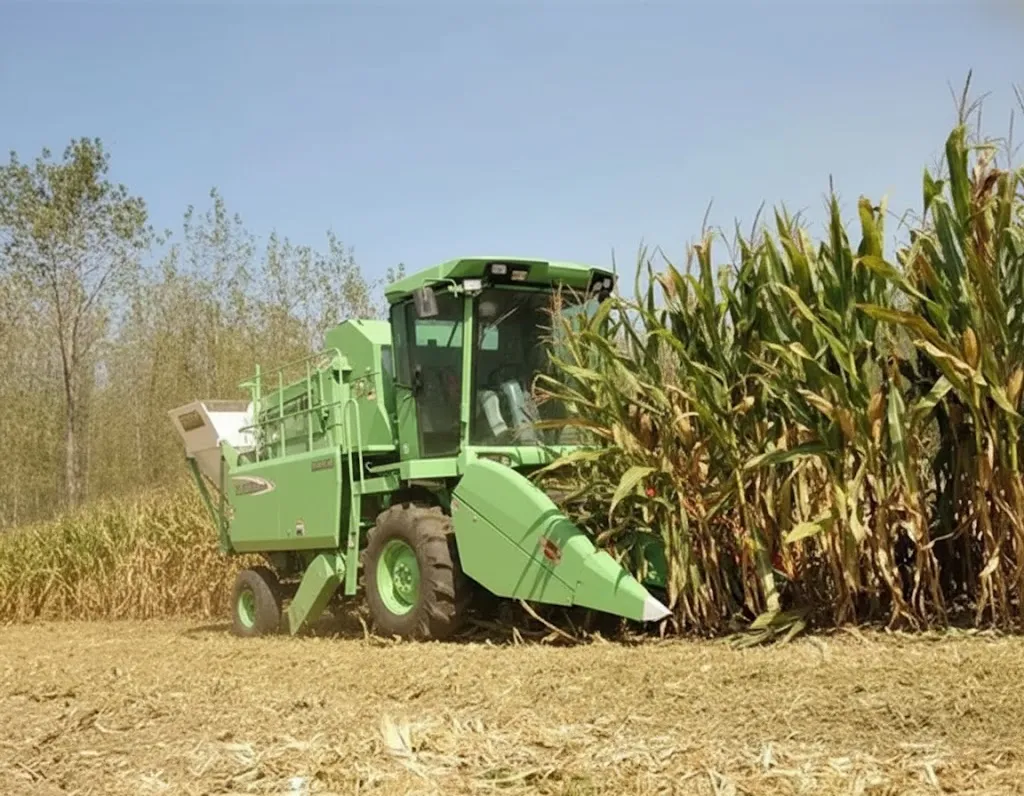
 Every summer across the arable counties of England — from the Lincolnshire Wolds to the broad flatlands of East Anglia and the rolling farmland of Yorkshire — the combine harvester is the centrepiece of the harvest. Tens of thousands of tonnes of grain move through these machines each season, and at the heart of that movement is a component that rarely gets the attention it deserves: the grain conveying chain. This chain runs continuously for hours on end, under heavy load, in conditions that combine heat, dust, grain chaff, and vibration in ways that would destroy lesser mechanical components. When the chain fails, the machine stops. When the machine stops during harvest, the cost is not merely a repair bill — it is lost yield, delayed schedules, and very real commercial pressure. That is the environment for which Mega Chain engineers its large combine harvester grain conveying chains. These are not generic industrial chains adapted for agricultural use; they are designed from the grain up, with a deep understanding of how modern high-capacity combine harvesters operate across British fields.
The modern large-scale combine harvester — from the flagship models produced by the likes of CLAAS, John Deere, New Holland, and Case IH — places enormous stress on the grain conveying chain during peak throughput. Grain throughput rates of 40 to 80 tonnes per hour are no longer exceptional, and grain conveying chains must handle this load reliably, day after day, season after season. Mega Chain’s engineering team has spent over 18 years refining the metallurgy, heat treatment processes, and geometric tolerances that define a truly dependable agricultural conveying chain for the UK and global market.
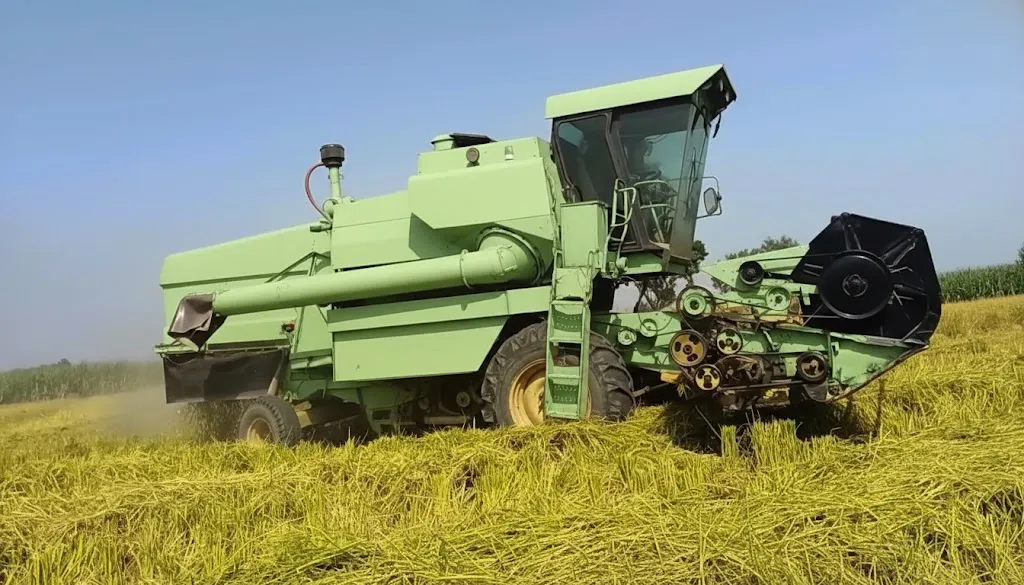 Mega Chain agricultural grain conveying chain — designed for high-capacity UK combine harvesters
Why the Grain Conveying Chain Is the Backbone of Your Combine
The engineering case for choosing right
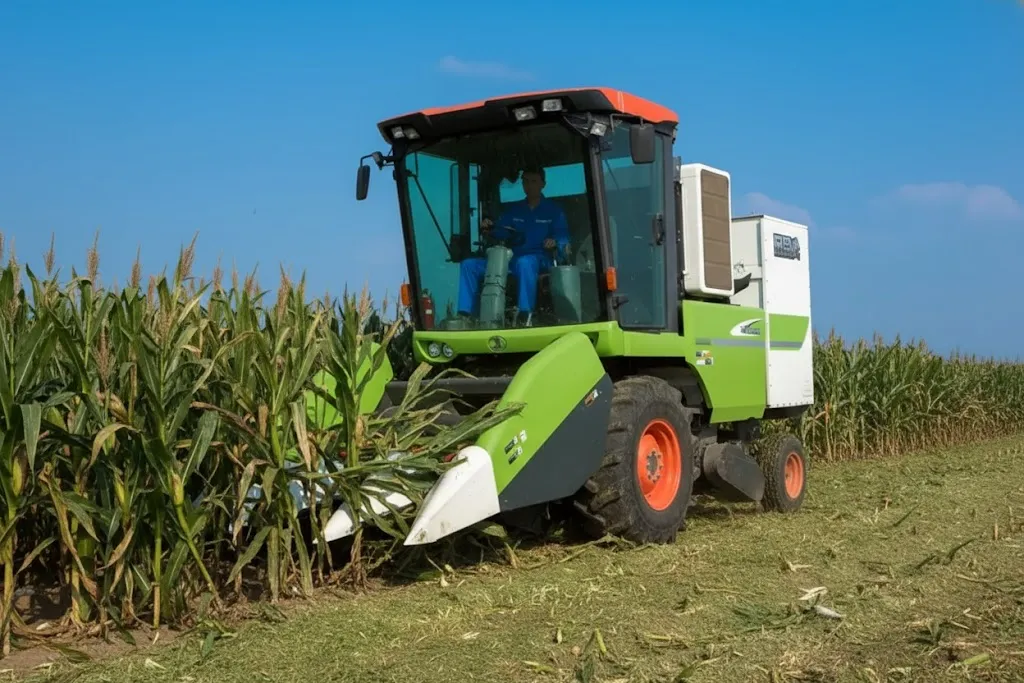 The grain conveying chain is responsible for one of the most mechanically intensive operations inside a combine harvester: moving harvested grain from the threshing and separation system upward and onward to the grain tank. This typically involves steep inclines, high mass flow rates, and constant reversals of tension as the chain moves through the elevator. Unlike a chain operating in a controlled industrial environment, the agricultural grain elevator chain works in open conditions where ambient temperature can swing dramatically, grain moisture varies by the hour, and the load on any given link can spike unexpectedly when slug-feeding occurs — the sudden ingestion of a dense mass of crop material into the header. A single weak link in this system, whether caused by inadequate tensile strength, poor pitch consistency, or insufficient surface hardness, can cascade into a chain jump, a pin failure, or a complete seizure at exactly the wrong moment.
Combine harvester manufacturers specify tight tolerances for their grain elevator chain systems. The pitch must be exact, the side-plate geometry must match the sprocket profile precisely, and the bearing surfaces between pin and bush must be finished to a standard that ensures smooth engagement at high speed. Mega Chain works to meet or exceed OEM specifications for all major combine platforms, including CLAAS Lexion and Tucano series, John Deere S and T series, New Holland CR and CX series, and Case IH Axial-Flow combines. The result is a grain conveying chain that integrates seamlessly with existing drive systems and maintains the original performance envelope of the machine.
Beyond the mechanical fit, the longevity of a grain conveying chain directly determines total cost of ownership. A chain that wears rapidly stretches out of pitch tolerance within a single season, forcing repeated tension adjustments and early replacement. A Mega Chain agricultural grain elevator chain, treated to optimal surface hardness through a controlled carburising and quenching process, maintains pitch accuracy across multiple harvesting seasons — delivering measurable value to British farm operators and agricultural contractors who need to manage fleet costs with precision.
Six Engineering Advantages That Define Mega Chain Performance
Designed and stress-tested for UK agricultural conditions
High Ultimate Tensile Strength
Mega Chain grain conveying chains are manufactured from premium alloy steel with UTS values exceeding 1,200 MPa on standard agricultural grades. This means the chain resists shock loads during slug-feeding events without permanent deformation, protecting the entire elevator drivetrain from cascading failures and costly downtime.
Precision Pitch Accuracy
Pitch deviation in an agricultural grain conveying chain causes uneven sprocket engagement, vibration, and accelerated wear. Mega Chain’s manufacturing process holds pitch tolerances to within ±0.05mm per link, ensuring smooth, quiet operation across both the drive sprocket and the tail sprocket, and preserving OEM combine performance parameters throughout the chain’s working life.
Carburised Surface Hardness
Through a controlled carburising and case-hardening process, Mega Chain achieves a surface hardness of HRC 58–62 on all bearing surfaces while retaining a tough, ductile core. This dual-property structure gives the grain elevator chain the wear resistance needed for multi-season use while avoiding the brittleness that plagues over-hardened chains in high-shock agricultural environments.
Corrosion-Resistant Finish
British harvest conditions bring rain, morning dew, and high humidity, particularly in late-season harvest windows when wheat and barley moisture contents are elevated. Mega Chain applies a zinc-phosphate plus oil treatment as standard, with optional zinc-nickel plating available for chains stored between seasons. This protects the grain conveying chain from surface oxidation and ensures smooth engagement after storage.
Extended Wear Life — Lower Cost per Hectare
Independent wear testing demonstrates that Mega Chain grain conveying chains achieve, on average, 35% greater elongation-to-replacement threshold compared to standard OEM-supplied chains under equivalent field conditions. For large UK contracting operations covering 5,000 hectares or more per season, this translates to a measurable reduction in annual chain replacement costs and fewer mid-harvest shutdowns.
OEM-Compatible Design & Drop-In Fit
Mega Chain maintains a comprehensive catalogue of grain elevator chain configurations cross-referenced to all major combine harvester platforms used across the UK. Chain pitch, inner width, outer width, plate thickness, and attachment tab dimensions are all matched to OEM standards. Agricultural engineers and combine operators can replace worn chains without any modification to existing sprockets or guides.
Technical Specifications — Mega Chain Grain Conveying Chain Series
Standard series parameters for large combine harvesters
The table below outlines the core technical parameters across Mega Chain’s standard grain conveying chain series for large combine harvesters. All values represent tested performance data from controlled laboratory conditions and are supported by field validation from operating fleets across England, Scotland, and Wales. Customised specifications — including extended pitch, reinforced side plates, and specialised attachments — are available upon request through Mega Chain’s UK technical sales team.
| Parameter | MC-AG38 | MC-AG50 | MC-AG63 | MC-AG75HD |
|---|---|---|---|---|
| Pitch (mm) | 38.1 | 50.8 | 63.5 | 76.2 |
| Ultimate Tensile Strength (kN) | 95 | 145 | 210 | 310 |
| Surface Hardness (HRC) | 58–62 | 58–62 | 58–62 | 59–63 |
| Side Plate Thickness (mm) | 3.2 | 4.0 | 5.0 | 6.3 |
| Pin Diameter (mm) | 7.9 | 10.2 | 12.7 | 15.9 |
| Material Grade | 20MnCr5 | 20MnCr5 | SCM420 | SCM420 |
| Surface Treatment | Zn-P + Oil | Zn-P + Oil | Zn-Ni (Optional) | Zn-Ni (Optional) |
| Pitch Tolerance (mm) | ±0.05 | ±0.05 | ±0.05 | ±0.04 |
Material Science and Manufacturing Process
How Mega Chain grain conveying chains are built to last
🔳 Base Steel Selection
Mega Chain sources low-carbon alloy steel (primarily 20MnCr5 and SCM420 grades) from certified European and Asian steel mills. These grades are selected for their excellent carburising response, which allows the manufacturing process to achieve the required combination of hard surface and tough core without compromising dimensional accuracy. All raw material batches are inspected for chemical composition and mechanical properties before entering production.
🔥 Heat Treatment Process
All chain pins and bushes go through a continuous-atmosphere carburising furnace with precise atmosphere and temperature control, followed by oil quenching and low-temperature tempering. This produces a case depth of 0.4–0.8mm with a hardness gradient that transitions smoothly from the hard surface into the ductile core. The process is validated via Vickers microhardness testing and retained in production records for quality traceability.
📌 Assembly and Pre-Loading
Each grain conveying chain is assembled on precision fixtures that hold pin and bush axial alignment to tight tolerances. After assembly, chains are pre-loaded on a dedicated tensioning rig to remove initial elongation — a step that significantly improves pitch stability during the first hours of field operation, reducing the frequency of initial tension adjustments and helping operators get the machine straight into the field without delays.
Where Mega Chain Grain Conveying Chains Are Used
Application scenarios across the UK agricultural sector
Mega Chain’s grain conveying chains for combine harvesters are deployed across a broad range of operational scenarios throughout the United Kingdom. From family-run mixed farms in the Welsh Borders to large-scale arable enterprises spanning thousands of hectares across East Anglia, and from specialist agricultural contracting companies operating fleets of high-specification combine harvesters to machinery dealers requiring reliable aftermarket replacement parts, the application profile of these chains is wide and demanding. The following scenarios represent the most common and performance-critical uses identified by Mega Chain’s UK technical support team.
🌿 Winter Wheat & Spring Barley Harvest
The main grain harvesting season in the UK runs from late July through September. High-capacity combines harvesting winter wheat at throughput rates of 50–80 t/h place sustained loads on grain elevator chains for 12–16 hour daily working periods. Mega Chain grain conveying chains are built specifically for this sustained, high-load operating profile.
🌻 Oilseed Rape Harvesting
Oilseed rape (OSR) presents particular challenges for grain conveying chains because of its fine seed size, low bulk density, and the tendency of the crop to lodge and slug-feed into the header. The light but abrasive nature of OSR dust accelerates pin-bush wear on inadequately hardened chains, making the surface treatment and hardness specification of Mega Chain’s agricultural series especially relevant.
🌾 Peas, Beans & Pulse Crops
Protein crops such as combining peas and field beans have become increasingly important in UK rotations under environmental stewardship and regenerative agriculture initiatives. The dense, heavy seed of field beans in particular creates high point loads on grain elevator chain attachments and flights. Mega Chain’s HD attachment series for grain conveying chains is designed to handle this demanding crop type.
🌿 Maize and Cereal Harvesting in Scotland
In Scotland, where harvest windows can be compressed and conditions are often wet, chain corrosion resistance and the ability to run at sub-optimal moisture conditions become particularly important. Mega Chain’s zinc-phosphate treatment and, where specified, zinc-nickel platings are especially well-suited to the Scottish harvesting environment and its shorter, more intensive working windows.
🚗 Agricultural Contracting Fleets
UK agricultural contracting companies operating fleets of four to twenty combine harvesters have a critical need for consistent chain quality and reliable supply. Mega Chain works with contracting businesses to provide pre-season stock agreements, ensuring that the right grain conveying chain specifications are available at the start of harvest without emergency sourcing delays or inflated spot-market prices.
🔧 Aftermarket & Dealership Supply
Agricultural machinery dealers and independent parts suppliers across England, Scotland, and Wales stock Mega Chain’s grain conveying chain range as a quality-assured alternative to OEM parts. With cross-reference data available for all major combine models, dealers can confidently recommend the correct Mega Chain specification to their farm customers, backed by Mega Chain’s documented performance data.
Serving the UK Agricultural Sector with Dependable Supply
From Lincolnshire to Aberdeenshire — reliable grain chain supply nationwide
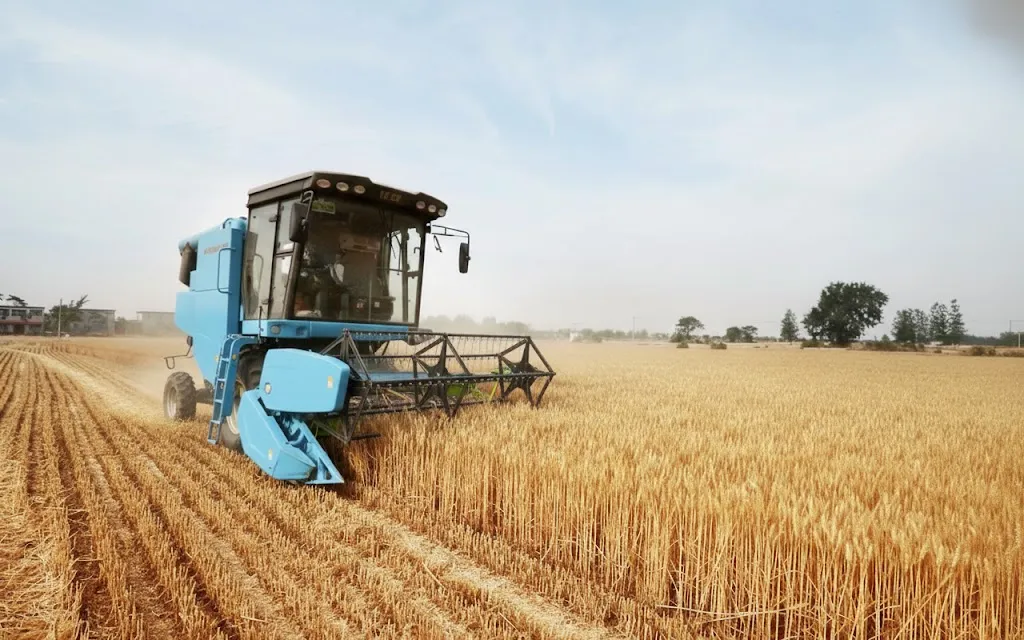 The United Kingdom is one of the world’s most productive wheat and barley growing nations. With approximately 3 million hectares of wheat grown annually and significant volumes of barley, oilseed rape, and pulse crops adding to total harvested area, the demand for dependable grain conveying chain supply is not merely a matter of machine maintenance — it is a strategic agricultural infrastructure issue. British farming operates under tight economic margins and unpredictable weather, which means that any interruption to the combine harvester’s grain elevator system during harvest has an outsized commercial impact relative to the cost of the component involved.
Mega Chain supplies grain conveying chains to agricultural customers across all major arable regions of the UK, including Lincolnshire, East Anglia (Norfolk and Suffolk), Yorkshire, the East Midlands, Cambridgeshire, Hampshire, and Wiltshire, as well as the major Scottish arable areas of Angus, Perthshire, Fife, and Aberdeenshire. Orders placed through Mega Chain’s UK trade account system can be fulfilled with short lead times, with pre-agreed seasonal stock held at distribution partners across England to ensure that harvest-critical parts are never more than 24 hours away from the farm gate.
For UK-based agricultural machinery importers and distributors, Mega Chain offers trade pricing structures and minimum order quantities appropriate for the dealership model, with full technical documentation and cross-reference catalogues provided for staff training purposes. Whether you are a farm buyer sourcing a replacement grain elevator chain for a specific John Deere S780 or a procurement manager placing a bulk order of assorted chain specifications for a multi-brand contracting fleet, Mega Chain’s UK technical sales team can assist.
Customer Success: Fenland Grain Services, Cambridgeshire
How a leading UK contracting operation reduced downtime and improved harvest efficiency
Company
Fenland Grain Services Ltd
Location
Wisbech, Cambridgeshire, UK
Fleet Size
8 x large combine harvesters
Annual Area
~11,000 hectares
Fenland Grain Services operates one of the largest agricultural contracting fleets in the East of England, covering eleven thousand hectares of wheat, barley, and oilseed rape annually across Cambridgeshire, Lincolnshire, and Norfolk. Prior to partnering with Mega Chain, the company experienced an average of 2.3 grain elevator chain replacements per machine per season — a figure that combined part cost, workshop time, and opportunity cost represented a meaningful operational overhead. The workshop manager had also raised concerns about inconsistent pitch between batches from different suppliers, which required repeated tension adjustments and contributed to sprocket wear on two of their CLAAS Lexion 8900 units.
In the 2022 harvest season, Fenland Grain Services trialled Mega Chain MC-AG50 grain conveying chains across three of their machines, retaining their previous supplier on the remaining five combines for comparison. The results from the 2022 and 2023 seasons demonstrated a significant difference: the three machines fitted with Mega Chain grain conveying chains required zero mid-season replacements in both years, while the comparison machines averaged 1.8 replacements each over the same period. Workshop notes also recorded improved consistency of chain tension across the Mega Chain machines, with operators reporting smoother grain tank filling behaviour at peak throughput.
By the 2024 season, Fenland Grain Services had transitioned their entire fleet to Mega Chain grain conveying chains across all pitch specifications, and had entered into a pre-season supply agreement that guarantees delivery of their full requirements by the end of June each year. The company estimates a combined saving of approximately £14,000 per season across parts, labour, and lost-harvest opportunity compared to their previous chain supply arrangement.
“
“We’ve run Mega Chain grain elevator chains through three full seasons now and the difference in wear life compared to what we were using before is genuinely noticeable. Two of our CLAAS machines went the entire 2023 season without a single chain adjustment after the first day — that is simply not something we had ever achieved before. The cost saving is real, but it is the peace of mind during harvest that we value most.”
— James Whitmore, Operations Director
Fenland Grain Services Ltd, Cambridgeshire
“
“We stock Mega Chain grain conveying chains across all the main combine platforms we service — John Deere, Case IH, and New Holland. The cross-reference documentation is thorough, the quality is consistent batch to batch, and our workshop staff have had zero fitment issues. Our farm customers come back specifically asking for Mega Chain when they need a replacement, which tells you something.”
— Sarah Goddard, Parts Manager
Holbeach Agricultural Machinery Ltd, Lincolnshire
“
“Running a twelve-combine fleet across Angus and Perthshire, we deal with short harvest windows and unpredictable weather. The last thing we need is a chain failure at nine o’clock in the morning when the crop is ready. Mega Chain has given us the kind of consistent, season-long reliability we need, and the fact that we can get them delivered to Scotland within 24 hours on the pre-season agreement is a real operational benefit.”
— Alistair McRae, Fleet Manager
Strathmore Harvesting Services, Perthshire, Scotland
Custom Grain Conveying Chain Manufacturing — Tailored to Your Combine
Mega Chain factory: full-specification custom engineering service
Not every combine harvester operates on a standard OEM specification chain. Modified elevator configurations, specialist high-capacity headers, extended elevator centres on wide-track machines, and the specific requirements of prototype or legacy combine models all create situations where a standard catalogue chain is not the right answer. Mega Chain’s factory operates a full custom manufacturing service that can produce grain conveying chains to virtually any specification, with minimum order quantities appropriate for the agricultural sector and lead times that can be compressed significantly for urgent harvest-season requirements.
✓ Custom Pitch Lengths
Any pitch from 25.4mm to 101.6mm, including non-standard intermediate values for OEM-modified elevator systems.
✓ Bespoke Attachment Tabs
K-type, A-type, SA-type, or fully custom attachment profiles welded or cold-formed to your flight or paddle mounting requirements.
✓ Extended Side Plate Options
Heavy-duty side plates in 20–30% greater thickness than standard for high-shock crop applications such as maize and field beans.
✓ Stainless Steel Variants
316L stainless grain conveying chains for combines operating in certified organic or food-grade grain environments where carbon steel corrosion is not acceptable.
✓ Pre-Season Stock Agreements
Dedicated stock reservation for UK customers from May onwards, guaranteeing pre-harvest delivery and eliminating last-minute sourcing risk during the peak demand window.
💾 Discuss Your Custom Chain Requirements
Email: [email protected] | Response within 1 business day
Frequently Asked Questions — Grain Conveying Chains for UK Combine Harvesters
Practical answers from Mega Chain’s agricultural engineering team
What is the best grain conveying chain supplier for large combine harvesters operating in the UK, and how do I know which pitch to order for my machine? +
Mega Chain is a specialist supplier of agricultural grain conveying chains for all major combine harvester platforms used in the UK, including CLAAS, John Deere, New Holland, Case IH, and Fendt. The correct pitch for your specific machine depends on the model and the elevator configuration — for example, CLAAS Lexion 8000 and 7000 series typically use 50.8mm pitch grain elevator chains, while New Holland CR series combines commonly use 38.1mm or 63.5mm depending on the elevator position. Mega Chain’s UK technical team provides free specification matching: contact [email protected] with your combine model and serial number range for an exact cross-reference.
How much does a replacement grain elevator chain cost for a large combine harvester in the UK, and where can I get a price? +
Pricing for grain conveying chains depends on pitch size, chain length (number of links), and any attachment specifications required. As a general guide, standard grain elevator chains for mid-range combine harvesters typically range from £80 to £280 per chain in the UK market, with heavy-duty and extended-length configurations for large machines commanding higher prices. Mega Chain offers competitive trade pricing for agricultural dealers and contracting businesses with volume requirements. To obtain a specific quote for your combine harvester’s grain conveying chain, contact the Mega Chain sales team at [email protected] with your machine specification and required quantity.
How often should I replace the grain conveying chain on my combine harvester during the UK wheat harvest season? +
For large combine harvesters covering 2,000 to 5,000 hectares per season in UK conditions, a quality grain elevator chain should not require replacement more than once per season — ideally, a well-specified chain should last two full seasons with correct tension management. Signs that your grain conveying chain needs replacement include visible link elongation beyond the wear indicator mark, persistent vibration or noise from the elevator, inconsistent grain tank filling rates, and any visible side plate cracking. Mega Chain’s agricultural series chains have demonstrated consistent two-season service life under normal UK grain harvesting conditions when correctly tensioned and stored dry between seasons.
Which combine harvester brands and models are compatible with Mega Chain grain elevator chains available in the UK? +
Mega Chain grain conveying chains are cross-referenced and available for all major combine harvester brands used across the UK market. This includes CLAAS (Lexion 5000–9000, Tucano 400–500 series), John Deere (S series S660–S790, T series T560–T660), New Holland (CR7090–CR10.90, CX series), Case IH (Axial-Flow 5130–9250), Massey Ferguson (MF 7300 series), and Fendt IDEAL series. Mega Chain also maintains specifications for older legacy models commonly found in the UK second-hand market. The Mega Chain compatibility catalogue is available on request, and the technical team can confirm fit for any machine not listed.
Can I order custom-length or non-standard pitch grain conveying chains from Mega Chain for a modified combine elevator in the UK? +
Yes — Mega Chain operates a full custom manufacturing service for grain conveying chains with non-standard pitch, extended length, modified attachment tabs, or heavy-duty side plate specifications. This service is particularly relevant for modified or prototype combine harvesters, machines that have had elevator centres extended as part of a throughput upgrade, or legacy models where the original OEM chain is no longer commercially available. Minimum order quantities for custom grain elevator chains are negotiable depending on specification complexity. Custom orders typically carry a lead time of 3–6 weeks from design confirmation, though urgent harvest-season requirements can sometimes be accommodated in shorter timeframes. Contact [email protected] to begin a custom chain enquiry.
What causes premature wear on a grain conveying chain in a combine harvester, and how does Mega Chain’s design address these failure modes? +
The primary causes of premature grain elevator chain wear in combine harvesters are: insufficient surface hardness at the pin-bush bearing interface (leading to abrasive wear); incorrect initial tension or poor tension maintenance (leading to pitch elongation and sprocket skip); inadequate lubrication from the factory (creating metal-to-metal contact under load); and shock loading from slug-feeding events (causing side plate yielding or pin shear). Mega Chain addresses each of these through carburised surface hardness of HRC 58–62, pre-loading before dispatch to remove initial slack, factory oil impregnation of all bearing surfaces, and high-tensile steel grades selected for toughness rather than just hardness. These design decisions collectively eliminate the most common failure modes seen in UK combine grain elevator systems.
Where can agricultural contracting businesses in England and Scotland get a competitive bulk price quote on grain conveying chains before the harvest season? +
Mega Chain welcomes pre-season bulk enquiries from agricultural contracting businesses across England, Wales, and Scotland. The most efficient route to obtaining a competitive bulk price for grain conveying chains before the UK harvest season is to contact the Mega Chain commercial team directly at [email protected], providing your combine fleet make and model list, the grain elevator chain specifications currently in use (pitch and number of links if known), and your estimated total quantity requirement. Mega Chain can typically turn around a formal quotation within 24 hours on working days, and pre-season stock reservation agreements are available for UK customers requiring guaranteed supply from June onwards.
How does a grain elevator chain differ from a standard industrial roller chain, and why does it need to be an agricultural-specific design? +
A grain conveying chain for a combine harvester differs from a standard industrial roller chain in several fundamental ways. First, grain elevator chains typically carry flight attachments or paddle brackets at regular intervals, requiring extended pins, strengthened side plates, and precise attachment geometry that standard roller chains do not have. Second, the operating environment is open to grain chaff, fine dust, and moisture — conditions that demand superior surface treatment rather than the basic black-oxide finish found on general industrial chains. Third, the load profile includes frequent slug-feeding shock events that require the chain to absorb impact rather than transmit it, favouring tougher steel grades over the pure tensile optimisation of standard transmission chain. Using a non-agricultural industrial chain as a combine grain elevator substitute is a common cause of premature failure and should be avoided.
Ready to Upgrade Your Combine’s Grain Conveying Chain?
Talk to Mega Chain’s UK agricultural chain specialists today. Whether you need a direct OEM replacement, a customised specification, or a pre-season supply agreement for your contracting fleet, we have the technical knowledge and manufacturing capability to deliver.
✉ Get a Quote — [email protected]
Mega Chain · Agricultural Drive Engineering · UK & Export Supply
edit by gzl