
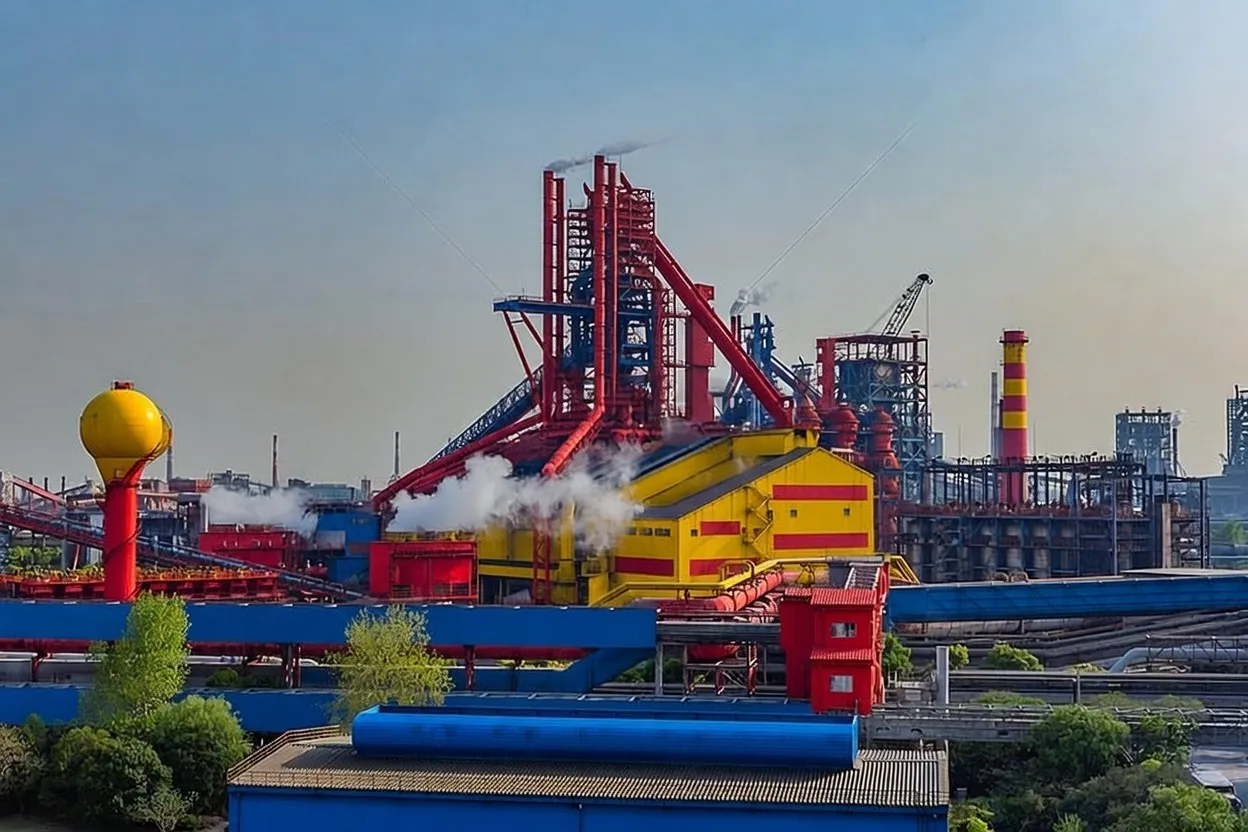
 Inside every integrated steelworks, the blast furnace dominates both the skyline and the maintenance budget. At its very top, a charging system loads and sequences the descending burden — iron ore pellets, sinter, coke, and limestone — that the furnace consumes continuously, twenty-four hours a day, three hundred and sixty-five days a year. The mechanical chain that drives that system operates inside one of the harshest environments in all of heavy industry: abrasive mineral dust infiltrating every gap, radiant heat cycling the metal through wide temperature swings, shock loads at every skip landing, and the absolute operational imperative that the chain never fails between planned shutdown windows. When it does fail, the cost is not a short delay. Restarting a cold blast furnace at a major UK integrated site costs upwards of £50,000 per hour in lost production alone — a figure that concentrates the minds of maintenance engineers and procurement directors alike.
Mega Chain has spent more than eighteen years developing drive and conveyor chains specifically for this application. That accumulated field experience — drawn from steelworks across Scunthorpe, Port Talbot, Rotherham, and South Wales — is embedded in every alloy specification, every hardening profile, and every dimensional tolerance in the blast furnace range. The product is not a general industrial chain dressed up with a steel-plant sales brochure. It is an engineered solution matched to a specific failure environment, validated by on-site elongation data, and refined through direct collaboration with the maintenance engineers who live with the consequences of chain performance every day.
What follows is a detailed examination of that solution: the engineering principles behind the chain’s durability, the technical parameters that determine correct specification, the application scenarios across the full blast furnace complex, and the financial case for upgrading from catalogue alternatives. For UK-based steelworks procurement and engineering teams considering a chain specification review or an urgent replacement, this guide is the technical foundation that conversation starts from.
Why Standard Industrial Chains Cannot Survive the Blast Furnace Top Charging Environment
The blast furnace top charging system is mechanically uncomplicated in outline: a skip hoist or bell-less top distributor feeds weighed batches of burden material to the furnace throat on a continuous cycle. The chain driving that mechanism transmits torque reliably across that cycle — a job that sounds straightforward until you factor in what that chain is actually exposed to. Iron ore fines and coke breeze particles, typically in the 0–6 mm range and with a Mohs hardness of 5.5 to 6.5, infiltrate pin-bush interfaces of unsealed chains within days of installation. The resulting three-body abrasive wear at the contact surfaces accelerates elongation at a rate that can be five to eight times faster than the same chain in a clean environment. The maintenance data from UK integrated sites confirm this: unsealed catalogue chains in blast furnace top charging applications routinely reach the 2% elongation replacement threshold within three to five months of installation.
Thermal cycling compounds the mechanical degradation. The ambient temperature at the top of the furnace stack fluctuates between outdoor conditions — which at a North Lincolnshire or South Yorkshire site in winter can fall below -5 °C — and the radiant heat environment near the furnace throat, which can subject chain components to intermittent temperatures above 200 °C without protective shielding. Standard carbon-steel chain link plates, hardened for surface wear resistance without adequate through-hardness toughness, become susceptible to brittle fracture under these combined conditions. Fatigue cracks initiate at the pin holes — the highest-stress point in the link plate — and propagate at a rate driven by the cyclic loading of each skip lift. A 10-tonne skip decelerating from full hoisting speed generates a dynamic overload on the chain that can reach 3× the static working load. For a chain already carrying thermal fatigue damage, that event sequence ends in fracture.
Mega Chain’s blast furnace range eliminates each of these failure mechanisms through material selection, heat treatment protocol, and sealing architecture applied consistently across every production batch. The outcome is a chain that converts an unpredictable, failure-driven replacement schedule into a planned, campaign-aligned maintenance event.
Alloy-Steel Pin & Bush Assembly
Case-hardened alloy steel pins achieve 58–62 HRC surface hardness, providing abrasion resistance against ore-dust particles while the toughened core absorbs the shock loading of each skip cycle without brittle fracture.
High-Temperature Alloy Selection
42CrMo4 and 30CrNiMo8 grade steels retain yield strength and toughness through temperature cycling from -5 °C to 350 °C continuous, addressing both British winter startups and furnace-throat radiant heat exposure.
Shot-Peened Fatigue Resistance
Controlled shot peening introduces compressive residual stress at pin-hole bore surfaces, effectively doubling fatigue life under the repeated dynamic overloads generated at each skip landing compared to unpeened equivalents.
X-Ring Sealed Construction
Four-lipped X-ring seals at every pin-bush interface prevent ore-dust infiltration and retain grease across extended maintenance intervals — delivering less than 0.5% elongation at service intervals where unsealed chains exceed their replacement threshold.
Custom Pitch & Attachment Geometry
Non-standard pitches, extended pins, bent attachment plates, and bespoke end-fittings are manufactured to drawing or reverse-engineered from a sample — ensuring direct drop-in fit across Paul Wurth, Primetals, and Danieli Corus OEM equipment.
Full Batch Traceability
Every delivery ships with mill certificates, heat treatment records, hardness test reports, dimensional inspection data, and a proof-load test certificate — documentation packages formatted to meet ISO 45001 and site-specific quality management requirements at UK steelworks.
Technical Performance Parameters — Blast Furnace Chain Series
The following table summarises the core performance parameters across the three standard production grades in Mega Chain’s blast furnace top charging range. All values represent minimum guaranteed figures for production batches; enhanced specifications for campaigns exceeding 18 months between planned shutdowns, or for bell-less top distributor applications requiring sub-0.3% elongation tolerance, are available on application to the engineering team.
| Parameter | Standard Grade | Heavy Duty Grade | Extreme Duty Grade |
|---|---|---|---|
| Pitch Range | 38.1 – 101.6 mm | 63.5 – 152.4 mm | 101.6 – 203.2 mm |
| Min. Breaking Load | 120 kN | 280 kN | 520 kN |
| Pin Surface Hardness | 56 – 60 HRC | 58 – 62 HRC | 60 – 64 HRC |
| Link Plate Steel Grade | 42CrMo4 | 42CrMo4 / 30CrNiMo8 | 30CrNiMo8 + shot peen |
| Core Toughness (Charpy) | min. 30 J @ 0 °C | min. 40 J @ 0 °C | min. 55 J @ -10 °C |
| Sealing Option | None / O-ring | O-ring / X-ring | X-ring (standard) |
| Continuous Temp. Limit | up to 150 °C | up to 250 °C | up to 350 °C |
| Replacement Elongation | 2.0 % | 1.5 % | 1.5 % |
| Proof-Load Test | 50 % MBL per batch | 50 % MBL per batch | 50 % MBL per batch |
| Standard Certification | ISO 1228 / BS EN 818 | ISO 1228 / BS EN 818 | ISO 1228 + DNV / BV opt. |
| Standard Lead Time (custom) | 4 – 6 weeks | 5 – 8 weeks | 6 – 10 weeks |
Application Scenarios Across the Blast Furnace Complex
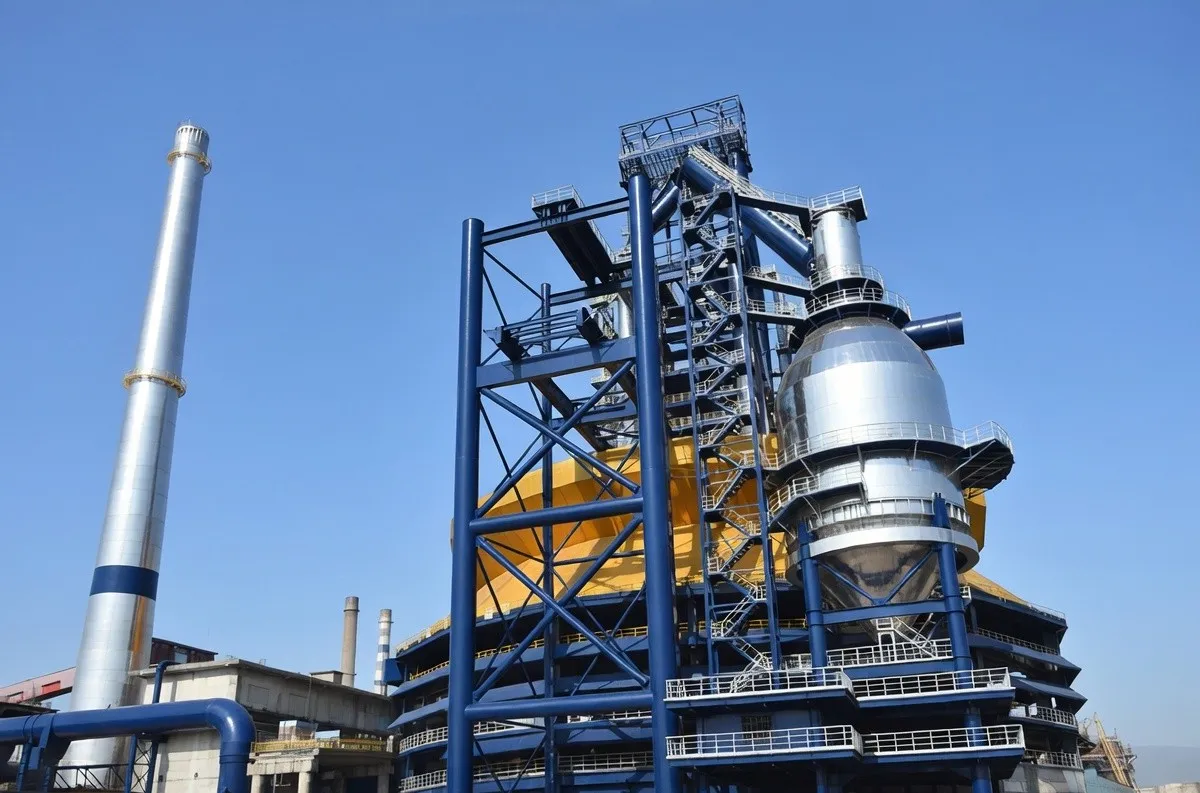 The skip hoist drive chain is the highest-profile Mega Chain application in a blast furnace top charging system, but the role of precision heavy-duty chain extends throughout the entire charging complex and into the cast house downstream. Bell-less top distributor drives — which replaced the traditional double-bell top seal on most modern furnaces operating in the UK — use chain-actuated mechanisms to position and rotate the distributing chute, placing each burden batch at a precise radial and tilt angle inside the furnace throat. The pitch control requirements for this application are exceptionally tight: accumulated elongation in the drive chain translates directly into burden distribution error, affecting gas utilisation, thermal efficiency, and ultimately furnace productivity. It is a chain specification that cannot be managed with catalogue products chosen on breaking load alone.
At the stockhouse level, long-pitch conveyor chains move screened ore and coke from the ground-level storage bins to the weighing hoppers that load the skips. These chains carry heavy flights or paddles, operate in the same abrasive dust environment as the hoist chain above, and typically run as matched multiple-strand assemblies where equal elongation across all strands is critical to avoiding transverse loads on the conveyor structure. Mega Chain supplies matched-elongation strand sets for these applications, with assembly measurement conducted at proof load to ensure strand-to-strand elongation consistency to within 0.05%. Beyond the charging system itself, the chain portfolio extends to hot stove valve actuation, taphole drilling machine drives at the cast house, and torpedo ladle car positioning systems — making Mega Chain a single-source chain supplier for the entire blast furnace facility.
▶ Skip Hoist Drive Chain
Primary ore and coke lifting mechanism — the highest load application in the charging system. Extreme Duty Grade with X-ring sealing and custom end-fittings matched to OEM skip car geometry. Campaign-targeted service life of 12–18 months.
▶ Bell-less Top Distributor Drive
Rotating chute positioning chain — tight pitch tolerance, sealed construction, radiant heat resistant. Elongation tolerance specification typically sub-0.3% over full campaign to maintain burden distribution accuracy.
▶ Stockhouse Conveyor Chain
Long-pitch flight conveyor chain for ore and coke transfer from bins to weighing hoppers. Extended pitch, attachment plates for burden flights, sealed construction, matched-elongation multi-strand sets.
▶ Probe & Sampling Gate Actuation
Burden profile probe and temperature sampling gate drives — lower loads but extreme temperature proximity and near-zero allowable failure rate. Sealed alloy chain as standard, no substitution accepted.
▶ Hot Stove Valve Drive
Blast temperature changeover valve actuation chains — high-temperature alloy options as standard, supplied as complete chain-sprocket matched assemblies for direct installation during planned hot stove maintenance windows.
▶ Cast House Equipment
Taphole drilling machine drives, mud gun actuation, and torpedo ladle car positioning — downstream applications within the full Mega Chain blast furnace portfolio, enabling consolidated single-source chain procurement across the whole facility.
Engineering Principles: Material Science Behind the Performance Gap
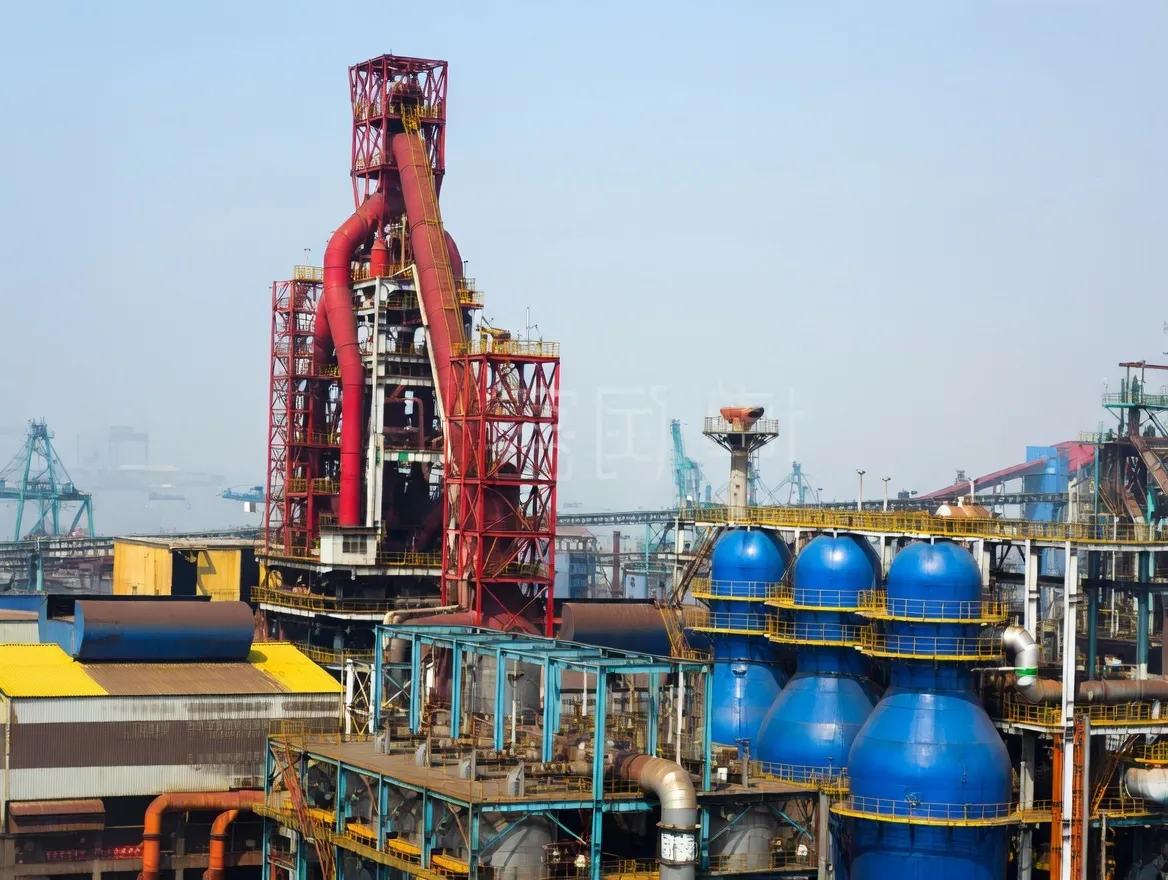 The performance differential between a Mega Chain blast furnace drive chain and a standard catalogue equivalent is not primarily a matter of size or nominal breaking load — two chains with identical catalogue specifications can perform vastly differently in service when the underlying material science and manufacturing process diverge. Mega Chain’s Extreme Duty Grade achieves its field-validated 12-to-18-month campaign life through three interconnected engineering disciplines: alloy metallurgy, heat treatment process control, and sealing architecture. None of these elements delivers full performance in isolation; the combination is what separates the product from alternatives.
On the metallurgical side, the selection of 42CrMo4 for Heavy Duty Grade and 30CrNiMo8 for Extreme Duty Grade link plates is rooted in transformation metallurgy. Both grades undergo induction hardening at the pin-hole bore surfaces — the primary wear and fatigue initiation zone — to a controlled case depth of 1.2 to 2.0 mm. The Cr-Mo and Cr-Ni-Mo alloying elements enable precise independent control of surface hardness (58–64 HRC, determined by case depth and quench rate) and core hardness (32–38 HRC, governed by alloy composition and tempering cycle). This separation is mechanically critical: the hard case provides abrasion resistance against ore particles that enter the link plate bore, while the tough core absorbs the bending and tensile fatigue loads without crack propagation. Standard carbon-steel chains cannot achieve both properties simultaneously; selecting a hardening cycle that produces an adequate surface hardness invariably generates a core that is too brittle for the impact loading regime in skip hoist service.
The geometry of the pin-hole boring process directly influences service life in ways that are rarely communicated in catalogue literature. Mega Chain’s bore tolerance of ±0.025 mm — approximately one-quarter of the tolerance band permitted under ISO 1228 — ensures full-circumference contact between the pin and bush from the point of installation. Where looser-tolerance chain allows the pin to bear eccentrically within the bush, contact stress at the bearing arc can be two to three times the theoretical value, accelerating wear by the same factor. Consistently uniform contact distributes the wear load across the entire available contact area, and the measured result in UK field installations is an elongation rate of 0.04–0.07% per month in standard blast furnace top charging duty — predictable, monitorable, and manageable within a planned maintenance framework.
The sealing system completes the performance architecture. An X-ring seal seated in a machined groove on the pin carries four sealing lips rather than the two of an O-ring, providing both static and dynamic sealing capability at the pin-bush interface under the torsional and axial movements that occur during chain operation on the sprocket. The grease charge trapped within the sealed cavity maintains a coherent film at the contact surface across maintenance intervals of up to 2,000 operating hours — a practical necessity on blast furnace equipment where continuous operation means chain lubrication access is unavailable between shutdowns.
Customer Success: North Lincolnshire Integrated Steelworks — Blast Furnace C
Blast Furnace C at this North Lincolnshire integrated steelworks had been averaging a skip hoist chain replacement interval of 4.5 months. The chain in service at the time was a standard-catalogue heavy-duty roller chain sourced through a general industrial distributor, conforming to ISO 1228 in pitch and breaking load but specified without reference to the specific operating environment. Each unplanned replacement required a crane-assisted furnace-top access during an emergency production stop, with a direct cost to the plant of approximately £31,000 per event in labour, crane hire, and lost blast time — before accounting for the downstream production impact through the sinter plant and steel shop.
Mega Chain’s application engineers visited the site following an introduction through the plant’s maintenance engineering team. A chain pull-test conducted on the removed chain confirmed the failure mode: abrasive wear elongation at 3.2%, compounded by pinhole fatigue cracking in the link plates — both consistent with a chain lacking adequate case-depth hardening and operating without dust sealing in a high-abrasive environment. The wear pattern at the pin-bush contact showed eccentric contact loading, indicating bore-tolerance stack-up in the original chain.
Mega Chain specified a 101.6 mm pitch Extreme Duty Grade chain with X-ring sealing, 30CrNiMo8 shot-peened link plates, and custom end-fittings matched to the skip car geometry. The specification was submitted to the plant engineering team with a material calculation note and a dimensional verification drawing within two weeks of the site visit. Chain manufacture was completed in seven weeks, with full documentation — including BSI-conforming material certificates, heat treatment and hardness records, and the proof-load test certificate — delivered with the chain for integration into the plant’s ISO 45001 maintenance management system.
A 12-month elongation monitoring programme, conducted by the plant’s own maintenance team using the reference-length measurement protocol supplied by Mega Chain, recorded a final elongation of 0.64% — comfortably within the 1.5% Extreme Duty Grade replacement threshold. The chain ran through the subsequent planned blast furnace shutdown with no unscheduled intervention. Calculated direct cost saving over the 12-month period against the previous 4.5-month average replacement frequency: approximately £82,000. Blast Furnace B at the same site was subsequently converted to the same Mega Chain specification.
We had been treating a 4-to-5-month chain change as an unavoidable operating cost. Mega Chain’s engineering team came on-site, understood exactly why we were failing, and produced a solution directly targeted at that failure mode. The 12-month campaign chain delivered precisely what they said it would — and the documentation package was the cleanest we had ever received from a chain supplier. What really impressed us was that they did not just sell us a product; they set up the elongation monitoring protocol so our team could track the chain’s condition between shutdowns without relying on gut feel.
We operate a Paul Wurth bell-less top and the distributor chute drive chain is a component where we have zero tolerance for premature failure. Mega Chain produced a replacement chain with the correct pitch tolerance to within 0.02 mm over the full assembly length — something we had been unable to achieve sourcing from general distributors. It has been running for 16 months without any measurable distribution anomaly, and the sealed construction means we have not had to access the drive housing between shutdowns for lubrication, which on our furnace configuration is a significant safety improvement.
The unit price per metre is higher than catalogue alternatives — that is acknowledged. But when our reliability team put together the total cost of ownership analysis including avoided breakdown costs, avoided blast-loss, and crane hire savings, the Mega Chain specification paid for itself inside the first campaign. Procurement agreed the switch immediately once they saw those numbers. The thing I would tell any maintenance director at a UK blast furnace site is: do not compare chain suppliers on unit price. Compare them on total cost across a 12-month campaign. The calculation is not close.
Custom Manufacturing Capability: Your Blast Furnace’s Exact Specification, Every Time
Mega Chain does not offer a fixed product catalogue for blast furnace applications. Every chain we supply is engineered to the specific dimensional and performance requirements of your furnace, your OEM equipment, and your maintenance schedule — because no two blast furnace charging systems are the same.
No two blast furnace top charging systems carry identical geometry requirements. The mechanical design of OEM equipment from Paul Wurth, Primetals Technologies, and Danieli Corus varies significantly between generations and between individual furnace construction contracts, and the majority of blast furnaces currently operating in the UK have been subject to modifications, rebuilds, or top-charging system upgrades that move them away from their original OEM specification. A chain sourced from a general catalogue on the basis of nominal pitch and breaking load alone will frequently introduce fit problems — incorrect end-fitting geometry, incompatible attachment plate position, marginal inner-width clearance — that generate additional loading on the skip car mechanism and accelerate chain wear beyond any reasonable service life prediction.
Mega Chain‘s custom manufacturing process begins with a technical review meeting — conducted on-site at UK steel plant facilities or remotely via drawing exchange — in which our application engineers confirm pitch, link plate thickness, pin diameter, inner and outer width, the position and orientation of attachment plates, and the full geometry of any end-fittings required for skip car connection. Where OEM drawings are available, the review is dimensional verification. Where drawings are unavailable — a common situation on older UK blast furnaces originally commissioned in the 1970s and 1980s — our engineers reverse-engineer from a physical chain sample, producing a fully dimensioned manufacturing drawing that is signed off by the customer engineering team before production commences.
The manufacturing process is entirely in-house: link plate profiling and precision hole boring on CNC machining centres, pin and bush induction hardening with individual part temperature logging, controlled assembly under specified pre-load torque, sealing installation, and 100% dimensional inspection against the manufacturing drawing for each component. Tensile proof-load testing is conducted on a chain sample drawn from each production batch, with the test record included in the documentation package. Surface and core hardness testing by Rockwell and Vickers methods is performed on heat treatment witness samples from the same batch, with results traceable to individual production records.
For UK-based steel plant teams managing maintenance planning, Mega Chain also provides a chain condition monitoring consultancy service: our engineers review elongation records, maintenance logs, and removed chain samples to establish a site-specific replacement schedule aligned with planned blast furnace shutdown intervals. This service directly reduces emergency stock holding requirements, allows procurement to plan chain purchases against the shutdown calendar rather than against failure events, and generates the data foundation for continuous improvement in chain service life over successive campaigns. Several UK steelworks procurement teams have found that this data-driven approach reduces total chain spend — combining purchased cost and breakdown-related costs — by 35–55% over a three-year procurement horizon compared to the reactive sourcing model it replaces.
Serving the UK Steel Industry: Scunthorpe, Port Talbot, Rotherham, Teesside, and Beyond
The United Kingdom’s integrated steel sector — concentrated at the Scunthorpe and Port Talbot blast furnace complexes, the Rotherham special steels cluster, and the Teesside and South Wales primary steel production facilities — represents some of the most challenging chain operating environments in the world. These plants run blast furnaces through multi-year campaigns with planned shutdown windows often measured in days rather than weeks. The procurement and maintenance teams at these sites need chain suppliers who combine deep product knowledge with commercial reliability: a consistent specification delivered on schedule, traceable supply chain documentation that satisfies both site-level ISO 45001 requirements and the post-Brexit UK product compliance framework, and the engineering capability to respond to an urgent replacement requirement without compromising quality or documentation standards.
Mega Chain maintains UK-based technical and commercial support with application engineers available for on-site consultations at major UK steelworks facilities. Our alloy steel raw material supply chain is qualified to British and European standards and documented to comply with UK REACH chemical compliance requirements as they apply post-Brexit. All documentation is produced in English, with certification references to British Standards Institution (BSI) equivalents of ISO standards where applicable — ensuring seamless integration with the purchasing specifications maintained by UK steel plant procurement departments.
The shift across the UK steel industry towards electric arc furnace (EAF) minimill production — driven by decarbonisation commitments and scrap availability — does not reduce the role of heavy-duty chain in these facilities. Scrap charging crane drives, ladle transfer car positioning systems, and DRI handling conveyors in hydrogen-DRI-based operations all rely on the same class of precision, wear-resistant chain used in blast furnace applications. Mega Chain’s blast furnace engineering capability translates directly to these EAF and emerging green-steel applications, providing a consistent supply relationship as UK steelworks evolve through the energy transition.
Whether the immediate need is a direct replacement for a failing blast furnace skip hoist chain, an engineering review of top charging equipment on a furnace approaching its next planned shutdown, or a forward procurement plan for a multi-year maintenance contract, Mega Chain’s technical team is equipped to engage at the level of detail that UK steel plant engineering requires. Enquiries from UK-based purchasing, maintenance planning, and engineering teams at any stage of the procurement cycle are welcomed at [email protected].
Frequently Asked Questions
Apply FAQPage + Speakable structured data markup via your WordPress SEO plugin (Yoast FAQ Block or RankMath Schema module) for voice search and rich result eligibility.
What is the typical campaign service life I should expect from a Mega Chain blast furnace top charging chain at a UK integrated steelworks operating continuous skip cycles?
Under continuous blast furnace operating conditions typical of UK integrated sites — skip cycles every 4 to 6 minutes, abrasive mixed burden of iron ore pellets, sinter, and coke — Mega Chain’s Extreme Duty Grade achieves a monitored service life of 12 to 18 months before reaching the 1.5% elongation replacement threshold. This aligns chain replacement with planned shutdown windows, eliminating the unscheduled emergency outages that standard catalogue chains generate in this environment. Actual campaign life varies with furnace output rate, burden composition, skip car weight, and the lubrication regime between shutdowns.
How much does a custom-engineered Mega Chain blast furnace skip hoist chain cost compared to a standard catalogue equivalent, and is the price premium justified for UK steel plant procurement budgets?
A custom Mega Chain blast furnace Extreme Duty Grade chain typically carries a unit cost 25–45% above catalogue equivalents. The justification is consistently found in total cost of ownership analysis rather than unit price comparison. At UK integrated steelworks, an unscheduled skip hoist chain failure generates direct costs of £25,000–£80,000 per event in emergency labour, crane hire, and lost blast time. Sites that move from reactive catalogue chain to Mega Chain typically recover the price premium within the first avoided emergency replacement event. For a site-specific cost comparison or formal quotation, contact [email protected].
Which alloy steel grades does Mega Chain specify for blast furnace top charging chains, and why do they outperform standard carbon steel in the abrasive, high-temperature conditions of UK blast furnace environments?
Mega Chain specifies 42CrMo4 for Heavy Duty Grade and 30CrNiMo8 for Extreme Duty Grade link plates. Both are low-alloy grades selected for their transformation metallurgy under induction hardening — the Cr-Mo and Cr-Ni-Mo alloying elements enable the surface hardness (58–64 HRC, wear resistance) and core toughness (min. 40–55 J Charpy at 0 to -10 °C, fracture resistance) to be independently controlled. Standard carbon steels cannot achieve both simultaneously. This combination matters specifically at UK blast furnace sites where winter ambient temperatures can approach -5 °C during startup while the chain simultaneously experiences radiant heat exposure near the furnace throat.
Where can a UK blast furnace plant find a reliable heavy-duty chain supplier who can deliver a custom-engineered skip hoist chain within a tight planned-shutdown schedule?
Mega Chain provides UK-based technical and commercial support with application engineers available for on-site consultations at steelworks across Scunthorpe, Port Talbot, Rotherham, Teesside, and South Wales. Standard custom specifications are delivered in 4–8 weeks; for emergency breakdown situations, expedited fabrication is available in 10–15 working days for selected chain sizes. All documentation is supplied in English and conforms to UK post-Brexit technical requirements. Contact [email protected] to discuss your specific blast furnace requirement and shutdown timeline.
How do I monitor my blast furnace top charging chain condition to predict when replacement is needed, and what elongation percentage should trigger a scheduled change in a UK steelworks context?
Elongation should be measured across a reference length of 20 links at a fixed datum point on the chain every 3 months during continuous blast furnace operation. The replacement threshold for Mega Chain Heavy Duty and Extreme Duty Grade chains is 1.5%; Standard Grade is 2.0%. Any measured elongation exceeding 0.8% per quarter indicates abnormal wear — typically dust infiltration or lubrication breakdown — and warrants an inspection of the sealing condition. Mega Chain supplies a chain measurement gauge and written monitoring protocol to maintenance teams at UK steel plants on request, at no charge, as part of the supply relationship.
Can Mega Chain supply a direct replacement for an existing Paul Wurth or Primetals Technologies blast furnace skip hoist chain at a UK steel plant without requiring modifications to the hoist equipment?
Mega Chain has direct supply experience with aftermarket replacement chains for blast furnace equipment from Paul Wurth, Primetals Technologies, Danieli Corus, and other OEM builders. Every replacement is preceded by a dimensional review from customer drawings or physical sample measurement. The manufactured chain matches OEM geometry precisely — pitch, pin diameter, inner and outer width, attachment plate position, and end-fitting configuration — ensuring a direct installation fit without hoist modification. A dimensioned confirmation drawing is provided to the customer engineering team for sign-off before manufacture commences.
What certification and test documentation does Mega Chain provide with blast furnace chains to meet the quality management and safety audit requirements of UK steel plant procurement systems?
Every Mega Chain blast furnace delivery includes: a steel mill material certificate with chemical composition and mechanical property data; a heat treatment record with temperature-time log for the hardening and tempering cycles; surface and core hardness test results by Rockwell and Vickers methods; a dimensional inspection report against the agreed manufacturing drawing; and a tensile proof-load test certificate at 50% of minimum breaking load conducted on a sample from the production batch. Documentation conforms to ISO 9001, ISO 45001, and UK post-Brexit technical standards. Third-party certification (DNV, Bureau Veritas, Lloyd’s Register) is available on request and is standard on Extreme Duty Grade supplies.
Mega Chain · Blast Furnace Specialists · United Kingdom
Ready to Specify the Right Chain for Your Blast Furnace?
Send us your chain dimensions, OEM equipment reference, or a sample for reverse engineering.
Our application engineers respond within one business day.
edit by gzl