
Product Description
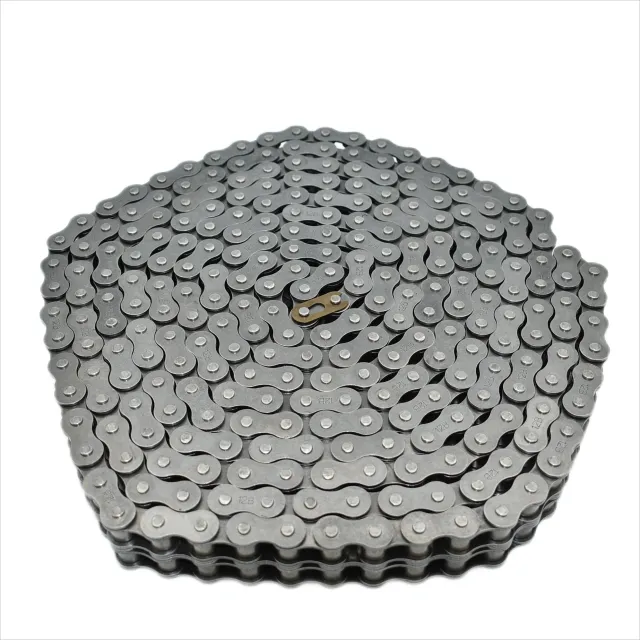
Stainless Steel Transmission Chain, Stainless Steel Roller Chain, Stainless Steel Conveyor chain, Stainless steel chains for bottle conveyor line which is used on bottle filling conveyor lines, other standard ss chain or special ss chain(SS304 chains, SS316 chains, SS316L chains, SS conveyor chains, SS304 conveyor chain, SS316 conveyor chain) all available
We have special technolodgy to arrange more hardness on SS chains plate as per the request of famous chains factory in Europe
We have many OEM chain factory customer from Europe and our stainless steel chain quality is similar to the A quality in the world
We are professional supplier of chains:
1. Bicycle chain: 408, 410, 415
2. Motorcycle chain: 04C, 25H, 06C, T3, 270H, 415H, 420, 420L, 425, 428, 428H, 520,
525, 530
3. ASA roller chain: 35, 40, 41, 50, 60, 60H, 80, 80H, 100, 120, 140, 160, 200, 240
(Catalog)
4. Chain (British standard): 05-B, 06-B, 08-B, 10-B, 12-B, 16-B, 20-B, 24-B, 28-B,
32-B, 40-B (Catalog)
5. Large pitch chains: 100, 100H, 120, 120H, 140, 140H, 160, 160H, 180, 200, 240
6. Extend-pitch precision roller chain: 208A, 208B, 210A, 210B, 212A, 212B, 216A,
216B, 220A, 220B, 224A, 224B, 228B, 232B
7. Roller chains for beer buntline conveyor: CK-70S, CK-100S, CK-100SA, CK-100SC, CK-133XA,
CK-140X, CK-140XA, CK-150X, CK-150S, CK-154X, CK-155X, CK-155XA, CK-160X, CK-160XA, CK-160XB, CK-160XC, CK-165X, CK-165XA, CK-169, CK-180X, CK-180XA, CK-200S, CW-102, CW-127
8. Implement roller chains for conveyors: 81X, 81XH, 81XHH, CA550, CA555, CA620
9. Multi strand sizes available; Up to 5 strands, for select size standard attachment
Available
10. Chains from 04b~16b are with spring clips, others are riveted; Cottered design
Is available for size 80 to 240
11. Stainless steel chain and nickel plated chains is available; Special design also available
(i. E., oven conveyor) and we can produce as per material your requests, usually stainless steel chain material is SS304, if you need SS316 or SS316L etc. It is available too
Our conveyor chains are as following items:
Short pitch, double pitch conveyor roller chain:
1)European standard short pitch roller conveyor accessories: A1 – WSK2
2)European Standard Short Pitch Hollow Pin Chains and accessories: 08BHP – 12BHP
3)European standard short pitch bending roller conveyor: 08BSB, 10BSB, 4)12BSB
4)European standard double pitch conveyor chain: C208B – C232BL
5)American Standard Short pitch conveyor chain attachments: A1 – WSK2
6)American Standard Short Pitch Hollow Pin Chain: 40HP – 80HP
7)American Standard short pitch bending roller conveyor: 35SB – 80SB
8)American Standard Double pitch conveyor roller: C2040 – C2162H
9)American Standard Double pitch conveyor roller attachment: A1 – WSK2
10)American standard double pitch hollow pin chain: C2040HP – C2082HP
11)American Standard Double pitch conveyor roller scoliosis: C2040SB, C2050SB, C2060SB
12)American standard double pitch conveyor roller Plastic Large: C2042D – C2102HD
13)American Standard controllable beat conveyor (speed chain): C2030VR – C2080VR
14)American Standard side-mounted conveyor roller (short pitch double pitch): 40PSR – 100PSR; C2040PSR – C2100PRS
15)American Standard overhead plastic roller conveyor chains (short pitch, double pitch and long pitch): 40TR – 100TR; C2040TR – C2100TR
| Material: | Alloy |
|---|---|
| Structure: | Roller Chain |
| Surface Treatment: | Polishing |
| Chain Size: | 1/2"*11/128" |
| Feature: | Fire Resistant, Oil Resistant, Heat Resistant |
| Usage: | Transmission Chain, Drag Chain, Dedicated Specia |
| Customization: |
Available
| Customized Request |
|---|
Can an industrial chain be retrofitted to an existing conveyor system?
Yes, an industrial chain can be retrofitted to an existing conveyor system in many cases. Retrofitting involves replacing the existing conveyor belt or alternative power transmission system with an industrial chain to improve performance, increase load capacity, or meet specific application requirements. Here are the key considerations for retrofitting an industrial chain:
- System compatibility: Before retrofitting, it is essential to evaluate the compatibility of the existing conveyor system with an industrial chain. Consider factors such as the structure, design, and components of the conveyor system to ensure proper fit and functionality.
- Chain selection: Choose an industrial chain that is suitable for the specific application requirements and aligns with the load capacity, speed, and environmental conditions of the conveyor system. Consider factors such as chain type, pitch, material, and lubrication requirements.
- Drive system adaptation: Retrofitting an industrial chain may require adjustments to the drive system of the conveyor. This may involve replacing the existing drive components or modifying the drive mechanism to accommodate the chain drive.
- Installation and alignment: Proper installation and alignment of the industrial chain are crucial for optimal performance. Ensure that the chain is tensioned correctly, aligned with the sprockets, and properly lubricated.
- Maintenance and monitoring: Implement a maintenance plan to regularly inspect and lubricate the industrial chain. Monitor the chain’s performance, including tension, wear, and any signs of failure, to ensure smooth and efficient operation.
- Safety considerations: Retrofitting an industrial chain requires adherence to safety standards and guidelines. Ensure that the retrofitting process does not compromise the safety of personnel or the integrity of the conveyor system.
It is recommended to consult with an experienced engineer or conveyor system specialist when retrofitting an industrial chain to an existing conveyor system. They can provide expert advice, conduct a thorough assessment, and ensure a successful retrofit that improves the performance and reliability of the conveyor system.
What are the noise levels associated with industrial chains?
The noise levels associated with industrial chains can vary depending on several factors, including chain design, lubrication, and operating conditions.
Chain Design: The design of the industrial chain, including the type of chain and its construction, can impact noise levels. Chains with smoother surfaces and precision manufacturing techniques tend to produce less noise.
Lubrication: Proper lubrication of the chain is essential for reducing noise. Applying a suitable lubricant to the chain can minimize friction and vibration, resulting in quieter operation.
Operating Conditions: The operating conditions of the industrial chain, such as the load, speed, and tension, can also affect noise levels. Higher loads and speeds, as well as inadequate tensioning, can increase noise levels.
Overall, it is important to consider noise levels when using industrial chains, particularly in noise-sensitive environments. Implementing proper chain design, regular lubrication, and maintaining appropriate operating conditions can help minimize noise and create a more comfortable work environment.
What are the signs of wear and tear in an industrial chain?
Monitoring the condition of an industrial chain is essential to identify signs of wear and tear. Here are some common signs to watch for:
- Chain Elongation: Measure the chain’s pitch to check for elongation. Excessive elongation indicates wear in the chain and can lead to poor performance and premature failure.
- Worn Sprocket Teeth: Inspect the sprocket teeth for signs of wear. Worn or misshapen teeth can cause the chain to skip or slip, resulting in decreased efficiency and increased stress on the system.
- Chain Flexibility: Assess the flexibility of the chain by bending it. If the chain is stiff or has tight spots, it may indicate corrosion, inadequate lubrication, or worn components.
- Visible Damage: Look for any visible damage on the chain, such as bent links, cracked or broken plates, or missing pins or rollers. These can weaken the chain’s integrity and compromise its performance.
- Excessive Noise: Unusual noise during operation, such as grinding, rattling, or squeaking, can indicate a problem with the chain. It may be caused by misalignment, inadequate lubrication, or worn components.
- Increased Friction: Check for excessive heat or signs of friction, such as discoloration or hot spots. Increased friction can accelerate wear and lead to premature failure.
- Poor Tension: Assess the chain’s tension by checking for slack or excessive tightness. Improper tension can cause the chain to wear unevenly and affect its performance.
Regular inspections and maintenance are crucial to identify these signs of wear and tear. Addressing issues promptly, such as replacing worn components or adjusting tension, can help prolong the life of the industrial chain and prevent unexpected failures.


editor by CX 2023-07-20