
Purpose-engineered heavy-duty chains delivering zero-compromise performance in one of the world’s most thermally aggressive and mechanically demanding industrial environments.
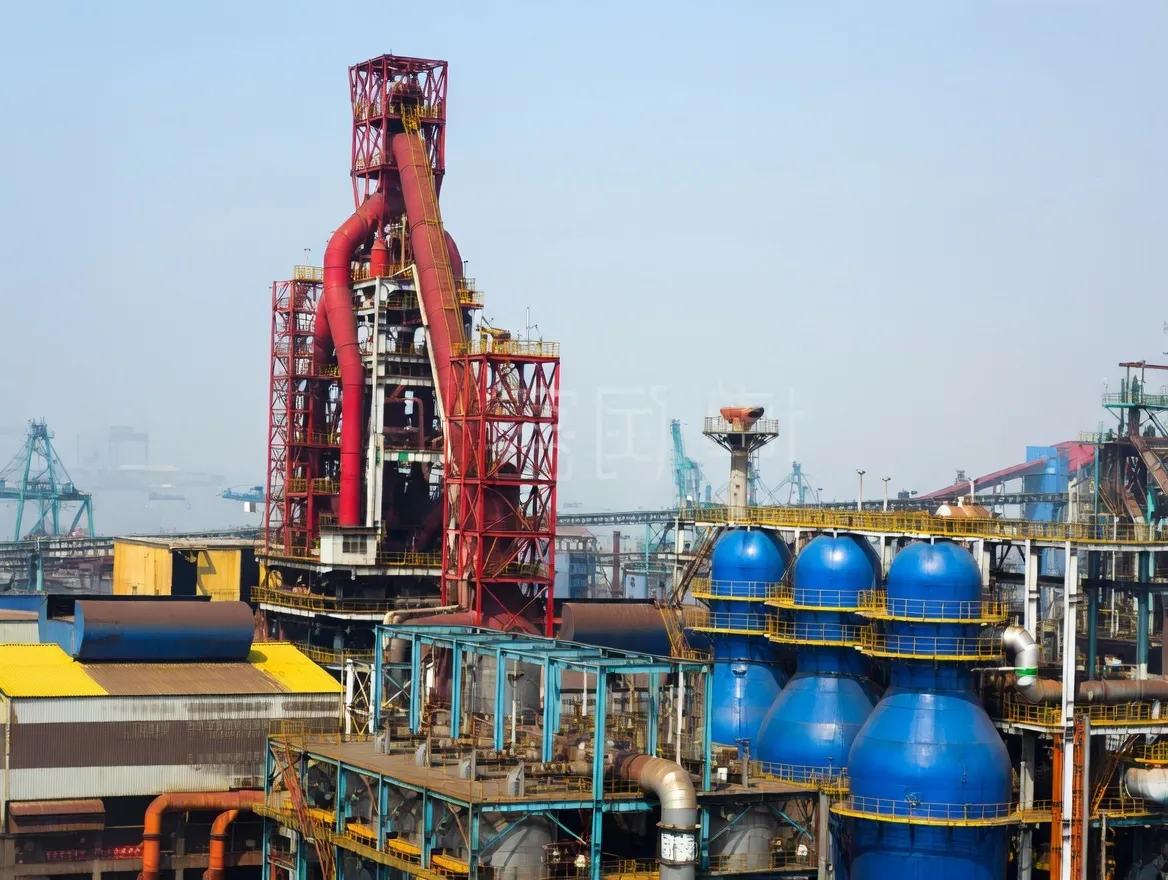 Blast furnace top charging systems occupy the nerve centre of any integrated steelmaking plant. Every tonne of hot metal produced depends on the continuous, precisely metered delivery of iron ore, sinter, coke, and limestone into the furnace shaft — a process repeated hundreds of times per shift, around the clock, without pause. At the physical heart of these charging mechanisms, industrial chains absorb the combined stresses of extreme thermal cycling, heavy impact loading, relentless abrasive dust, and corrosive furnace gas atmospheres. Mega chain solutions, purpose-engineered for metallurgical duty, have become the specification of choice for blast furnace operators across the United Kingdom. The combination of heat-resistant alloy steels, close-tolerance machined components, and chain geometry optimised for skip hoists, inclined plate feeders, and bell-less top charging conveyors makes mega chain the rational selection whenever production continuity is a non-negotiable commercial requirement. When the furnace is producing, there is no margin for compromise on the chain that keeps it fed.
The UK steel industry operates some of the largest integrated blast furnaces in Europe, with major sites in South Wales, South Yorkshire, Scunthorpe, and the North East processing millions of tonnes of raw burden materials every year. At these plants, a single unplanned chain failure can halt casting operations for anywhere between six and twenty-four hours, generating direct losses measured in tens of thousands of pounds per hour alongside the reputational cost of delayed downstream supply. Correctly specifying a mega chain — matching pitch, breaking load, material grade, surface treatment, and lubrication compatibility to the precise duty cycle of each charging position — is a procurement decision with direct and quantifiable impact on plant profitability. The engineering team behind Mega Chain brings 18 years of dedicated application experience in metallurgical chain systems, and every product supplied reflects that deep operational understanding of what blast furnace environments genuinely demand from a drive chain in continuous service.
Mega Chain blast furnace top charging chains — engineered and tested for UK metallurgical service conditions
The Extreme Operating Environment of Blast Furnace Top Charging
No other application in the steelmaking process places as wide a range of simultaneous mechanical demands on a drive chain as the blast furnace top charging system. Chains operating in skip hoist and conveyor charging positions must function continuously at ambient temperatures that can exceed 400°C at the furnace throat, while simultaneously managing tensile loads that fluctuate sharply with each bucket fill-and-dump cycle. The burden materials themselves — iron ore lumps, sinter, and high-temperature coke — generate severe impact loading at each transfer point, progressively grinding pin and bush surfaces when the wrong chain specification is deployed. Furnace gas atmospheres introduce sulphur compounds, carbon monoxide, and water vapour that accelerate oxidative corrosion on unprotected chain components. Grit and fine ore dust act as an abrasive grinding compound in every articulating joint, and heat soak over a long campaign gradually changes the microstructure of inferior alloy steels, reducing strength and ductility long before visible surface wear becomes apparent. Any industrial chain specified for this duty must simultaneously resist heat, impact, abrasion, chemical attack, and cyclic fatigue loading — precisely the combination of performance properties that defines the mega chain product range developed specifically for blast furnace top charging applications across the United Kingdom.
How Mega Chain Technology Performs Under Blast Furnace Operating Conditions
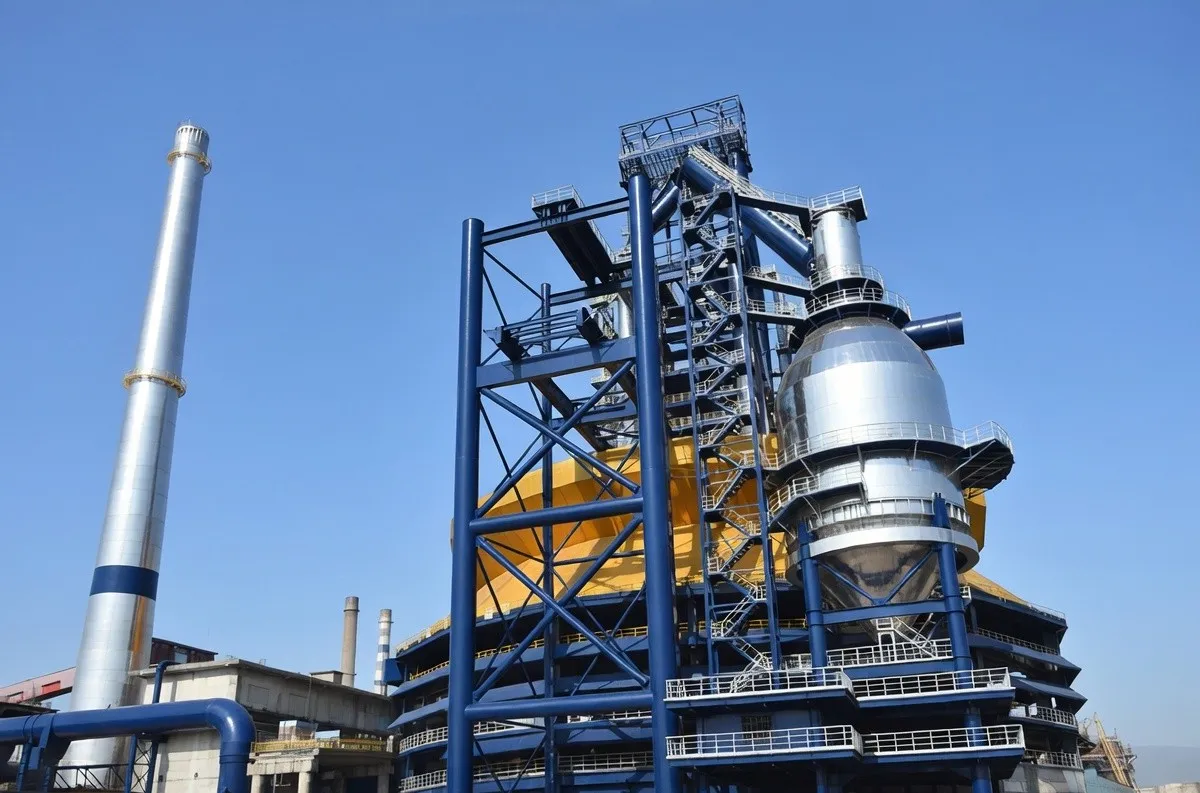 The engineering philosophy behind mega chain for blast furnace top charging applications begins with material selection at the design stage, long before any metal is cut. Outer and inner plates are manufactured from high-manganese alloy steel that retains yield strength and Charpy impact values at elevated temperature, while proprietary heat treatment cycles produce a hardness gradient across the plate cross-section — hard at the surface for wear resistance, tougher at the core for fatigue and impact tolerance. Pins are produced from case-hardened nickel-chromium steel with surface hardness values in the range of 58–62 HRC, providing a wear-resistant contact surface against the precision-honed bush bore. The bush-to-pin interference fit is maintained within tolerances that prevent micro-movement under cyclic loading — a critical detail, because any looseness at this interface translates directly into accelerated pitch elongation and early chain failure. Rollers, where fitted, are manufactured to the same standard, with case depths engineered to survive the abrasive burden environment of a charging conveyor. High-performance mega chain grades for blast furnace duty utilise a high-manganese austenitic alloy which exhibits work-hardening behaviour in service — meaning the chain surface actually hardens further under the abrasive action of ore dust, rather than wearing rapidly as a standard heat-treated steel would. The overall assembly is engineered so that every component reaches its designed wear limit at approximately the same point in service life, avoiding the costly scenario where one weak component forces early replacement of an otherwise sound chain run.
Technical Performance Parameters: Mega Chain for Blast Furnace Top Charging
Core Advantages of Mega Chain in Blast Furnace Top Charging Applications
High-Temperature Durability
Mega chain blast furnace grades retain full structural integrity and dimensional stability at operating temperatures up to 500°C. Standard carbon steel chains begin to lose meaningful tensile strength above 250°C, making them unsuitable for positions close to the furnace throat. This thermal resilience translates directly into longer service intervals, fewer emergency replacements, and maintenance team access to the most inaccessible positions in the charging circuit only during planned outages.
Superior Abrasion Resistance
Deep case-hardened pins and precision-honed bush bores reduce the rate of joint wear to a fraction of that seen in standard commercial chain grades. In practical blast furnace operation, this means maintenance teams spend measurably less time monitoring chain elongation and more time on value-adding work. Mega chain abrasion resistance ratings are validated by independent laboratory testing to ASTM G65 and ISO 6945 standards, giving procurement teams defensible data for total cost of ownership calculations.
Impact and Fatigue Tolerance
Repeated shock loading from burden materials dropping onto conveyor pans and skip buckets generates high-cycle fatigue stress in every chain link. Mega chain plate geometry is specifically designed to distribute these stress concentrations away from pin-hole edges — the classic crack initiation site in fatigue failures. Empirical data from UK blast furnace installations shows fatigue life extended by 40–60% versus generic heavy chains at an equivalent nominal breaking load, under the same operating conditions.
Full Custom Engineering
No two blast furnace charging systems are dimensionally identical, and standardised off-the-shelf chains rarely match the OEM-specified geometry precisely. Mega chain is available in fully custom configurations — non-standard pitch, special attachment plates, extended pins for bucket mounting, hollow pins for lubrication circuits, and bespoke coatings for specific atmospheric conditions. Every custom mega chain order is supported by a documented application engineering review before manufacture begins.
Full Traceability Documentation
Every mega chain batch supplied for blast furnace service includes a fully traceable material test certificate covering chemical composition, tensile properties, hardness results, and dimensional inspection records. Proof loading to 50% of minimum breaking load is performed before despatch and recorded on the accompanying quality documentation. This level of traceability satisfies the record-keeping requirements of UK industrial safety management systems and supports maintenance engineers in demonstrating compliance during internal and external audits.
Proven UK Field Performance
Mega chain products are currently in service across multiple blast furnace installations in the United Kingdom, in both skip hoist and bell-less top charging configurations. The performance data gathered from these UK installations informs continuous product improvement and provides prospective customers with real-world reference points against which to evaluate the investment case for upgrading their current chain specification. Site references and performance data are available on request through the Mega Chain UK technical sales team.
Material Science and Construction Behind Mega Chain’s Metallurgical Performance
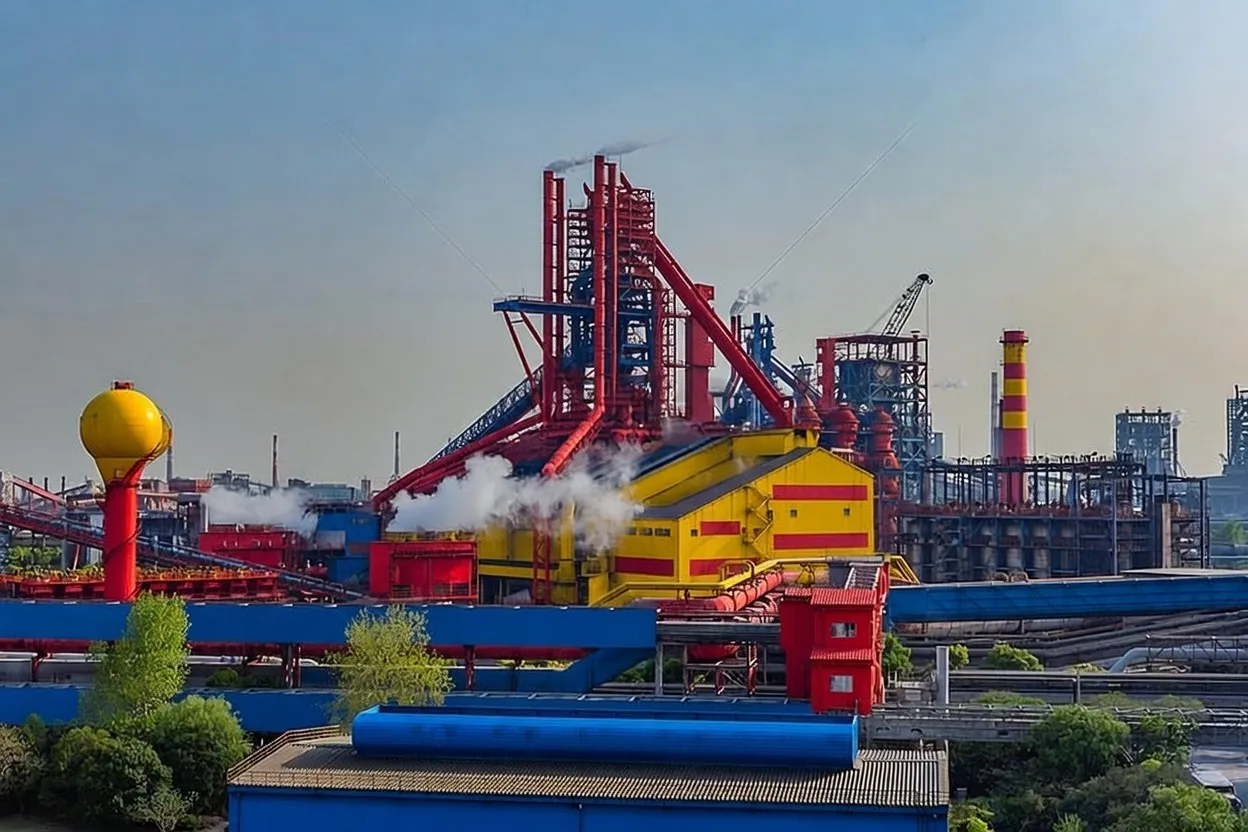 The material architecture used in mega chain production for blast furnace duty reflects decades of documented failures and the hard lessons drawn from them. Outer link plates are produced from 42CrMo4 or equivalent high-tensile alloy steel, quenched and tempered to achieve a Charpy impact value that remains acceptable even after prolonged service at elevated temperature. High-performance grades utilise a high-manganese austenitic alloy which uniquely exhibits work-hardening behaviour in service — the chain surface actually hardens further under the abrasive action of burden dust, rather than wearing rapidly as a conventional heat-treated steel would. Pins are manufactured from 20NiCrMo alloy, carburised to a case depth of 1.0–2.5 mm and hardened to 58–62 HRC, with a tough core deliberately retained to absorb impact loads without brittle fracture. Bush bores are honed to the precise surface roughness specification that optimises the lubricant oil film in loaded joints while resisting grit ingress into the sliding contact zone. The heat treatment and hardening processes are carried out in computer-controlled continuous furnaces, with every batch subject to destructive coupon testing to verify that the specified case depth and core hardness have been achieved before the components progress to assembly. Surface protection treatments — ranging from zinc phosphate priming with high-temperature lubricant to advanced ceramic or DLC coatings for the most aggressive furnace gas environments — are applied as standard to all blast furnace mega chain grades. The result is an assembled chain where every material property has been deliberately selected and verified for the specific demands of top charging service, rather than adapted from a general industrial chain catalogue.
Application Scenarios: Where Mega Chain Operates in the Blast Furnace Charging Circuit
📈 Skip Hoist Drive Chains
In traditional skip hoist charging installations, mega chain forms the mechanical drive link between the hoisting drum and the skip car guide system. These chains must manage extreme acceleration and deceleration forces with each skip cycle while operating in a dusty, high-temperature environment in the upper shaft region. Mega chain skip hoist grades feature extended pin ends for integrated attachment plate mounting and are supplied in dynamically matched pairs to ensure balanced load distribution across dual-track systems throughout the full service life.
🔄 Bell-Less Top Charging Conveyors
Modern bell-less top charging systems use rotating distribution chutes fed by inclined conveyor chains that handle continuous burden material flow to the furnace throat. Mega chain in this application must resist the abrasive flow of ore and sinter across the chain surface alongside the demanding thermal cycling from ambient conditions at the conveyor base to near-furnace temperatures at the upper transfer point. Sealed-joint and O-ring seal mega chain variants are available as a dedicated product line for this specific application challenge.
📡 Burden Stockhouse Apron Feeders
Apron feeder systems controlling burden flow from stockhouse bins to the primary skip or belt conveyor charging circuit use heavy-duty drag chain to carry articulated pan sections. The combination of fully loaded pan weight and material impact loading at the bin discharge point demands the highest breaking load and fatigue rating available in the mega chain range. These systems have been successfully deployed in UK iron ore blending facilities and pellet plants operating at throughputs exceeding 800 tonnes per hour, without unplanned chain failure over extended campaigns.
💥 Coke Plant Charging and Transfer
The coal and prepared coke circuits feeding the blast furnace complex rely on chain-driven gate mechanisms, drag scraper conveyors, and transfer chutes to regulate material flow through dosing and distribution systems. While the thermal demands at the coke plant stage are lower than those experienced at the furnace throat itself, the extremely abrasive and angular nature of metallurgical coke makes mega chain the preferred specification. The hard outer surface combined with a tough core delivers the wear life necessary to maintain charging accuracy and conveying capacity throughout a full blast furnace campaign.
Customer Success Story: Integrated Steelworks, South Wales, United Kingdom
Client Industry
Integrated Steelworks, South Wales, UK
Application
Blast Furnace No. 4 — Skip Hoist & Bell-Less Top Charging
Outcome
Service life extended from 14 months to 31 months
Cost Saving
Approx. £180,000 in avoided maintenance & downtime costs
The Challenge
A large integrated steelworks operating in South Wales had been experiencing accelerated wear in the skip hoist drive chains on its No. 4 blast furnace charging system for several consecutive campaigns. The incumbent chain supplier was delivering service lives of only 12–14 months under the plant’s severe operating conditions — which included peak burden temperatures above 380°C at the furnace throat, throughput rates exceeding 600 tonnes of mixed burden per hour, and a twenty-four-hour continuous operation profile with no scheduled production pauses. Each chain replacement required a planned furnace pause of approximately eight hours, carrying a direct production loss that the maintenance finance team calculated at over £22,000 per event. Elongation monitoring records identified pin and bush wear as the primary failure mechanism, with the chain reaching its 2% elongation replacement threshold well before the next scheduled planned maintenance window. The plant engineering team sought an alternative mega chain solution capable of closing the gap between planned maintenance campaigns without any reduction in the reliability of a furnace producing 3,200 tonnes of hot metal per day for downstream basic oxygen steelmaking.
The Mega Chain Solution
The Mega Chain application engineering team conducted a full duty cycle analysis of the skip hoist system before any chain specification was proposed. The review covered chain path geometry and sprocket tooth form, peak load profiles derived from the hoist drive current monitoring data, thermal exposure mapping across the chain run, and an assessment of the ore and sinter fines contamination present at the articulating joints of the worn incumbent chain. Based on this detailed analysis, a high-manganese alloy mega chain with ceramic-coated pins and factory-fitted O-ring sealed joints was specified. The ceramic pin coating reduced the calculated abrasive wear rate at the pin-bush interface by an estimated 65% compared to standard hardened pins in comparative rig tests conducted at an independent UK materials testing laboratory. The sealed joint design prevented the ingress of fine ore dust into the articulating joint cavity — a critical improvement given that the analysis had identified ore dust contamination as an amplifying factor in the wear mechanism at this specific installation. The chains were supplied as matched sets with a full material test certificate, a dimensional inspection report, and an application-specific lubrication schedule developed in collaboration with the plant’s maintenance team and lubricant supplier.
The Outcome
After 31 months of continuous service under identical operating conditions, the installed mega chain sets showed less than 1.2% pitch elongation — comfortably within the plant’s 2.0% replacement threshold, with estimated remaining service life of a further 6–9 months before the elongation limit would be approached. The operation successfully avoided two previously scheduled chain replacement outages during the monitoring period, eliminating approximately £44,000 in direct maintenance costs and an estimated £136,000 in recovered production across the 31-month window. The maintenance engineering manager reported that the improved chain service life had removed the skip hoist chain from the critical path of the plant’s annual outage planning schedule for the first time in five years. Following this result, mega chain was adopted as the specified standard for all blast furnace top charging chain positions at the facility, with a framework supply agreement in place to ensure replacement chains are available ahead of each planned campaign change.
What Maintenance Engineers and Procurement Teams Say About Mega Chain
We trialled mega chain on our No. 3 furnace skip hoist position after repeated early failures with the previous supplier. The improvement in service life was immediate and measurable — we went from replacing chains every 13 months to running 28 months without touching the elongation limit. The material test certificates and application support the Mega Chain engineering team provided gave us confidence this was a properly engineered product, not just a lucky batch. It is now our standard specification across all four of our operating blast furnace charging positions.
— Senior Maintenance Engineer, Integrated Steelworks
South Yorkshire, UK · Blast Furnace Operations
As a procurement specialist covering capital spares across three blast furnaces in the North East, the total cost of ownership argument for mega chain over cheaper alternatives is genuinely compelling. The upfront cost per metre is higher, but when you account for maintenance labour, planned shutdown costs, and production loss from emergency replacements, mega chain pays for itself well within the first campaign. The team’s willingness to manufacture fully customised chain to our exact OEM-replacement drawings, without minimum order penalties, is something I haven’t found elsewhere in the UK market.
— Senior Procurement Manager, Iron & Steel Group
North East England, UK · Capital Spares Procurement
Our bell-less top charging conveyor environment is genuinely brutal — fine sinter dust everywhere, severe thermal cycling, and high-cycle fatigue loading on every chain link. We had gone through four different chain suppliers in six years before switching to mega chain. The sealed-joint variant they recommended has now been running for over two years without any unplanned intervention. The technical documentation they supplied, including the duty analysis and lubrication schedule, helped us obtain internal sign-off quickly. They clearly understand blast furnace environments in a way that general chain distributors simply do not.
— Plant Engineering Manager, Steelworks
South Wales, UK · Bell-Less Top Charging Systems
Manufacturing Capability and Custom Chain Engineering Services
The Mega Chain manufacturing facility operates as a vertically integrated production environment, maintaining direct control over every stage of the chain manufacturing process — from raw material receipt and incoming chemical verification through heat treatment, machining, assembly, proof loading, and final inspection. This vertical integration is a deliberate strategic choice rather than a legacy arrangement; it reflects the understanding that blast furnace chain performance is determined as much by manufacturing consistency as it is by raw material specification, and that outsourcing key process stages introduces variability that manifests as unpredictable service life in the field. Our production capability spans chains from 50 mm pitch through to 320 mm pitch in standard configurations, with a dedicated custom engineering workshop staffed by engineers who routinely handle the most complex non-standard requirements in the metallurgical sector. In practical terms, our custom service capability means we can match existing OEM chain dimensions precisely from a component drawing, worn sample, or even a site-measured chain run — reproducing discontinued chain types no longer catalogued by the original equipment manufacturer. We regularly develop entirely new chain configurations for modified charging system geometries following blast furnace upgrades, producing prototype chain runs for customer approval testing before committing to production volumes. For UK blast furnace operators managing long-lead capital spares procurement or planning a major furnace reline campaign, Mega Chain can establish buffer stock supply agreements and scheduled call-off arrangements that ensure replacement chains are manufactured and warehoused ahead of the maintenance window, available precisely when the outage schedule demands.
Custom Chain Engineering Capabilities
Non-Standard Pitch
Any pitch from 50 mm to 400 mm, matching OEM or bespoke drawings precisely
Attachment Plates
Custom A1, A2, K1, K2 or fully bespoke bucket and pan mounting configurations
Surface Coatings
Ceramic, nickel-chrome, DLC, or zinc-nickel for specific furnace gas atmospheres
Sealed Joints
O-ring or lip-seal designs for dust-laden and abrasive operating conditions
Hollow Pins
Through-bore pin configurations for pressurised lubrication circuit integration
OEM Replacement
Reverse-engineered from worn samples or discontinued OEM catalogue references
Dedicated Chain Supply and Technical Support for UK Blast Furnace Operators
The United Kingdom maintains one of Europe’s most technically advanced integrated steel industries despite the well-documented commercial pressures the sector has navigated in recent years. Blast furnace operations in South Wales — centred on the major production sites in Port Talbot and associated valley works — alongside the extensive steelmaking complex at Scunthorpe in Lincolnshire and the specialty steel producers in the Sheffield and Rotherham corridor represent generations of capital investment in high-capacity ironmaking that demands world-class components supply and maintenance engineering support. Mega chain has built a specific technical support and supply chain framework for UK blast furnace operators that recognises the distinct procurement protocols, quality assurance expectations, and delivery requirements of British industrial manufacturers. Documentation standards conform to BS EN and ISO requirements routinely specified in UK engineering procurement contracts and standing tender frameworks. A UK-based technical liaison capability is maintained to support site visits, duty cycle analysis, installation consultancy, and chain monitoring programmes for plants that want a managed service approach to their charging chain procurement. Lead times for standard mega chain grades in blast furnace specification are typically four to six weeks from order confirmation, with expedited production scheduling available for urgent replacement requirements following unexpected chain failure events. For major planned outage scenarios — particularly blast furnace relining campaigns where all charging positions may require simultaneous chain renewal — the Mega Chain project scheduling team engages directly with the plant’s outage management function to develop a phased supply programme coordinated with the construction programme. UK freight and logistics partnerships ensure that mega chain arrives at the plant gate on schedule, correctly labelled to the purchase order, and accompanied by a complete quality documentation package that satisfies the traceability requirements of UK industrial safety management systems and plant engineering quality procedures.
18+
Years of metallurgical chain application experience
4–6 wks
Standard lead time to UK delivery
100%
Proof loaded and MTC-documented before despatch
ISO 9001
Certified quality management system
Frequently Asked Questions: Mega Chain for Blast Furnace Top Charging in the UK
Answers from our blast furnace chain application engineering team — with real-world context for UK steel operations
How much does a mega chain for blast furnace top charging systems typically cost for UK steel plants?
Pricing for mega chain in blast furnace top charging applications depends on the chain pitch, breaking load grade, material specification, and any custom features such as sealed joints, attachment plates, or specialist coatings. Standard blast furnace grades typically range from £180 to £650 per metre depending on pitch and specification, while high-performance ceramic-coated or high-manganese grades carry a premium reflecting the additional processing involved. The critical comparison for UK procurement teams is not per-metre price but total cost of ownership over the planned campaign length — a mega chain priced at twice the rate of a generic commercial chain but delivering three times the service life represents a substantial saving when maintenance labour costs, planned shutdown duration, and production loss per outage hour are factored into the calculation. Contact the Mega Chain UK sales team at [email protected] for a detailed quotation specific to your furnace and charging system configuration.
Which mega chain specification is best suited to bell-less top charging conveyors at integrated UK steel mills operating above 3,000 tonnes per day hot metal output?
For bell-less top charging conveyors at high-output integrated blast furnaces in the UK — where throughput exceeds 600 tonnes of burden per hour and the chain operates in a continuous abrasive dust environment with thermal cycling between ambient and temperatures approaching 450°C — the recommended mega chain specification combines a high-manganese alloy plate set with ceramic-coated nickel-chromium pins and factory-fitted O-ring sealed joints. This combination addresses the three principal failure mechanisms observed in high-duty bell-less charging conveyors: pin-bush abrasive wear from ore and sinter fines ingress, thermal fatigue in the link plates, and oxidative corrosion of pin surfaces exposed to furnace gas atmospheres. For plants with bell-less charging systems operating two or more furnaces simultaneously, matched specification across all chain runs simplifies the spare parts holding and chain rotation programmes managed by the engineering maintenance function.
Where can I find a reliable blast furnace top charging chain supplier serving steel plants in South Yorkshire, South Wales, and the North East of England?
Mega Chain operates a dedicated technical sales and application engineering resource covering the full geography of the UK steel industry, including the major blast furnace sites in South Yorkshire and the wider South Yorkshire Steel Belt, the integrated steelworks locations in South Wales including the Port Talbot and associated sites, and the North East England steelmaking cluster. Our UK technical liaison team can be contacted directly through the Mega Chain website or by emailing [email protected]. For urgent replacement enquiries following an unplanned chain failure, a direct engineering contact is available to initiate an expedited production and delivery schedule. Mega Chain maintains relationships with UK-based industrial freight specialists who can deliver from our manufacturing facility to plant gates in South Wales, South Yorkshire, Scunthorpe, and the North East within agreed lead times under framework supply agreements.
What is the expected service life of a mega chain used in high-temperature blast furnace skip hoist applications in UK steelworks?
Service life for mega chain in blast furnace skip hoist applications varies with the specific duty cycle, thermal environment, burden material characteristics, and lubrication management practice at each plant. For standard-grade mega chain in a moderately demanding skip hoist position — operating below 300°C with a well-maintained lubrication regime — service lives of 18–24 months are routinely achieved at UK installations. For high-performance sealed-joint, ceramic-pin mega chain grades installed in the most severe positions with burden temperatures approaching 400°C, documented service lives of 28–36 months have been recorded at multiple UK blast furnace sites, representing a doubling to trebling of the service life delivered by standard commercial chain grades from general industrial suppliers. Elongation should be monitored at intervals of no more than three months using a precision pitch measurement device and plotted against the plant’s replacement threshold to ensure chains are changed at the planned maintenance window rather than reactively after a failure event.
How do I get a custom mega chain price and technical specification for a blast furnace top charging system upgrade or reline project in the UK?
The most direct route to a custom mega chain quotation for a blast furnace top charging upgrade or reline project is to email the Mega Chain technical sales team at [email protected] with the chain pitch, approximate run length, duty cycle description, operating temperature, and any specific material or documentation requirements for the project. If the relevant chain drawings or worn samples are available, providing these allows the application engineering team to produce a dimensionally confirmed specification and competitive price within 5–7 working days. For major reline projects where multiple chain positions require simultaneous renewal, Mega Chain can provide a combined technical submission covering all charging positions, with a single quality documentation package and coordinated delivery schedule. There is no charge for the application engineering review and duty analysis provided as part of the quotation process.
When should blast furnace maintenance teams schedule mega chain replacement to avoid unplanned downtime in top charging operations?
The established best practice for mega chain replacement scheduling in blast furnace top charging is to implement a condition monitoring programme based on regular pitch elongation measurement rather than fixed calendar replacement intervals. Elongation should be measured over a reference length of at least 15 pitches using a calibrated chain measuring device, with measurements taken on load where practical. A replacement plan should be triggered when elongation reaches 1.5% for high-performance mega chain grades and 1.8% for standard grades — providing a comfortable buffer before the 2% engineering replacement threshold is reached. For plants with established planned maintenance outage schedules, the elongation trend data should be used to project the month in which the replacement threshold will be reached and that replacement work should be built into the nearest convenient planned outage window. Mega Chain can provide an elongation monitoring log template and interpretation guidance as part of the supply documentation package for any new blast furnace chain installation in the UK.
What materials make mega chain capable of operating at blast furnace throat temperatures above 400 degrees Celsius without structural degradation?
The thermal performance of mega chain at temperatures above 400°C is enabled primarily by the use of high-manganese austenitic alloy steel in the link plates, a material class that retains its yield strength and ductility at elevated temperatures significantly better than conventional ferritic or martensitic alloy steels. While standard 42CrMo4 steels begin to lose meaningful mechanical properties above 280–300°C due to tempering of the hardened martensite structure, austenitic high-manganese alloys maintain their structural properties through the temperature range encountered in blast furnace top charging service because their strengthening mechanism does not depend on the martensite microstructure. The pin material — 20NiCrMo carburised and hardened — retains adequate surface hardness through the thermal cycles experienced at the furnace throat, particularly when combined with ceramic surface coatings that add an additional thermal barrier layer. The combined material system in high-performance mega chain grades has been validated through independent laboratory thermal ageing tests as well as accumulated field evidence from UK blast furnace installations operating continuously over multiple campaigns.
How does mega chain compare to standard heavy-duty chain in total cost of ownership for UK blast furnace operators running continuous 24-hour casting campaigns?
In total cost of ownership terms, mega chain for blast furnace top charging consistently outperforms standard heavy-duty chain grades when the full cost model is evaluated across a complete blast furnace campaign. The higher procurement cost per metre of mega chain — typically 60–120% above a standard commercial grade equivalent — is more than offset by the extended service life, which at UK blast furnace sites averages 2.2 to 2.8 times the life achieved by standard chains in equivalent duty positions. The financial impact of each avoided chain replacement outage, calculated on the basis of planned shutdown duration, maintenance labour, crane and rigger costs, and furnace production loss, is material: at a furnace producing 3,000 tonnes of hot metal per day, each avoided eight-hour outage represents recoverable production and cost savings in the range of £170,000 to £250,000. Across a 36-month campaign, the total cost advantage of mega chain over standard chain grades at these production levels typically exceeds £350,000 per blast furnace, before accounting for the asset risk reduction associated with eliminating unplanned chain failure events entirely from the operating risk register.
Ready to Specify Mega Chain for Your Blast Furnace Top Charging System?
Send your duty cycle details, chain drawings, or a description of your current chain problems. Our engineering team will respond with a tailored specification and quotation within 5 working days.
© Mega Chain — Blast Furnace Top Charging Chain Solutions for UK Steel Industry | edit by gzl