
Mega Chain for Large
Combine Harvester
Grain Conveying Systems
Engineered for peak throughput, multi-season durability, and zero field failures — the heavy-duty chain specification trusted by leading UK arable contractors across every major crop type and growing region.
🛡 42CrMo4 Case-Hardened
🇬🇧 UK Stock & Despatch
📐 Bespoke Lengths to Order
✍ Senior Applications Engineer · 18+ Years
🌍 United Kingdom · B2B Arable Sector
⏱ 16 min read
The Grain Conveying Chain Is the Highest-Stakes Wear Component in Any High-Output Combine
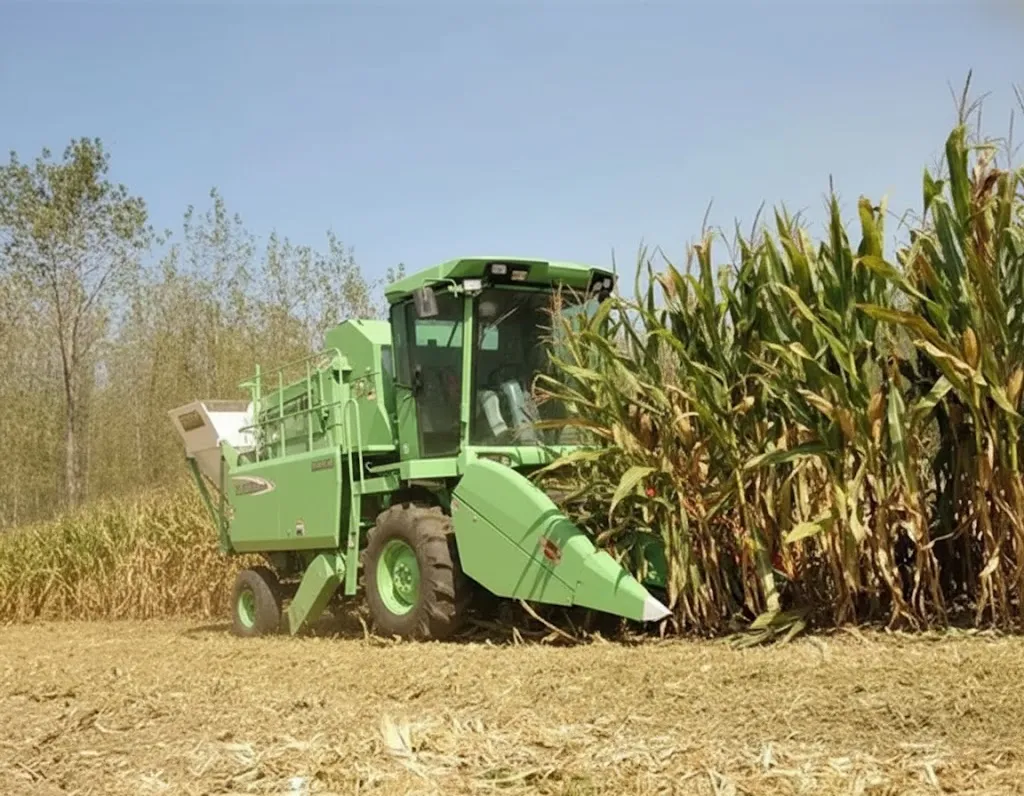 Every tonne of grain harvested from a large combine harvester must pass through a network of internal conveying chains before reaching the grain tank. The clean grain elevator, the tailings returns circuit, the feederhouse crop conveyor, and the grain tank filling system together form a closed mechanical pipeline that operates at sustained high speed across shifts that routinely extend to twelve or fourteen hours in a tight weather window. When that pipeline includes a mega chain assembly engineered specifically for combine grain conveying — with precision-ground pin-bushing interfaces, dual-hardness heat treatment, and factory-pre-charged internal lubrication — the entire system performs with a consistency that standard agricultural chain cannot match. When it includes generic carbon steel chain sourced on price, the degradation of that pipeline begins within the first few hundred operating hours, and the commercial consequences accumulate with every tonne that passes through an elongated, misaligned elevator before the problem becomes visible to the operator.
The UK’s principal arable counties — East Anglia, Lincolnshire, Yorkshire, the Scottish lowlands, and the East Midlands cereal belt — put combine grain conveying chains through one of the most demanding operating environments in European agriculture. Light chalk and sandy soils in Breckland and the Lincolnshire Wolds introduce fine silica particles into the elevator housing that act as an abrasive compound in the running clearance of any chain without a hardened wear surface. Scotland’s persistently humid harvest conditions expose outer plate surfaces to corrosive moisture for a greater proportion of operating hours than anywhere else in Britain. The dense clay profiles of the Vale of York and Cambridgeshire lowlands produce grain with elevated moisture content that stresses the tank conveying system even as the machine is delivering its highest throughput figures. Mega chain has been developed against this specific UK performance brief, and the engineering decisions embedded in its construction — right down to the alloy selection and bore tolerance — reflect eighteen-plus years of documented application experience in exactly these conditions.
This guide covers the full technical picture: the materials and manufacturing quality that distinguish mega chain from standard grain elevator chain, the performance parameters across the GC product range, the conveying positions within a large combine where the upgrade delivers the most measurable benefit, and the documented commercial outcomes that have made mega chain the specification of choice for UK contractors who account for their machinery running costs to the level of cost-per-tonne-harvested.
📧 Request a UK Trade Quote — [email protected]
Response within one working day · Single units and wholesale supply · UK mainland despatch available
How Mega Chain Engineering Addresses the Specific Failure Modes of Combine Grain Elevators
The metallurgical and mechanical design logic that separates heavy-duty grain conveying chain from standard agricultural chain
Pin-Bushing Tolerance Engineering
The running clearance between pin and bushing bore in a mega chain assembly is machined to a tolerance of ±0.015 mm — roughly the width of a human hair. At this precision level, the lubricant film pre-charged into each bushing bore maintains full hydrodynamic separation between the two wear surfaces throughout operating temperature cycling from cold start to sustained high-speed running. Standard agricultural chain, manufactured to ISO 487 tolerances that allow a fit clearance several times wider, cannot sustain this film under the contamination conditions generated inside a working grain elevator housing, where fine grain husk particles enter the pin-bushing clearance within the first few hours of operation and begin grinding away the bore surface from the inside. The mega chain bore tolerance is the single most important manufacturing parameter determining service life in a combine elevator application, and it is the element most difficult to verify visually when comparing chain options at the point of purchase.
Dual-Zone Heat Treatment Protocol
Mega chain pin and bushing components undergo a controlled carburising cycle at 920°C followed by an oil-quench sequence designed to build a wear-resistant surface layer of 0.8 to 1.2 mm depth to a surface hardness of 58–62 HRC, while preserving a tough core hardness of 35–40 HRC capable of absorbing the fatigue loading generated by a clean grain elevator running at 400 to 600 RPM across a fourteen-hour harvesting shift. The distinction between surface and core hardness is critical in combine applications: a pin hardened uniformly to 58 HRC across its full cross-section would be brittle under the cyclic bending stress imposed as the chain articulates over the elevator sprockets, and brittle chain failure inside a running elevator housing is both mechanically unpredictable and operationally dangerous. The dual-zone profile eliminates this failure mode entirely, making mega chain suitable for the most demanding feederhouse and tailings elevator positions where impact loading from stones and dense crop material creates peak stress events well above the sustained operating load.
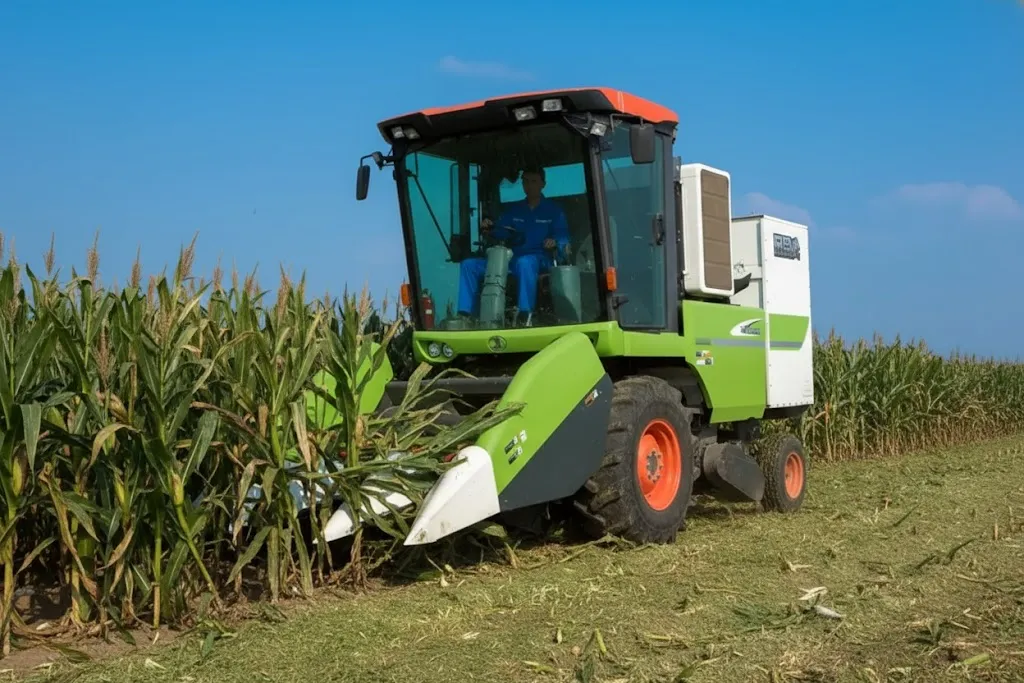 The pitch geometry of mega chain is the third pillar of its engineering differentiation. Every combine platform — John Deere S and X Series, Claas Lexion and Trion, Case IH Axial-Flow, New Holland CR, AGCO Gleaner — uses a specific nominal pitch at each elevator position, and those pitches are not interchangeable. A clean grain elevator chain on a John Deere S790 does not share its pitch with the equivalent chain on a Claas Lexion 8900 or a Case IH 8250. Sourcing mega chain through a manufacturer who holds verified OEM cross-reference data for each platform, and confirms the correct pitch, attachment spacing, and connecting link configuration before despatch, means the chain seats correctly on the elevator sprockets from the moment of installation, runs at the designed tooth-engagement angle throughout its working life, and maintains the bucket spacing geometry that governs grain conveying efficiency from season to season.
GC Series Mega Chain — Full Technical Parameters
Production specifications for the standard range · Custom pitch, length, surface finish, and attachment configuration available to order
| Technical Parameter | GC-38 | GC-50 ★ | GC-63 ★ | GC-76 |
|---|---|---|---|---|
| Pitch (mm) | 38.1 | 50.8 | 63.5 | 76.2 |
| Min. Breaking Load (kN) | 68 | 98 | 135 | 188 |
| Working Load (kN) | 17.0 | 24.5 | 33.8 | 47.0 |
| Pin Diameter (mm) | 10.2 | 12.7 | 15.0 | 17.8 |
| Inner Plate Thickness (mm) | 3.6 | 4.8 | 5.6 | 6.4 |
| Max. Speed (m/s) | 3.2 | 2.8 | 2.4 | 2.0 |
| Temp. Range (°C) | -20 / +80 | -20 / +80 | -20 / +80 | -20 / +80 |
| Pin Case Hardness (HRC) | 58–62 | 58–62 | 58–62 | 58–62 |
| Bore Tolerance (mm) | ±0.015 | ±0.015 | ±0.015 | ±0.015 |
| Plate Material | 42CrMo4 | 42CrMo4 | 42CrMo4 | 42CrMo4 |
| Surface Options | Zn-Ni / SB | Zn-Ni / SB | Zn-Ni / BO | Zn-Ni / BO |
★ GC-50 and GC-63 are recommended standard specifications for clean grain elevator applications on most UK combine platforms. SB = Shot-blast · BO = Black oxide · Zn-Ni = Zinc-nickel electrolytic coating. Contact [email protected] for OEM cross-reference data, attachment configurations, and UK pricing.
Materials Science and Surface Engineering Behind the GC Series
Three layers of material technology working together to outperform standard chain in the UK combine operating environment
42CrMo4 Alloy Steel — The Grade That Changes Everything
The chromium-molybdenum 42CrMo4 alloy used throughout the mega chain GC series delivers a through-hardenability depth that standard C45 or C50 carbon steel cannot achieve. After controlled carburising and quenching, the surface hardness reaches 58–62 HRC while the core retains 35–40 HRC toughness for impact resistance. In abrasive grain environments — particularly the silica-rich soils of Breckland, the chalk of the Lincolnshire Wolds, and the flinty profiles common across East Yorkshire — the hardened surface layer resists the micro-cutting action of grain husk particles at the wear surfaces for measurably longer than any carbon steel chain specification. The alloy also responds more predictably to heat treatment than carbon steel, reducing the batch-to-batch variation in hardness profile that represents a significant quality control risk in high-volume standard chain production.
Zinc-Nickel Electrolytic Coating — 720-Hour Salt Spray Performance
UK harvest conditions create an exceptionally demanding corrosion environment for exposed chain surfaces. Morning dew on standing crop, intermittent rain during late August cutting windows in Scotland and northern England, and the moisture retained by grain cut at above 18% all accelerate oxidation of unprotected steel surfaces. The zinc-nickel alloy coating applied to mega chain outer plates achieves over 720 hours in neutral salt spray (NSS) testing under ISO 9227, compared to approximately 180 hours for standard electrolytic zinc. The nickel component forms a passive oxide barrier that actively resists chloride attack — the mechanism primarily responsible for red rust penetration into standard zinc coatings after repeated wet-dry cycling — and self-repairs minor damage caused by chain flexing over elevator sprockets throughout the operating season.
Pre-Charged Solid Lubrication — Factory-Sealed, Field-Free
Every mega chain pin-bushing bore receives a factory-applied solid lubricant injection under controlled pressure before the chain is assembled and sealed. Unlike conventional grease, which builds up in the pin-bushing clearance over the first few operating hours and then traps the grain dust and husk particles that enter the chain’s running environment, the solid lubricant compound migrates under frictional heat to maintain a protective molecular film without accumulating contaminants. The formulation remains stable across the full temperature range encountered in UK combine operation — from 4°C at the start of an early morning Scottish barley cut through to the 60–65°C bushing temperatures generated by sustained high-speed running during a warm August afternoon in Cambridgeshire. The factory-sealed design eliminates the field lubrication requirement entirely, removing a commonly overlooked source of premature wear: the pin-bushing that runs dry between greasing intervals in the middle of an extended harvest shift.
Seven Performance Advantages Documented by UK Combine Operators
Measurable outcomes reported by arable contractors running GC series mega chain across multi-season harvest programmes
Extended 2–3 Season Service Life
Contractors report elevator chain intervals extending from one season to two or three harvests without replacement. Calculated on cost-per-tonne-harvested over three years, mega chain’s additional purchase cost is typically recovered within the first operating season, with subsequent years running at substantially lower chain maintenance cost.
Reduced Elevator Grain Loss
Consistent pitch accuracy throughout the operating season keeps bucket spacing matched to elevator geometry. Standard chain elongation creates gaps through which grain falls back into the elevator boot. At current UK wheat and barley prices, even marginal elevator grain loss reduction delivers a calculable improvement in harvested yield per hectare across a full season’s programme.
Reduced Sprocket Wear
An elongated chain running on a correctly-profiled sprocket shifts the tooth-contact point progressively toward the sprocket tip with every additional 0.1 mm of pitch elongation. The resulting tooth accelerated wear is an indirect but significant cost of standard chain operation — and one that mega chain’s precision pitch stability eliminates across the multi-season interval between elevator chain inspections.
Extended Tension Adjustment Intervals
Several UK contractors operating mega chain across Lincolnshire and East Anglian fleets have removed elevator chain tension checks from daily inspection routines during the first two seasons of operation. The pre-charged lubrication and dimensional stability that make this possible represent real time savings at the margin of every working day during harvest.
Superior Abrasion Resistance on Sandy Soils
The advantage is most pronounced in arable areas where grain carries fine silica particles from light soils — Breckland Norfolk, South Lincolnshire, East Yorkshire Wolds — into the elevator housing. The 42CrMo4 hardened surface resists the micro-cutting action of these particles at a measurably lower wear rate than any carbon steel chain specification in the same operating environment.
Cross-Platform OEM Compatibility
Mega chain is manufactured to verified OEM pitch and attachment specifications for John Deere S and X Series, Claas Lexion, Trion and Tucano, Case IH Axial-Flow, New Holland CR and CX Series, and AGCO Gleaner. Mixed-brand contracting fleets can consolidate elevator chain supply to a single manufacturer source without carrying multiple chain specification inventories through harvest.
Lower Total Cost of Ownership
A three-season cost model incorporating chain replacement frequency, installation labour, accelerated sprocket wear from elongated chain, and downtime costs during harvest consistently demonstrates a lower total ownership figure for mega chain despite the higher unit price per metre. This calculation is the basis on which the fastest-growing UK arable contractors are currently specifying mega chain across their entire fleet.
Serving UK Arable Contractors From the Fens to the Scottish Lowlands
Grain conveying chain supply, technical support, and custom manufacture available across all principal UK growing regions
The operational demands on a combine grain conveying chain vary significantly between the UK’s principal arable regions — not only because the soil types and crop varieties differ, but because the weather risk during the harvest window, the combine population in each region, and the scale of the contracting businesses that serve each county’s farm base all combine to create a distinct performance brief. Mega chain’s product range has been developed against this regional diversity rather than against a generic European specification, and the application engineering support available through the UK supply network reflects years of documented experience across each of these distinct operating environments. Stock is held for the most common platform specifications across all five principal regions, with custom manufacturing lead times of five to ten working days covering the less common configurations found on older and legacy machines still in productive use across the UK’s arable fleet.
East Anglia
Norfolk, Suffolk, Cambridgeshire, and Essex. High-silica chalky and sandy soils. GC-50 / GC-63 Zn-Ni recommended for John Deere and Claas large-frame fleets across cereal and OSR programmes. East Anglia accounts for the UK’s highest concentration of large-frame combine operating hours per season.
Dominant crops: Winter wheat · OSR · Spring barley
Lincolnshire
England’s largest single arable county. Variable soils from heavy fenland silt to free-draining Wolds limestone. Zinc-nickel mega chain variants are the preferred specification across Lincolnshire’s machinery dealer network. A high proportion of the UK’s largest contract harvesting businesses are headquartered here.
Dominant crops: Winter wheat · Sugar beet area chains · Oilseed rape
Scotland
Short harvest windows, persistent humidity, high grain moisture at cutting. Highest corrosion requirement of any UK region. GC-38 Zn-Ni and GC-50 Zn-Ni are standard stock at Scottish agricultural engineering dealers. The Zn-Ni specification was developed partly in response to documented chain corrosion feedback from Scottish arable operators.
Dominant crops: Spring barley · Winter wheat · OSR (Angus, Tayside)
Yorkshire & Humber
Wolds chalk-flint light soils, Vale of York clay lowlands, Holderness heavy ground. Wide grain moisture variation between fields on the same day demands chain that performs consistently across soil types. Significant spring barley and milling wheat area. Growing base of large-scale contracting operations centred on the East Riding.
Dominant crops: Winter barley · Milling wheat · Spring beans
Client Success: Fen Edge Harvest Services Ltd — Cambridgeshire Arable Contracting
Documented performance outcomes across a three-year transition from standard elevator chain to mega chain on a large-frame combine fleet in East Anglia
Background and the Problem Being Solved
Fen Edge Harvest Services Ltd operates four John Deere X9 combines across a managed programme covering approximately 9,400 hectares of Cambridgeshire and North Hertfordshire arable land each season, cutting primarily winter wheat, winter barley, oilseed rape, and an increasing area of spring beans. The business had operated on a policy of annual pre-harvest elevator chain replacement across all four machines for three consecutive seasons before approaching the Mega Chain applications team for a technical review. The trigger was a season in which two of the four combines required mid-harvest elevator chain replacement after accelerated wear on the chalky soils of their north Hertfordshire contract area — an unplanned stoppage event with a combined commercial cost the business wished to eliminate from future harvest planning.
Specification and Transition Process
Following a detailed review of the X9’s clean grain, tailings, and feederhouse chain positions against the company’s soil profile mix and annual hectarage by crop type, the team specified GC-63 Zn-Ni for the clean grain elevator, GC-38 Zn-Ni for the tailings returns, and GC-76 black oxide for the feederhouse slat conveyor on each machine. Chain length, attachment configuration, and connecting link type were verified against John Deere X9 OEM documentation before the order was placed, ensuring correct sprocket engagement and bucket spacing from the moment of installation on all four combines.
Outcomes Measured Over Two Full Harvest Seasons
Across the two seasons following the transition, all four machines completed their full harvest programmes on the originally fitted mega chain sets without a single elevator chain replacement or unplanned chain-related stoppage. Pitch elongation measurements at the start of the third season confirmed all twelve elevator chains — four machines, three positions each — still within the manufacturer’s recommended service tolerance. The annual chain procurement budget for the fleet was reduced by 44% against the pre-mega chain baseline, including the saving from eliminated mid-harvest replacement events. The business has since standardised mega chain across its full fleet and pre-orders the following season’s chain sets in January to guarantee stock ahead of harvest.
What UK Operators and Dealers Are Saying
Feedback collected from arable contractors, farm managers, and parts distributors across the UK
“We run five Claas Lexion 8900 combines across a Lincolnshire and East Yorkshire programme. Mega chain across all five machines for three seasons — not a single elevator stoppage. The pitch accuracy when we fitted the first set convinced us immediately: sprockets engaged perfectly on every machine without any adjustment. That does not happen with standard catalogue chain.”
Thomas Ashworth — Operations Director
Ashworth Agricultural Ltd · Sleaford, Lincolnshire
“Harvesting in Perthshire, we cut most seasons at grain moisture above 18 percent. Standard chain corrodes through the plating within six weeks of harvest and the surface rust carries abrasive material into the pin bore. The zinc-nickel mega chain specification on our Case IH 8150 has come through two full Scottish harvests without visible corrosion on any surface. I will not consider anything else for northern harvesting conditions.”
Iain MacGregor — Farm Manager
Glenkindie Estate Farms · Perthshire, Scotland
“Customers come to me asking for chain that outlasts the OEM original, and mega chain is what I recommend now without exception. The OEM cross-reference documentation is comprehensive, the custom length service has covered two legacy Claas Dominator configurations my customers thought were unsourceable, and the trade account pricing is competitive for the quality level. It is the right product at the right commercial terms for an agricultural engineering dealer.”
Rachel Donaldson — Parts & Service Manager
Donaldson Farm Machinery · Kings Lynn, Norfolk
Custom Manufacture: Bespoke Mega Chain for Any Combine, Any Configuration
Factory-direct customisation for UK dealers, contractors, and legacy platform operators requiring non-standard specifications
The UK combine fleet contains a substantial population of highly productive machines that are no longer supported by live OEM parts programmes. Claas Dominator and Medion Series, New Holland TX and TR platforms, Case IH 2100 and 2300 Series Axial-Flow, and early-generation John Deere 9000 Series combines use chain configurations — pitches, plate widths, attachment geometries, connecting link types — that have been withdrawn from standard manufacture by their original suppliers and are increasingly unavailable through aftermarket catalogues. The Mega Chain factory maintains full capability to produce custom chain to any specification that can be defined by pitch dimension, working length, attachment style, bore tolerance, surface treatment, and material grade. A physical chain sample, a set of measured dimensions, or an original OEM part number are all sufficient to begin the custom manufacture process. Minimum order quantities remain commercially viable for single-machine operators, and standard lead times of five to ten working days mean a replacement set for a vintage machine can be on-site well before harvest without compromising the quality or specification that the mega chain engineering standard defines.
Any Pitch · Any Length
Pitch range 19.05 mm to 101.6 mm. Working length from 1 m to 50 m. Supplied as cut length with ends, continuous coil, or pre-joined loop to customer dimension and agreed tolerance band.
Attachment Style Matching
K1, K2, A1, A2, extended plates, double-pitch attachments, and proprietary bucket bolt configurations matched to OEM drawings, engineering dimensions, or physical chain samples submitted by the customer.
Surface Finish Selection
Shot-blasted, zinc-nickel electrolytic (Zn-Ni), black oxide, hot-dip zinc, and nickel-chrome options. Surface specification matched to the corrosion and abrasion classification of the target application position on the combine platform.
Small-Batch UK Despatch
Custom runs from 5 m available for single operators. UK mainland standard and express carrier services. Wholesale pricing and advance stocking programmes available for dealers serving multiple combine brands.
📧 Get a Custom Manufacture Quote — [email protected]
Physical samples, OEM part numbers, and technical drawings all accepted · Typical response within one working day
Frequently Asked Questions — Mega Chain for UK Combine Grain Conveying
Conversational answers to the questions UK contractors, engineers, and dealers ask most frequently
Q01
What is the recommended mega chain specification for a John Deere X9 combine harvester clean grain elevator operating on light chalk and sandy soils in East Anglia, UK?
The John Deere X9 clean grain elevator runs a 63.5 mm pitch chain with K2 bucket attachment configuration at the UK market specification. For East Anglian light soils — the chalk and flint of north Hertfordshire and Breckland, the sandy profiles across the Broads fringe and south Norfolk — the GC-63 mega chain in zinc-nickel finish is the recommended specification. The elevated silica content in grain from these soils accelerates pin-bushing bore wear significantly, and the 42CrMo4 case-hardened wear surface of GC-63 is the correct material response to that specific abrasion condition. The Zn-Ni surface treatment addresses the overnight dew and intermittent rain corrosion risk present across most East Anglian harvest programmes. Email [email protected] with your X9 serial number for pitch cross-reference confirmation, attachment configuration details, and UK trade pricing.
Q02
How much does a mega chain grain elevator set cost for a large Claas Lexion combine in the UK, and where can I get a trade or wholesale price?
UK pricing for mega chain grain elevator sets varies based on the pitch series (GC-38, GC-50, GC-63, or GC-76), the working length of the specific elevator on your Claas Lexion model and configuration, and whether zinc-nickel or standard surface finish is specified. Standard Lexion elevator lengths for current models are held in UK stock, while custom lengths for older or configured machines are priced to order. Trade accounts and wholesale pricing are available for agricultural machinery dealers and contracting businesses purchasing across a fleet. The fastest route to a confirmed UK price is to email [email protected] with your Lexion model number, year, and elevator position — a quotation is typically returned within one working day.
Q03
Which mega chain surface treatment is best for harvesting high-moisture spring barley or early oilseed rape in Scotland or the north of England where grain regularly exceeds 18% moisture at cutting?
For harvesting in Scotland, Northumberland, Cumbria, or any northern UK region where grain moisture regularly exceeds 16% at cutting and where chain surfaces are exposed to persistent dew or light rain during harvest shifts, the zinc-nickel electrolytic coating on the GC-38 Zn-Ni or GC-50 Zn-Ni mega chain is the correct surface specification. Zinc-nickel alloy achieves over 720 hours neutral salt spray resistance under ISO 9227 — approximately four times the performance of standard electrolytic zinc — and the passive oxide formed by the nickel fraction resists the chloride attack responsible for the surface rust penetration that standard zinc coatings develop after repeated wet-dry cycling during a Scottish harvest. Black oxide finish remains appropriate for the drier harvest conditions common to southern and eastern English growing regions.
Q04
How often should a large combine harvester clean grain elevator chain be inspected for wear and when should it be replaced when running mega chain instead of standard agricultural chain?
Standard agricultural chain on a combine grain elevator typically requires inspection every 150–200 hours with replacement expected at 500–700 hours depending on soil type and operating conditions. Running mega chain, inspection intervals can be extended to 300–400 hours under most UK conditions, with replacement intervals of 1,000 to 1,500 hours documented on Cambridgeshire and Lincolnshire fleets operating in moderate-moisture conditions. The practical inspection method — a three-link elongation measurement against nominal pitch using a rule or vernier calliper — takes under five minutes and should be completed at each pre-harvest annual service regardless of expected condition. Once pitch elongation reaches 2% above nominal, replacement is recommended to prevent accelerated sprocket wear even if the chain has not failed visually.
Q05
Can mega chain be manufactured in a custom length to fit the clean grain elevator on an older Case IH Axial-Flow combine that the original manufacturer no longer supports with replacement chain?
Yes — supporting legacy and discontinued combine platforms is one of the core purposes of the Mega Chain custom manufacturing service. Older Case IH Axial-Flow models including the 2100, 2300, and early 8000 Series use clean grain elevator chain specifications that have been withdrawn from standard aftermarket production. Provide the OEM chain part number, a measured working length in number of links, the pitch, and the attachment type — or simply send a physical chain sample by post — and a bespoke mega chain set will be manufactured to the original specification and despatched to a UK address within five to ten working days. Minimum order quantities are commercially accessible for single-machine operators. Email [email protected] to begin the custom enquiry process.
Q06
What is the practical difference between mega chain and standard ISO 487 agricultural conveying chain when used on a combine harvester tailings elevator in heavy-cropping UK conditions?
On a tailings elevator in heavy-cropping UK conditions, the difference between mega chain and standard ISO 487 chain is most visibly expressed in pin-bushing bore wear rate. The tailings position carries the most abrasive material in the entire combine system — incompletely threshed heads, plant hull fragments, and soil particles returned from the upper sieve for re-processing. Standard C45 carbon steel chain, at ISO 487 bore tolerances, begins accumulating abrasive particles in the running clearance within the first few operating hours, and bushing bore enlargement accelerates progressively thereafter. Mega chain GC-38 Zn-Ni at ±0.015 mm bore tolerance and 58–62 HRC pin surface hardness resists this process at a documented factor of two to three times the service life of standard chain in the same tailings position and operating environment — a difference that translates directly into fewer replacement events per season across a contracting fleet.
Q07
Where can UK agricultural machinery dealers and parts distributors open a trade account to buy mega chain grain conveying products at wholesale prices with stock support for the harvest season?
UK agricultural machinery dealers and parts distributors can open a trade account and access wholesale pricing for mega chain grain conveying products by contacting the commercial team at [email protected]. A trade account provides tiered pricing based on annual order volume, with stocking recommendations calibrated to the combine brands and platform mix predominant in each dealer’s county catchment area. Early-season forward order programmes with guaranteed stock reservation are available for dealers serving harvest-critical arable regions including Lincolnshire, East Anglia, Yorkshire, and Scotland. Dealers can request physical chain samples for technical evaluation against their customers’ machines before committing to a stocking programme, enabling pitch cross-reference verification on the workshop bench prior to placing a full pre-harvest stock order.
Q08
How does running mega chain on the clean grain elevator of a high-output combine harvester reduce overall grain loss during a UK wheat harvest compared to standard agricultural chain?
Grain loss at the clean grain elevator is directly linked to the pitch accuracy of the chain carrying the elevator buckets. As standard chain elongates — moving from its nominal pitch dimension toward the 2–3% elongation that typically triggers replacement — the spacing between adjacent buckets increases beyond the dimension the elevator housing geometry was designed around. Grain that should be scooped cleanly into a bucket and conveyed to the tank instead falls back into the elevator boot on the return stroke, is re-processed by the bucket on the next pass, or passes through the gap between buckets onto the elevator casing floor. At current UK milling wheat prices of £190–£220 per tonne, even a 0.1% reduction in elevator grain loss per hectare across a 6,000-hectare harvest programme represents a recoverable yield value that makes the investment in mega chain commercially straightforward to justify.
Mega Chain
Heavy-duty grain conveying chain engineered for large combine harvester applications. Purpose-built for UK arable operating conditions across all major platforms and soil types.
Contact
Technical specifications, custom manufacture, UK trade accounts, and wholesale pricing:
[email protected]
Applications
Clean grain elevator · Tailings returns · Feederhouse conveyor · Grain tank filling · All major UK combine platforms · Legacy machine custom supply
© 2026 Mega Chain · All technical specifications subject to confirmation · United Kingdom
edit by gzl