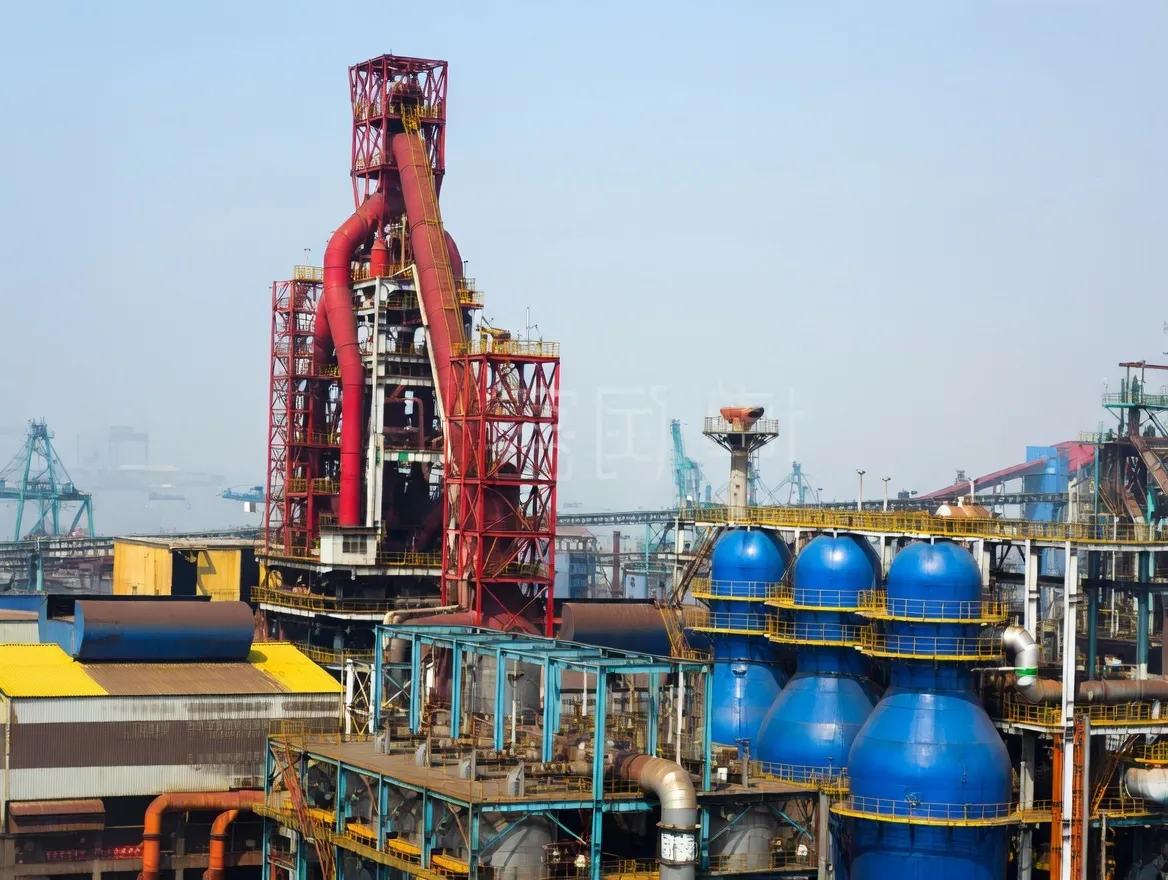
 The blast furnace stands at the very heart of primary steel production, and across the United Kingdom — from the integrated steelworks of South Wales to the specialty facilities in Sheffield and the ironmaking operations at Scunthorpe — the reliability of every component within the furnace system carries direct commercial consequences. At the top of the furnace, the charging system performs one of the most mechanically demanding tasks in the entire production process: delivering precisely measured quantities of coke, sinter, and iron-bearing pellets into the furnace throat in an unbroken cycle that runs twenty-four hours a day, seven days a week. The chains that power these top charging mechanisms are not standard industrial components. They operate in a convergence of punishing conditions — sustained elevated temperatures, heavy shock loading at every start and stop, relentless abrasion from fine burden dust, and the chemical aggression of furnace gases that attack unprotected metal surfaces. When a chain fails at this position, the financial consequences are immediate. Unplanned stoppages at a large UK blast furnace can cost tens of thousands of pounds per hour in lost production, and emergency maintenance under pressure carries its own safety and quality risks.
Mega Chain has been developing and supplying heavy-duty chain solutions for demanding industrial environments for nearly two decades. Our blast furnace top charging chains represent the accumulated result of that experience — shaped by real application feedback from metallurgical operations, refined through materials science, and manufactured to standards that put traceable quality at the centre of every order. From the initial alloy steel specification through heat treatment, precision machining, assembly, surface protection, and final inspection, every step in the production of a Mega Chain blast furnace product reflects the specific demands of the application it will be used in. We do not adapt standard designs. We engineer to the operating conditions.
What Makes Blast Furnace Top Charging Chains So Technically Demanding?
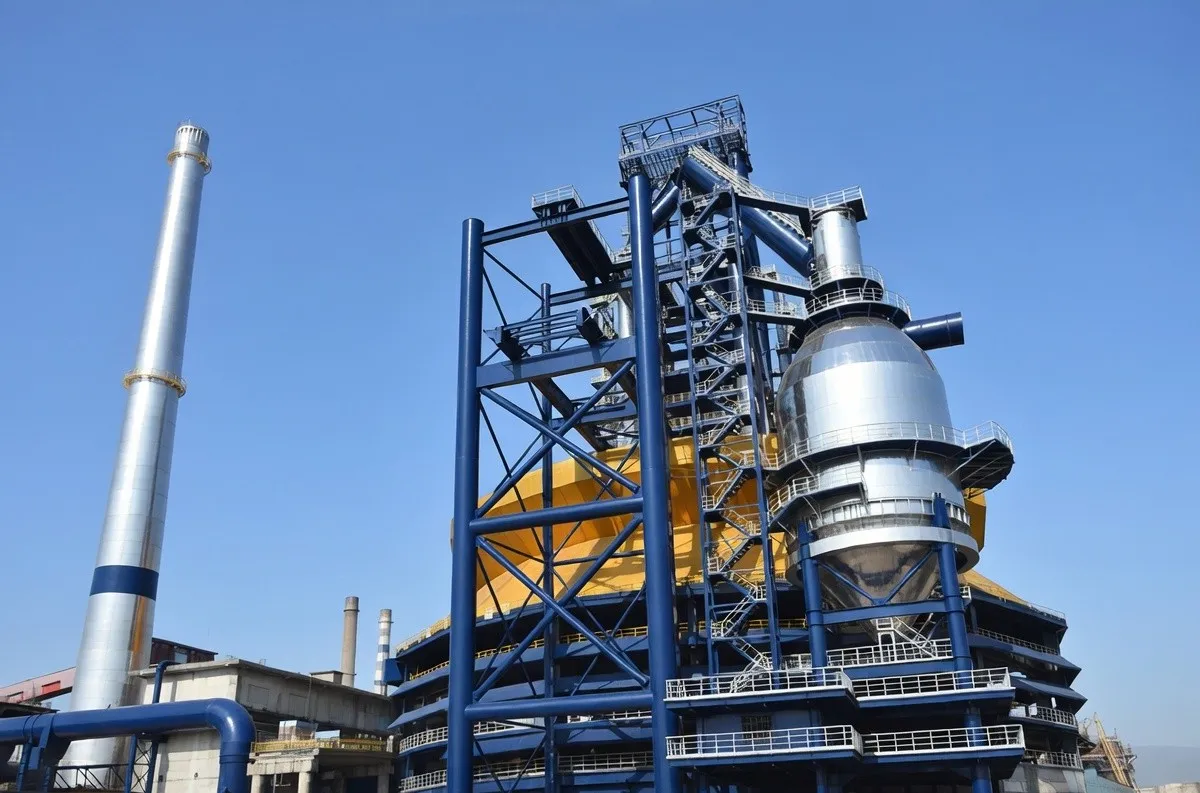 The top charging system of a modern blast furnace encompasses several distinct mechanical sub-systems, each placing unique and often simultaneous demands on the chain components within it. Bell-less top (BLT) systems — now the industry standard across most large UK integrated steelworks — use rotating distribution chutes and burden gates that require heavy-duty chain drives to position and control material flow precisely. Traditional bell-type installations, still operational at a number of smaller UK facilities, rely on skip hoist mechanisms that start and stop under full load dozens of times per hour. In both system types, the chain must perform reliably in an environment that concentrates degradation mechanisms in a way that no standard industrial chain catalogue adequately addresses.
Gas temperatures at the furnace top and uptake duct exits routinely reach 200°C to 350°C during normal operation, and brief excursions beyond this range occur during process upsets. At these temperatures, lubricant viscosity drops dramatically, and any standard grease within the chain joints may carbonise and lose its protective function entirely — leaving metal-on-metal contact at the pin and bushing interface. At the same time, fine particles from the coke and ore burden migrate through any available path into the chain joints, acting as an abrasive lapping compound that grinds away the bearing surfaces from the inside. The combination of reduced lubrication and internal abrasion creates a wear environment that can consume a poorly specified chain within a matter of weeks in the most aggressive positions.
The loading profile adds further complexity. Skip hoist chains experience heavy shock loading at the start of every hoist cycle, as the motor torque ramps up against the static weight of the loaded skip. This shock, repeated hundreds of times every working day, introduces fatigue cycling at stresses that are only manageable if the chain’s material and heat treatment have been specifically optimised for fatigue resistance. The same cycle ends with dynamic braking loads at the top of travel, which impose compressive forces and reversal stresses that accelerate any pre-existing material defects. Mega Chain’s application engineering approach addresses all of these factors before a single component is manufactured, ensuring the specified chain is genuinely suited to the demands of the installation.
Materials Science and Manufacturing Discipline Behind Every Mega Chain
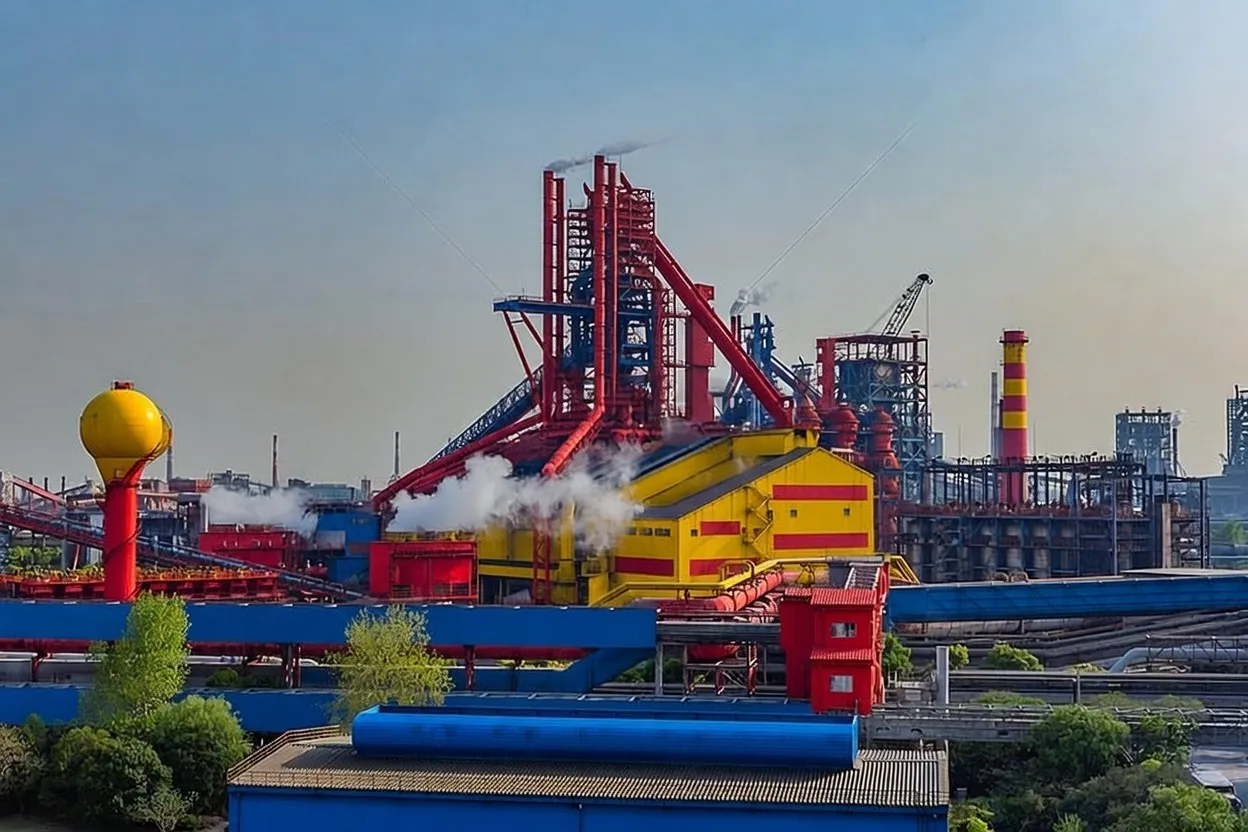 Material selection for blast furnace charging chain applications begins with a clear-eyed assessment of the operating temperature range and the load spectrum the chain will see in service. For the majority of BLT chute drive and burden gate positions, Mega Chain specifies a chromium-molybdenum (Cr-Mo) alloy steel that maintains its tensile strength and toughness characteristics at temperatures up to 350°C. Cr-Mo steels offer a well-understood combination of hardenability, secondary hardening response, and creep resistance that makes them reliable performers in the thermal environment of the blast furnace top. For skip hoist main chains and other positions involving higher shock energy, a nickel-chromium-molybdenum (Ni-Cr-Mo) alloy grade is specified, adding nickel’s contribution to toughness and fatigue crack resistance to the base Cr-Mo performance profile.
Heat treatment is performed entirely in-house using atmosphere-controlled carburising furnaces that eliminate the oxidation and decarburisation risks associated with open-atmosphere processing. Carburising depth, quenching rate, and tempering temperature are all controlled to tight tolerances that deliver a consistent case depth of 1.6 to 2.0 mm and a case hardness of 58 to 62 HRC across the treated surface. Critically, the core hardness and toughness are managed independently through tempering to ensure that the chain can absorb shock loading without brittle fracture while the hard case resists abrasive wear. Hardness verification is carried out on every batch using calibrated Rockwell testing equipment, and metallographic cross-sections are examined periodically to confirm case depth and microstructural quality. These are not sampling checks — for blast furnace chain production, the inspection commitment is comprehensive.
Surface protection at Mega Chain goes beyond a standard paint or coating application. Components are shot-blasted to remove all scale and produce a controlled surface profile, then treated with a zinc phosphate conversion coating that provides corrosion resistance and improves the adhesion of the subsequent high-temperature-resistant topcoat. The topcoat formulation is selected for stability at the operating temperatures encountered in the blast furnace environment, resisting chalking, flaking, or loss of adhesion that would expose the base metal to corrosive gases. For positions where access for re-lubrication is restricted or impractical, Mega Chain supplies chains with solid lubricant impregnated bushings. These bushings release a controlled quantity of lubricant at the pin/bushing interface during operation, sustaining a useful lubricant film throughout the service interval without any external lubricant input.
Technical Parameters and Performance Specifications
Six Reasons UK Steel Producers Specify Mega Chain
Application-Specific Engineering
We conduct a detailed application review before quoting on any blast furnace chain supply. This review examines operating temperature, loading profile, lubrication access, dust environment, and replacement history to confirm the most appropriate material grade, case depth, surface treatment, and bushing type for the specific installation position — not a generic catalogue selection.
In-House Heat Treatment Control
Carburising, quenching, and tempering are all performed in our own atmosphere-controlled furnaces. We do not sub-contract these operations. Every batch is hardness-tested before release, and cross-sectional metallographic checks confirm case depth and microstructure integrity. You receive a product where the claimed heat treatment properties are verified facts, not supplier assumptions.
Full Traceability Documentation
Every Mega Chain order is accompanied by material mill certificates traceable to identified heat batches, heat treatment batch records with hardness data, dimensional inspection reports, and proof load test certificates. This documentation package supports LOLER compliance, insurance requirements, maintenance management records, and third-party audits — reducing the administrative burden on your engineering and procurement teams significantly.
Measurably Extended Service Life
Solid lubricant impregnated bushings, sealed outer plate designs, and the deeper case depth of our metallurgical-grade chains combine to deliver service intervals that consistently outperform standard industrial chain products in blast furnace environments. UK customers across multiple facilities have moved from 5–7 month replacement cycles to 14–22 month intervals after switching to Mega Chain products in comparable applications.
UK Stock and Responsive Delivery
Commonly specified blast furnace chain sizes are held in UK stock, enabling same-week despatch for emergency requirements. For planned maintenance shutdowns, we work to your confirmed schedule with committed delivery dates agreed at order placement. No last-minute airfreight surprises, no currency risk, and dedicated UK account management means your team is always dealing with someone who understands the commercial pressures of UK steelmaking.
Custom Chain Design Capability
Non-standard pitches, special attachment plates, modified side plate profiles, extended pin ends, and bespoke end terminations are all within our manufacturing scope. For legacy blast furnace equipment no longer supported by its original manufacturer, our engineers can reverse-engineer directly from worn samples or OEM drawings to produce an exact replacement chain — saving your facility from costly system modifications simply to accommodate a non-standard component.
Where Mega Chain Performs Across the Blast Furnace Top Charging System
The blast furnace top charging system comprises multiple mechanical sub-systems, each with a distinct operating envelope. Mega Chain supplies engineered chain solutions across all the key positions within this system, with product specifications matched to the requirements of each application location rather than a single compromise specification covering all positions.
| Application Position | Recommended Chain Type | Primary Technical Requirement |
|---|---|---|
| BLT Rotating Chute Drive | Heavy-duty roller chain, Cr-Mo grade | Low elongation under cyclic load, high shock resistance |
| Skip Hoist Main Chain | Forged link chain, Ni-Cr-Mo grade | High MBL, fatigue life > 10^7 cycles, LOLER docs |
| Skip Counterweight Chain | Leaf chain, balanced lacing design | Even load distribution, corrosion resistance |
| Charging Car Traversal Drive | Standard heavy roller chain, sealed joints | Precision pitch consistency, dust exclusion design |
| Burden Gate Actuation | Short-pitch roller chain, fully hardened | Accurate positioning under high cycle frequency |
| Emergency Valve Seal Drive | HT coated chain with solid lube bushings | Guaranteed reliable operation during process upsets |
| Legacy Bell-Type Skip Hoist | Reverse-engineered to OEM or sample specification | Exact dimensional match, upgraded material grade |
Mega Chain’s reverse-engineering service is of particular value to UK steelworks operating blast furnace equipment that is no longer actively supported by its original equipment manufacturer. Where OEM replacement chains are unavailable, delivery lead times have become unacceptable, or pricing has escalated beyond commercial justification, our engineers can produce verified replacement chains from worn samples, partial drawings, or dimensional inspection of the in-situ chain. This service has kept several UK furnaces running without the need for expensive system modifications to accommodate available standard chain sizes.
South Wales Integrated Steelworks: Tripling Skip Hoist Chain Service Life
A major integrated steelworks in South Wales, operating twin blast furnaces producing over 3 million tonnes of hot metal annually, approached Mega Chain with a persistent problem in their bell-less top charging systems. The skip hoist main chains on both furnaces were being replaced every five to seven months — substantially shorter than the 12-month service life the original system specification had anticipated. Each replacement required a planned partial shutdown of the furnace, consuming valuable maintenance window time and a disproportionate share of the annual spares budget. The procurement team had already trialled two alternative standard-range chain suppliers without achieving meaningful improvement in service life.
Mega Chain’s application engineering team was invited to site for a root cause review. Examination of removed chains under magnification revealed a clear pattern: the wear was concentrated at the pin and bushing interfaces, with polished wear tracks extending through the case-hardened layer into the core material on the most worn components. Internal surfaces showed the characteristic scoring pattern associated with abrasive particle contamination — fine burden dust had been bypassing the standard chain seal arrangement and acting as grinding media within the joints. The previous supplier’s chains had a case depth of approximately 1.1 mm, which had been penetrated through by the combined action of abrasive wear and inadequate lubrication at a position where re-greasing access was limited to bi-monthly scheduled outages.
Mega Chain supplied Ni-Cr-Mo grade skip hoist chains with an increased case depth of 1.9 mm, sealed outer plate designs that significantly reduced dust ingress at the joint interfaces, and solid lubricant impregnated bushings that sustained a lubricant film at the pin/bushing contact regardless of external re-greasing intervals. The modified chains were installed during the next planned furnace outage on both units. Over the following twenty-four months of monitored operation, neither furnace required a chain-related unplanned stoppage, and the scheduled replacement interval was extended to over eighteen months — a tripling of the previous achieved service life.
* Results based on documented service performance at a UK integrated steelworks installation. Individual outcomes may vary according to specific furnace operating conditions and maintenance practices.
What UK Steel Industry Professionals Say
We had tried three different chain suppliers on our blast furnace skip hoist before we came to Mega Chain. The difference in service life was obvious within the first maintenance inspection. Their engineers actually came to site to understand what was happening with our worn chains before recommending a solution, rather than just sending a catalogue. That level of involvement made all the difference in getting the specification right for our particular conditions.
The documentation package that comes with every Mega Chain order is precisely what our procurement and HSE functions require. Full material certificates, heat treatment records, and proof load data — all traceable and structured for our maintenance management system. For a safety-critical component on a blast furnace, that level of traceability is not optional. It makes our internal audits significantly less stressful and keeps our insurance obligations in order.
When we needed a non-standard pitch chain for our older charging car traversal system, Mega Chain was the only supplier willing to treat the job seriously. They reverse-engineered from our worn samples, confirmed the design with us before manufacture, and delivered on schedule. The chain has now been in continuous service for over two years with no measurable issues. For anyone sourcing chains for legacy blast furnace equipment in the UK, I would not look anywhere else.
Manufacturing Capability and Bespoke Chain Services
Mega Chain’s manufacturing facility is configured specifically to support the kind of demanding, application-specific chain production that the UK metallurgical sector requires. Our production floor encompasses precision cold forging of chain components, atmosphere-controlled multi-stage heat treatment, automated assembly with torque-verified pin pressing, multi-stage dimensional inspection using calibrated measurement equipment, and shot-blasting and coating lines capable of processing large-format blast furnace chain products. This vertically integrated structure — where all critical operations are performed under our direct quality management — means there are no quality hand-offs to sub-contractors at the stages that matter most. When the heat treatment specification says 1.9 mm case depth at 60 HRC, that is what leaves our facility, because we verify it ourselves before the chain is assembled.
Custom chain development is one of Mega Chain‘s most important capabilities for the blast furnace sector, and it is one of the services we invest in continuously. Our engineering team regularly works with UK steelworks customers to develop bespoke chain designs that cannot be sourced from any standard catalogue. This covers non-standard pitches in both metric and imperial dimensions, special attachment plate configurations welded or mechanically fixed to outer side plates, modified plate profiles to clear unusual sprocket wheel geometries, extended or reduced pin ends for guide channel arrangements, and chains assembled to precise total lengths with verified end termination hardware. If your charging system was designed to a proprietary or obsolete specification, we can produce an exact replacement — or engineer an improved replacement that retains dimensional compatibility while upgrading the material or surface treatment specification. This customisation capability has directly enabled several UK blast furnace operators to avoid costly system modifications that would otherwise have been the only route to sourcing a compatible chain.
Beyond manufacturing, Mega Chain offers a chain condition assessment service for UK customers who want an objective review of their installed chains’ condition and remaining service life. Our field engineers can attend site during planned outages to measure elongation, assess plate crack initiation, check pin rotation, and evaluate surface condition across the installed chain length. The assessment produces a written report with a clear condition classification and replacement timing recommendation, giving your maintenance planning team a grounded basis for shutdown scheduling rather than relying on conservative fixed-interval policies that frequently result in either premature replacement or unnecessary risk of running beyond safe life. Contact us at [email protected] to request an application review or on-site audit.
Discuss your blast furnace chain requirements with our UK engineering team
Supporting the UK Steel Industry: From Sheffield to South Wales
Mega Chain actively supplies blast furnace top charging system chains to metallurgical and ironmaking operations across the United Kingdom. Our UK customer base spans the integrated steelworks of Port Talbot and the Welsh coastline, the specialty steel producers of Sheffield and the Don Valley, the ironmaking facilities at Scunthorpe, steelworks operations on Teesside, and fabrication and processing operations throughout the English Midlands and Scotland. UK-based customers benefit from stock availability of commonly specified chain sizes for emergency supply, UK-compliant documentation packages that address LOLER 1998 and BS EN standards, dedicated account management by personnel with direct knowledge of the UK steel sector, and field service support that does not require international coordination. We understand that UK steel production operates under unique commercial and regulatory pressures, and our service model is designed around that reality rather than treating UK orders as an extension of an export sales operation. Whether your requirement is a planned annual shutdown supply, an emergency single-chain replacement, or a structured framework agreement covering multiple blast furnace chain positions, Mega Chain has the capability and the commitment to serve you effectively.
Frequently Asked Questions
Administrator note: Apply FAQPage + Speakable Schema markup to the FAQ section above via your WordPress SEO plugin (Yoast SEO or RankMath). Speakable markup targets should reference the FAQ question and answer containers to support voice search visibility across Google Assistant and similar voice search platforms.
Ready to Specify the Right Chain for Your Blast Furnace?
The Mega Chain technical team is available to discuss your application, review your current chain specification, and provide competitive pricing. Contact us today for a no-obligation technical consultation.
✉ Contact Us: [email protected]
edit by gzl