Why Every Link in a Fuel Handling Machine Chain Drive Must Be Flawless
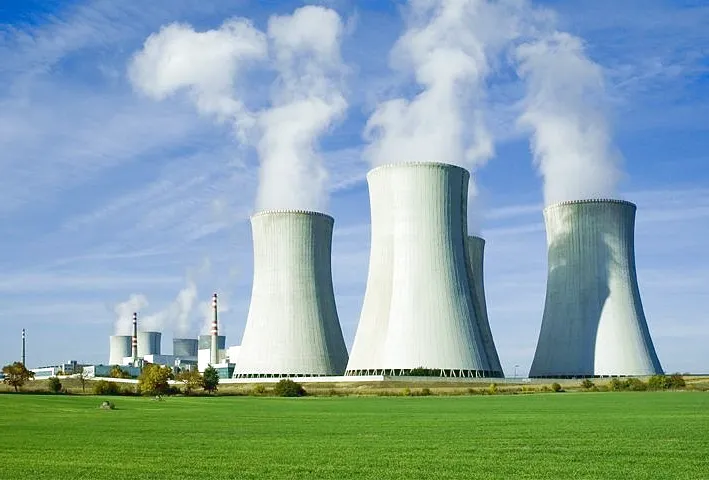 Nuclear power plants demand an extraordinary level of mechanical precision. Every component operating within or adjacent to the reactor environment must perform flawlessly — not just for a day or a year, but across decades of continuous service with virtually zero scheduled downtime. The fuel handling machine, responsible for loading and unloading fuel assemblies in both on-load and off-load reactors, sits at the very core of this operational demand. A chain failure here is not merely a maintenance inconvenience; it can result in costly plant shutdowns, regulatory scrutiny from the Office for Nuclear Regulation (ONR), and safety implications that no UK plant operator can accept. In an industry where every unplanned outage carries a price tag running into millions of pounds per day, the integrity of every drive component is an economic and safety imperative.
Mega chain technology has firmly established itself as the preferred drive solution for fuel handling machines precisely because it delivers the mechanical reliability, radiation tolerance, and load-bearing consistency that nuclear environments require. Across operational nuclear sites in the United Kingdom — from Hinkley Point C in Somerset to the Sizewell complex in Suffolk and Torness in East Lothian — procurement engineers continue to specify heavy-duty roller chains and specialty drive chains that meet the exacting standards of nuclear-grade supply. The combination of certified material traceability, dimensional consistency to ISO 606 and BS/EN standards, and corrosion-resistant surface treatment makes mega chain the engineering choice where compromise is never an option.
Understanding how these chains are designed, what makes them suitable for radiological environments, and where they deliver the greatest value throughout the fuel cycle is essential reading for any UK nuclear maintenance engineer, procurement manager, or reliability team looking to specify the right drive solution for their next planned outage or new-build project. The pages below cover the engineering rationale, real-world performance data, material specifications, and verified customer experience that back every mega chain claim.
Sourcing Mega Chain for your nuclear fuel handling project? Our engineering team is ready.
The Engineering Principles Behind Mega Chain Performance
Radiation Tolerance · Dimensional Precision · Certified Traceability
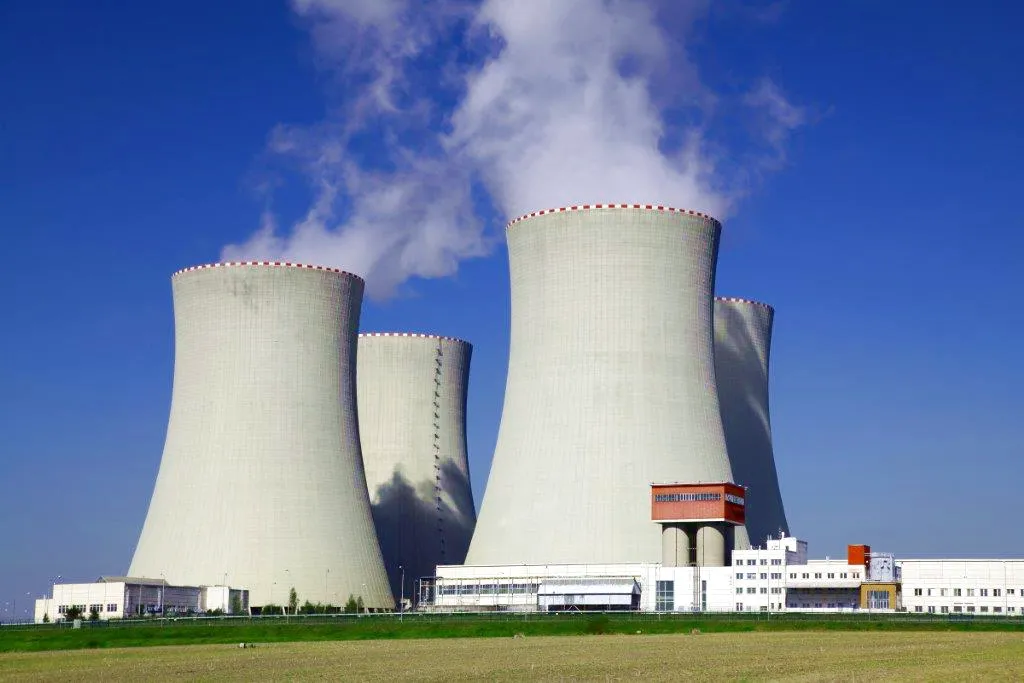 At the mechanical heart of every fuel handling machine lies a chain drive system that must contend with challenges no standard industrial roller chain is designed to face. The operating environment inside a nuclear power plant introduces a unique cocktail of stresses: elevated ambient radiation levels, humidity-laden atmospheres, temperature cycling across refuelling operations, and the weight of fuel assemblies — each of which can exceed 300 kg in a modern PWR configuration. A mega chain engineered for this duty must address each of these stresses simultaneously without sacrificing dimensional stability or fatigue resistance.
The metallurgical foundation of nuclear-duty mega chain starts with Grade 316L stainless steel or high-carbon alloy steel, selected for its documented resistance to radiation-induced embrittlement. Every inner and outer plate is precision-stamped to tolerances tighter than commercial grades, ensuring that pitch accumulation across a 3-metre run remains within ±0.15 mm — a critical requirement when the chain must mesh with a fixed sprocket array that cannot be re-adjusted during a live fuel cycle. The pins, bushings, and rollers are surface-treated with proprietary dry-film lubricant or solid-lubricant impregnation to eliminate the need for oil lubrication in areas where contamination must be avoided, substantially reducing the risk of introducing foreign material into the reactor building.
Beyond the base material, every batch of mega chain produced for nuclear applications comes with full material certification — Inspection Certificate 3.1 per EN 10204, backed by chain manufacturer test certificates (CMTCs) and dimensional inspection reports traceable to UKAS-accredited metrology. This level of documentation is not optional for a UK nuclear procurement; it is a licensing requirement under the Nuclear Industries Security Regulations and ONR’s Supply Chain Quality Assurance framework. Mega chain meets this standard as standard.
Technical Specification: Mega Chain for Fuel Handling Machine Applications
The table below summarises the primary technical parameters for mega chain products configured for nuclear fuel handling machine drive systems. All values reflect production standards; bespoke specifications are available upon request.
| Parameter | Standard Series | Heavy-Duty Nuclear | Custom / OEM |
|---|---|---|---|
| Pitch Range | 12.7 – 50.8 mm | 25.4 – 101.6 mm | Per drawing |
| Material Options | Alloy Steel | 316L SS / Duplex SS | Inconel / Hastelloy |
| Min. Breaking Load | 56 – 400 kN | 150 – 650 kN | Up to 1,200 kN |
| Pitch Tolerance | ISO 606 Class A | ±0.10 mm / metre | ±0.05 mm / metre |
| Operating Temperature | -20°C to +150°C | -40°C to +300°C | Per specification |
| Lubrication | Oil bath / drip | Solid-film / dry lube | Vacuum / lube-free |
| Radiation Resistance | — | Up to 10^7 Gy | Qualified per OEM |
| Material Certificate | EN 10204 2.2 | EN 10204 3.1 | EN 10204 3.2 |
| Surface Treatment | Zinc-nickel plate | Electroless nickel / PTFE | Per project spec |
| Applicable Standards | ISO 606, BS/EN | ISO 606 + ASME B29.1 | RCC-M / ASME NQA-1 |
Six Reasons UK Nuclear Engineers Choose Mega Chain
Performance · Compliance · Longevity · Support
Zero-Tolerance Dimensional Control
Every mega chain link is measured against master gauges calibrated to UKAS standards. Pitch accumulation over any 3-metre run is guaranteed within ±0.15 mm, preventing sprocket skip and assembly jam that could halt a fuel cycle operation mid-transfer.
Radiation-Qualified Material Stack
Nuclear-duty mega chain uses 316L stainless steel plates and pins that have been qualification-tested to cumulative doses exceeding 10^7 Gy. This ensures ductility and tensile strength remain within acceptable limits for the entire plant licence period, eliminating premature replacement costs.
Dry-Film and Lube-Free Options
Foreign material exclusion (FME) is a non-negotiable discipline in every nuclear plant in the UK. Mega chain products for fuel handling zones can be supplied with solid PTFE-impregnated bushings or MoS₂-based dry-film lubricants that eliminate oil contamination risk while maintaining wear life.
Full Documentation Package
Every order includes EN 10204 3.1 material certificates, dimensional inspection reports, hardness test records, and chain manufacturer test certificates (CMTCs). Our quality documentation integrates directly into EDF Energy and NNB GenCo vendor qualification systems, reducing your procurement timeline significantly.
Extended Service Life
Through induction-hardened pins and specially heat-treated plates, mega chain for nuclear duty achieves wear-elongation performance that routinely exceeds 20,000 operating hours before the 3% elongation limit — the standard replacement threshold used by most UK fuel handling machine OEMs — is reached under rated load conditions.
OEM Drop-In Compatibility
Mega chain is manufactured to match existing sprocket profiles from leading fuel handling machine builders including Orano, GEH, and Westinghouse. Our engineering team can reverse-engineer worn or obsolete chains from drawings, sample chains, or dimensional inspection reports, supplying fully interchangeable replacements on short lead times.
Material Science and Working Principles Behind Nuclear-Duty Mega Chain
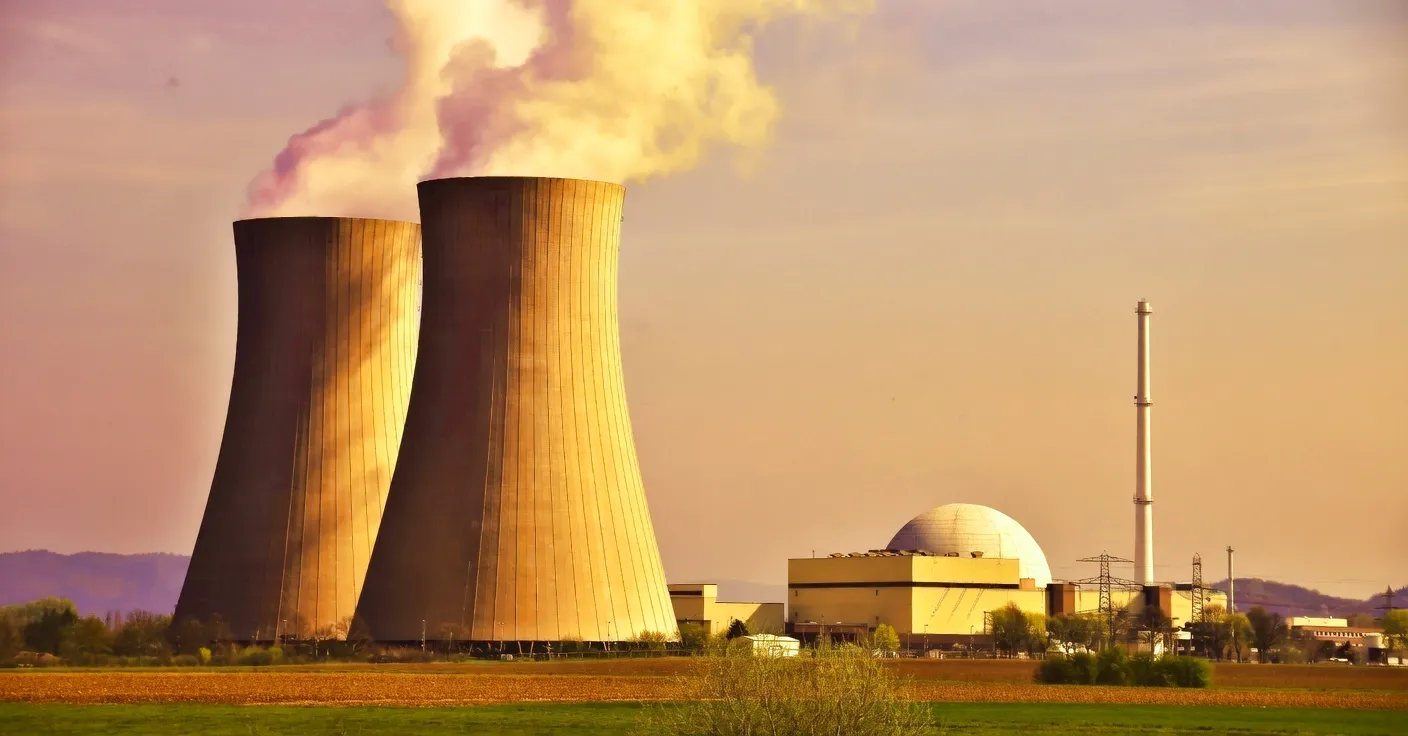 The chain drive in a nuclear fuel handling machine operates on the same basic mechanical principle as any roller chain system: the inner links’ bushings mesh with sprocket teeth to transmit torque, while the outer links hold the assembly together. What distinguishes a nuclear-grade mega chain from a standard industrial equivalent lies entirely in the quality and precision of execution at every manufacturing step — from raw material selection to final proof-load test.
The inner plates and outer plates are cut from cold-rolled strip steel or austenitic stainless steel sheet using precision blanking tools that maintain consistent geometry lot-to-lot. Each plate undergoes a controlled hardening and tempering cycle — typically to 40–48 HRC for alloy steel variants — in order to achieve the right balance between hardness for wear resistance and toughness to prevent fatigue cracking under the dynamic loads generated by a fuel assembly’s inertia during acceleration and deceleration phases. In stainless steel variants, the metallurgical approach shifts to work-hardening and precipitation treatments rather than through-hardening, since austenitic grades respond differently to thermal treatment.
Pins are ground to h6 tolerance and press-fitted into the outer plates at a defined interference, creating a joint that resists relative rotation under the millions of articulation cycles a fuel handling machine chain will experience across a 10-year refuelling programme. Bushings are either sintered bronze (for oil-lubricated zones) or PTFE-lined steel tubes (for lube-free nuclear areas), with the bushing inner diameter precisely sized to provide a running clearance of 5–15 microns relative to the pin — tight enough for smooth articulation, loose enough to prevent galling under the ambient radiation levels expected inside the reactor building.
Rollers, where fitted, are precision-turned to achieve roundness within 5 microns, substantially reducing the impulsive loading that non-round rollers generate as they engage each sprocket tooth. This matters enormously in fuel handling machines, where structural noise and vibration must be minimised to protect both the fuel assemblies and the sensitive position-feedback encoders that tell the control system exactly where each assembly is at every millisecond of the transfer sequence.
Where Mega Chain Is Used in Nuclear Fuel Handling Operations
From reactor head to spent fuel pond — the complete transfer chain
🔥
On-Load Refuelling Machines (AGR)
Advanced Gas-cooled Reactors at Torness and Hunterston B require fuel handling machines capable of operating in a CO₂ atmosphere at elevated temperature. Mega chain drive systems handle hoist and traverse functions under these conditions without polymer degradation.
⚡
PWR Refuelling Machines (Sizewell B)
At the UK’s only Pressurised Water Reactor, the polar crane and refuelling machine use chain drive systems for mast travel and upender functions during outage operations. Mega chain products are dimensioned to match OEM specifications precisely for drop-in replacement.
📋
Spent Fuel Storage & Transfer
Underwater transfer machines in spent fuel pools use chain drives to move fuel racks and flask handling bridges. The fully submerged environment demands stainless mega chain with no oil lubrication and exceptional crevice-corrosion resistance across extended storage periods.
📦
Flask Handling & Rail Transfer
Transport flasks weighing up to 120 tonnes are loaded onto rail vehicles using heavy-duty chain-driven lift and tilt mechanisms. Mega chain configured as leaf chain (BL series) or block chain handles these extreme static and dynamic loads with documented safety factors exceeding 5:1.
⚙
Decommissioning & Waste Retrieval
As older UK reactors enter decommissioning phases, remotely-operated retrieval machines rely on chain drives to manoeuvre waste containers in high-dose environments. Mega chain for these applications is specified with enhanced radiation hardness and remote-connection end links for tooling-free installation.
Customer Success Story
Real-world mega chain performance verified by independent inspection
Case Study
UK | Nuclear
Sizewell B Outage Chain Replacement — Suffolk, England
EPC Contractor: Major UK Nuclear Services Provider | Operator: EDF Energy
Background: During a scheduled 12-week refuelling outage at Sizewell B — the UK’s only operating PWR, located on the Suffolk coast — the maintenance team identified accelerated wear on the mast hoist chain of the refuelling machine. The incumbent chain supplier could not meet the lead-time requirement for a nuclear-certified replacement with EN 10204 3.1 documentation within the outage window, placing the restart schedule at risk.
Solution: The EPC contractor approached Mega Chain’s UK technical sales team. Within 48 hours, our engineers produced a reverse-engineered dimensional report from the worn chain sample provided, confirmed material compatibility with the reactor environment, and committed to supplying a 25.4 mm pitch, duplex stainless steel roller chain with full 3.1 certification in 18 working days — ahead of the critical path deadline. A dedicated quality hold point was established with the EPC’s third-party inspector, and the chain was witness-tested on our in-house proof-load bench to 150% of rated working load.
Outcome: The mega chain replacement was installed, function-tested, and accepted by the plant’s mechanical engineering team four days before the restart gate. Post-installation wear monitoring over the subsequent 18-month operating cycle showed pitch elongation of just 0.18% — well within the 3% action limit. The EPC contractor subsequently added Mega Chain to their approved vendor list for all UK nuclear chain drive applications, with a framework agreement established for ongoing outage support.
18
Days Delivery
0.18%
18-month wear
3.1
EN 10204 Cert
150%
Proof Load Test
What Nuclear Industry Professionals Say
Verified feedback from procurement and maintenance teams
“We needed nuclear-certified chain on a very tight outage timeline and Mega Chain delivered exactly that — documentation package complete, dimensions spot-on, and the technical support from their engineering team was genuinely outstanding. We have not looked elsewhere since.”
James Hartley
Senior Mechanical Engineer, Nuclear Outage Services Ltd — Yorkshire, UK
“The customisation capability is what sets Mega Chain apart for our fuel handling applications. We sent them a worn OEM chain with no drawing, and they came back with a fully dimensioned reverse-engineered replacement within two working days. The quality of the finished product exceeded what we had installed originally.”
Dr. Sarah Whitmore
Lead Procurement Manager, Nuclear Decommissioning Authority — Cumbria, UK
“For our AGR fuel-route conveyor systems, the dry-film lubricated mega chain option was the correct technical choice. After two full refuelling cycles, our maintenance team has recorded zero chain-related stoppages. The wear data we have collected confirms we are on track to exceed the manufacturer’s stated service life.”
Neil Prescott
Reliability & Maintenance Coordinator, AGR Fleet Operator — Scotland, UK
Manufacturing Capability and Deep Customisation for Nuclear Projects
Mega Chain operates an advanced chain manufacturing facility equipped with CNC precision blanking presses, automated pin-grinding machines, multi-station assembly fixtures, and a dedicated nuclear quality cell operating under a documented Quality Management System aligned with ISO 9001:2015 and the specific requirements of nuclear supply chain codes. The facility’s in-house metrology laboratory, calibrated to UKAS standards, supports 100% dimensional inspection for nuclear-grade orders before any component leaves the production floor.
Our product customisation capability is one of the strongest in the market. For nuclear fuel handling machine applications, we regularly deliver solutions that go well beyond catalogue products. These include non-standard pitches, extended or reduced-width plate configurations, special end-link geometries for tooling-free change-out, colour-coded links for position-sensing systems, custom-length runs with precisely placed master links, and complete chain assemblies built to site-specific drawings with pre-fitted connection hardware. Where projects require material qualifications beyond standard documentation — including seismic qualification reports for safety-related applications under ONR Licence Condition 36 — our technical team can coordinate the required testing and analysis directly with accredited UK testing houses.
The ability to work from incomplete data is a particular strength of our nuclear customisation service. Legacy fuel handling machines built in the 1970s and 1980s — of which a significant number remain in service at UK decommissioning sites — often have no surviving chain drawings. Our team can reverse-engineer a replacement from a physical worn sample, producing a fully documented new chain that is dimensionally faithful to the original while incorporating modern materials and surface treatments that extend the operational life far beyond that of the original equipment.
Have a nuclear fuel handling chain requirement that’s hard to source?
Our engineering team specialises in exactly these situations. Send us your drawings, samples, or specifications.
Serving the UK Nuclear Supply Chain from Coast to Coast
The United Kingdom’s nuclear energy fleet is geographically distributed across England and Scotland, and each site carries its own technical vocabulary, procurement pathway, and regulatory relationship with the ONR. Mega Chain‘s UK supply infrastructure is built around this reality. We hold consignment stock of the most commonly requested nuclear-grade roller chain sizes — including 1″ (25.4 mm), 1.5″ (38.1 mm), and 2″ (50.8 mm) duplex stainless series — at our UK distribution hub, enabling same-day despatch for urgent operational requirements at sites including Hinkley Point C (Somerset), Sizewell B (Suffolk), Torness (East Lothian), Heysham 1 and 2 (Lancashire), Hartlepool (County Durham), and Dungeness B (Kent).
For new-build projects such as Hinkley Point C — currently under construction by EDF Energy’s NNB GenCo subsidiary — and the proposed Sizewell C development, Mega Chain is actively engaged with tier-1 and tier-2 contractors to establish supply agreements for fuel handling system drive components during both the construction and operational phases. Our understanding of the UK Civil Nuclear Constabulary’s site access requirements, the Nuclear Industry Association’s supply chain codes of conduct, and the documentation frameworks used by major nuclear engineering contractors means that working with us carries none of the commercial friction associated with first-time nuclear suppliers.
Whether you are a mechanical engineer at a licensed nuclear site in Scotland managing an unplanned defect, a procurement specialist at a London-based EPC firm preparing a fuel handling equipment package, or a decommissioning project manager in the North West of England reviewing spares strategies for a defuelled AGR, Mega Chain has the product, the documentation, and the technical depth to support your requirement.
Frequently Asked Questions
Nuclear Fuel Handling Chain — UK Buyer Questions Answered
Mega Chain | Nuclear Energy Division
Ready to Specify Mega Chain for Your Fuel Handling Project?
Send your specification, drawing, or sample chain to our nuclear engineering team. We will respond with a technical proposal and competitive price within one working day.
✉ Get a Quote — [email protected]
edit by gzl