
Product Description
ISO Standard Short Pitch Precision Simplex Hardware Motorcycle Industrial Roller Chain
Product Description
1. Material: Alloy Steel
2. Surface Treatment: Shot peening
3. Application: The product is mainly applied in small lifting.
4. Chain No: 40-1, 50-1, 60-1, 80B-1, 10B-1, 12B-1, etc.
| Product name | ISO Standard Short Pitch Precision Simplex Hardware Motorcycle Industrial Roller Chain |
| Materials Available | 1. Stainless Steel: SS304, SS316, etc |
| 2. Alloy Steel: 45Mn, 42CrMo, 20CrMo, etc | |
| 3. OEM according to your request | |
| Surface Treatment | Shot peening, Blackening, Oxygenation, Polishing, Zinc-plated, Nickel-plated, Anodized, etc. |
| Characteristic | Fire Resistant, Oil Resistant, Heat Resistant |
| Design criterion | ISO DIN ANSI & Customer’s Drawing |
| Size | Customer’s Drawing & ISO standard |
| Package | Wooden Case / Container and pallet, or made-to-order |
| Certificate | ISO9001: 2008 |
| Advantage | Firtsr quality, Best service, Competitive price, Fast delivery |
| Delivery Time | 20 days for samples. 45 days for official order. |
Detailed Photos
View more products,please click here…
Company Profile
/* May 10, 2571 16:49:51 */!function(){function d(e,r){var a,o={};try{e&&e.split(“,”).forEach(function(e,t){e&&(a=e.match(/(.*?):(.*)$/))&&1
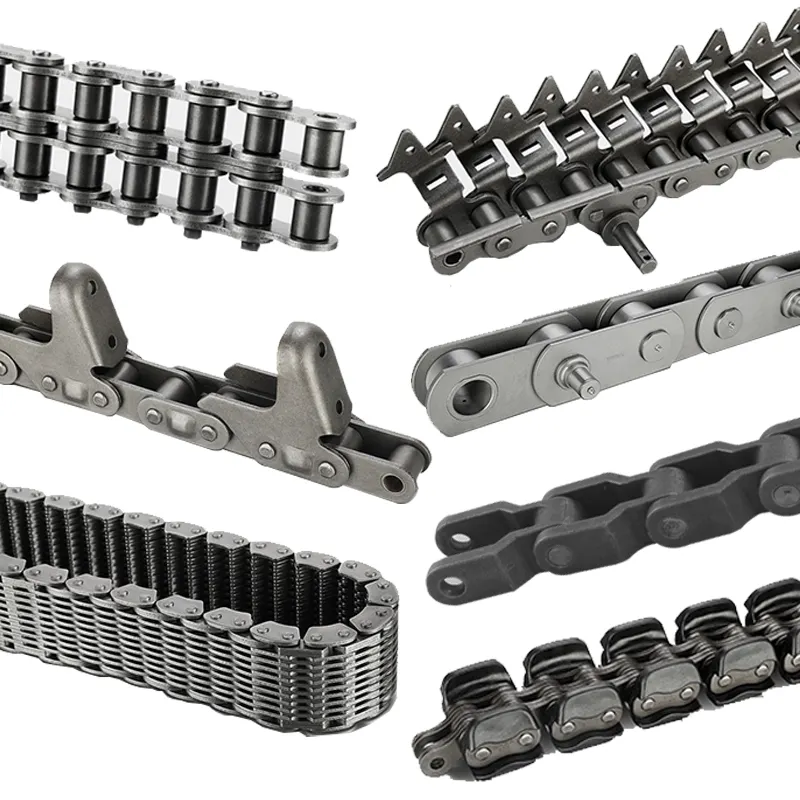
How does an industrial chain contribute to overall production efficiency?
An industrial chain plays a crucial role in enhancing overall production efficiency in various industries. Here are several ways in which an industrial chain contributes to production efficiency:
- Power transmission: Industrial chains efficiently transmit power from the drive source to different components of the machinery or equipment, enabling smooth and consistent operation. This ensures that the production process runs without interruptions or power loss, maximizing overall efficiency.
- Conveying and material handling: Industrial chains are commonly used in conveyor systems to transport materials, products, or components along the production line. They facilitate the movement of goods from one process to another, reducing manual handling and streamlining material flow. This improves production efficiency by minimizing bottlenecks, reducing cycle times, and optimizing resource utilization.
- Positioning and indexing: In automated assembly or packaging systems, industrial chains are used to precisely position and index workpieces or products. This enables accurate and efficient assembly, reducing errors and rework. The precise positioning capabilities of industrial chains contribute to improved production efficiency and product quality.
- Mechanical synchronization: Industrial chains are employed in machinery with multiple moving parts that require synchronization, such as in printing presses or packaging equipment. By linking and coordinating the movement of various components, industrial chains ensure precise timing and alignment, resulting in smooth operation and increased production efficiency.
- High load capacity: Industrial chains are designed to withstand heavy loads and transmit high levels of torque. This allows them to handle demanding applications and heavy-duty processes effectively. By providing reliable and robust power transmission, industrial chains contribute to improved production efficiency in industries that require the handling of substantial loads.
- Durability and reliability: Industrial chains are engineered to be durable and resistant to wear and fatigue, even in harsh operating conditions. Their long service life and minimal maintenance requirements contribute to increased production uptime and reduced downtime, enhancing overall production efficiency.
By facilitating power transmission, material handling, precise positioning, synchronization, and offering high load capacity, durability, and reliability, industrial chains play a vital role in optimizing production efficiency across various industries.
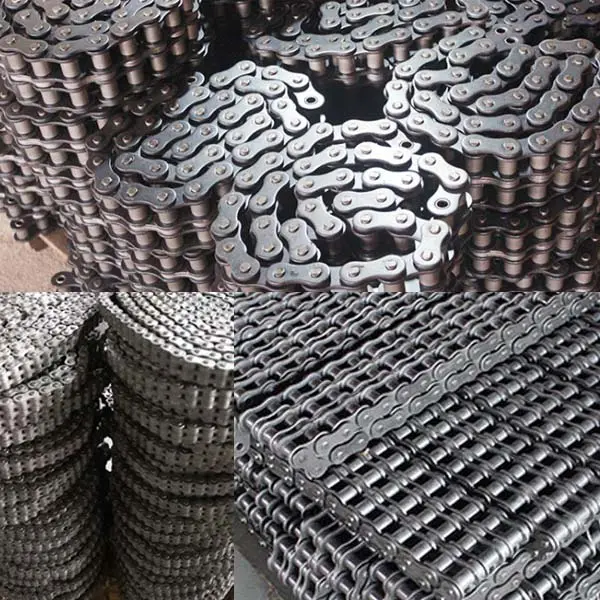
What are the noise levels associated with industrial chains?
The noise levels associated with industrial chains can vary depending on several factors, including chain design, lubrication, and operating conditions.
Chain Design: The design of the industrial chain, including the type of chain and its construction, can impact noise levels. Chains with smoother surfaces and precision manufacturing techniques tend to produce less noise.
Lubrication: Proper lubrication of the chain is essential for reducing noise. Applying a suitable lubricant to the chain can minimize friction and vibration, resulting in quieter operation.
Operating Conditions: The operating conditions of the industrial chain, such as the load, speed, and tension, can also affect noise levels. Higher loads and speeds, as well as inadequate tensioning, can increase noise levels.
Overall, it is important to consider noise levels when using industrial chains, particularly in noise-sensitive environments. Implementing proper chain design, regular lubrication, and maintaining appropriate operating conditions can help minimize noise and create a more comfortable work environment.
What are the different types of industrial chains?
Industrial chains are available in various types, each designed to suit specific applications and requirements. Here are some common types of industrial chains:
- Roller chains: Roller chains are the most common type of industrial chains. They consist of a series of interconnected rollers that engage with the sprockets to transmit power and facilitate the movement of materials.
- Conveyor chains: Conveyor chains are specifically designed for use in conveyor systems. They have attachments or slats that allow them to carry materials or products along a horizontal or inclined path.
- Leaf chains: Leaf chains are made up of interlocking plates or links that provide high tensile strength and resistance to fatigue. They are commonly used in applications that require heavy lifting or load-bearing capabilities.
- Wire mesh chains: Wire mesh chains are composed of interconnected wire mesh links. They are often used in applications that involve high-temperature environments, such as oven conveyors or drying processes.
- Bucket elevator chains: Bucket elevator chains are designed for vertical lifting applications, typically used in industries such as agriculture, mining, and construction. They feature buckets that carry materials as they move upward.
- Precision chains: Precision chains are engineered to provide precise positioning and accurate movement. They are commonly used in applications such as robotics, automation, and CNC machinery.
- Specialty chains: Specialty chains are designed for specific applications and industries. Examples include agricultural chains, escalator chains, drag chains, and many more.
Each type of industrial chain has its unique design features, materials, and applications. The selection of the appropriate chain type depends on factors such as load capacity, speed, environment, and specific operational requirements.


editor by lmc 2024-11-19