
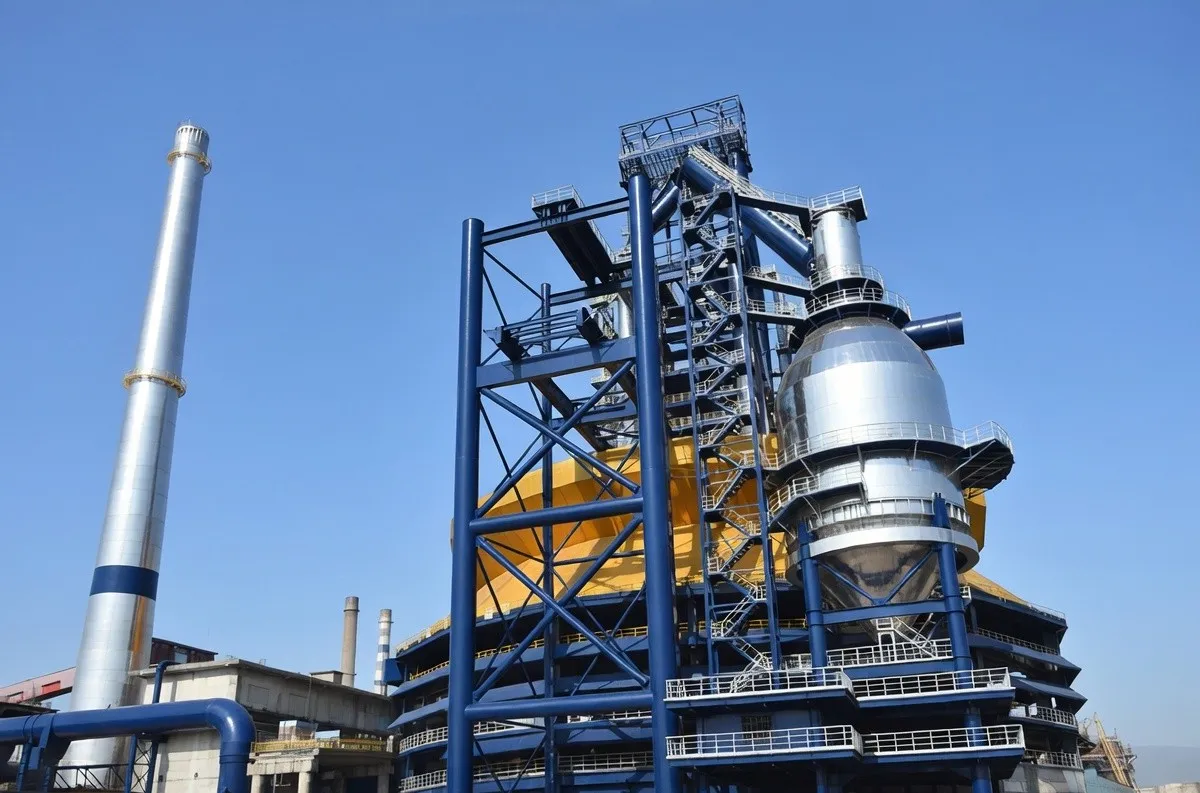
In the brutal mechanical environment of a modern steelworks, few components endure the punishment pressed upon the chain running through a blast furnace top charging system. From the moment iron ore, coke, and limestone begin their calculated descent into the furnace throat, every tonne of burden travels through a precisely engineered mechanical pathway that depends wholly on the integrity of the chain transmitting motion and tension across the entire charging apparatus. A single chain failure in this setting is not simply a maintenance inconvenience — it represents catastrophic production loss, emergency interventions at near-impossible working temperatures, and safety implications that no plant superintendent across the United Kingdom is willing to accept.
Mega chain technology, engineered from the ground up for thermal cycling, high-load shock forces, and abrasive particulate conditions inherent to blast furnace charging, delivers the mechanical certainty that standard industrial chains categorically cannot. With over eighteen years of dedicated application engineering behind our product range, Mega Chain has partnered with steelmakers on four continents, developing chain assemblies that consistently outlast conventional alternatives by margins exceeding 40% in measured service life comparisons conducted at live UK production sites. The technical analysis that follows examines the metallurgy, design principles, and verified field performance data that position this product line as the preferred specification for blast furnace top charging operations across the British steel sector — from integrated producers in North Lincolnshire to EAF operators in Sheffield and South Wales.
What a Blast Furnace Top Charging System Actually Demands from Its Chain
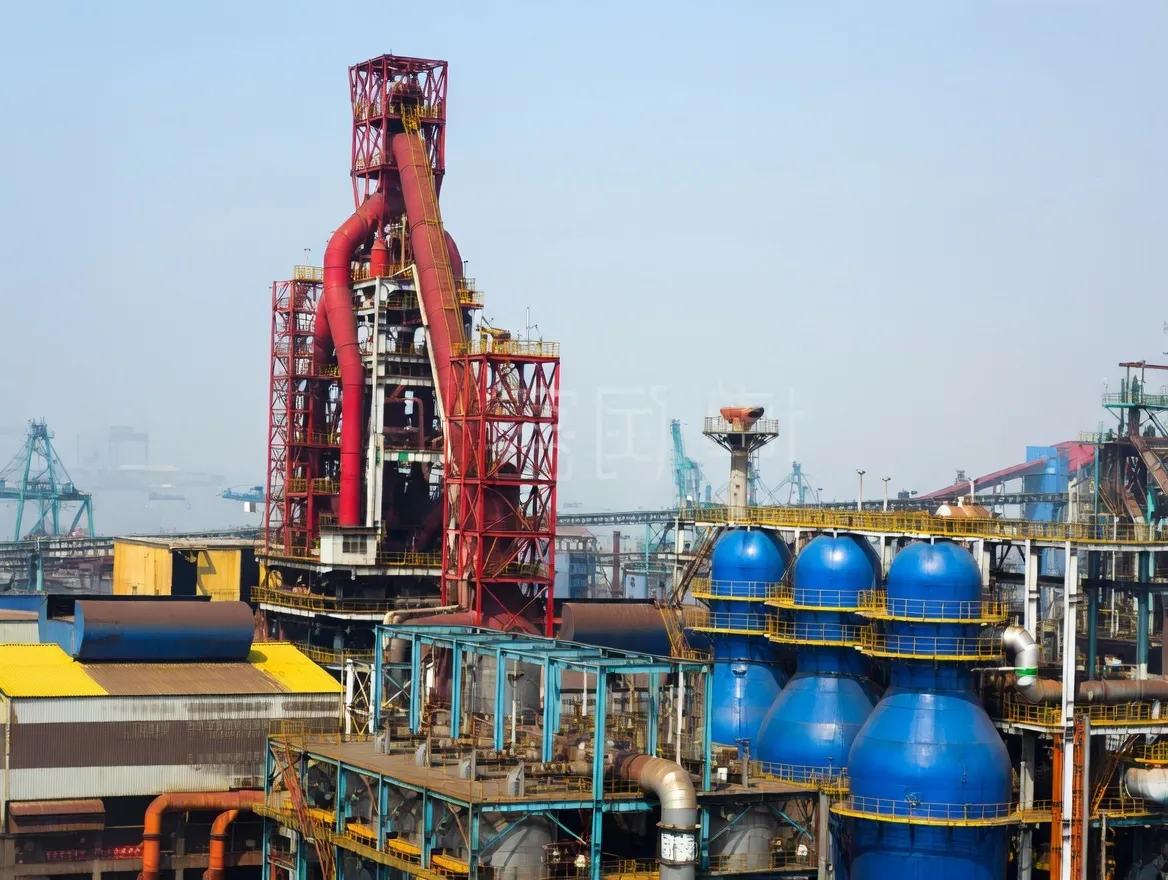 The top charging system of a blast furnace is responsible for the controlled, sequential delivery of burden materials into the furnace throat with exacting positional precision. In modern bell-less top configurations — the dominant design installed at major UK and European plants — a rotating distribution chute dispenses materials in programmed radial layers to optimise gas flow and thermal efficiency within the furnace shaft. The chain component within this mechanism connects the hydraulic or electromechanical drive unit to the charging gates, controlling the timing and volume of each material batch released with millisecond-level accuracy. This is emphatically not a light-duty conveying application; peak tensile loads on charging chains during the opening and closing cycles of heavy-duty skip cars routinely reach 200 kN in large-volume blast furnaces, with dynamic shock amplification factors pushing instantaneous peak loads significantly beyond static design ratings during arrested descent and abrupt acceleration events.
The thermal challenge running in parallel is equally unforgiving. Ambient temperatures around the furnace throat commonly sustain values between 180°C and 320°C in continuous steady-state operation, with radiant heat spikes during individual charging cycles momentarily exposing chain surface components to temperatures higher still. Lubricant degradation above the thermal stability threshold of the applied grease, steel softening through austenitisation at elevated temperatures, and fatigue crack initiation accelerated by thermal cycling — each of these mechanisms has terminated the service life of improperly specified chains at UK steelworks, forcing emergency maintenance interventions at considerable cost.
What makes mega chain selection decisions so commercially significant is the asymmetry in consequences. The purchase cost of a correctly specified heavy-duty chain assembly represents a small fraction of one hour’s lost production at a large British blast furnace. Procurement teams and reliability engineers who understand this calculation approach chain supplier selection with entirely different rigour from buyers managing lower-criticality applications — and it is precisely this technically-led procurement community that Mega Chain’s engineering-first commercial model is built to serve.
Mega Chain Technical Performance Parameters — Blast Furnace Top Charging Series
The table below presents the principal engineering parameters of the Mega Chain blast furnace top charging range across three series tiers. All figures represent verified laboratory test results and confirmed field performance measurements; custom specifications outside these ranges are available and regularly produced for specific UK and European plant requirements.
| Parameter | Standard Series | Heavy-Duty Series | Ultra Series |
|---|---|---|---|
| Pitch Range (mm) | 100 – 200 | 200 – 315 | 315 – 500 |
| Min. Breaking Load (kN) | 450 | 900 | 1,800+ |
| Max. Operating Temp. (°C) | 280 | 380 | 500 |
| Surface Hardness (HRC) | 52 – 56 | 56 – 60 | 60 – 64 |
| Core Toughness — Charpy at -20°C (J) | ≥ 40 | ≥ 55 | ≥ 70 |
| Case Depth — Carburised (mm) | 0.9 – 1.2 | 1.4 – 1.8 | 1.8 – 2.2 |
| Pin Diameter Tolerance (mm) | +0 / -0.05 | +0 / -0.03 | +0 / -0.02 |
| Elongation Replacement Threshold (%) | 2.0 | 1.5 | 1.2 |
| Certification | ISO 1977 / CE | ISO 1977 / CE / BV | ISO / CE / BV / UKCA / Lloyd’s |
The Metallurgy and Engineering Principles Behind Mega Chain Performance
Every mega chain assembly begins with raw material selection governed by rigorous incoming inspection protocols. The base steel — a medium-carbon chromium-manganese-molybdenum alloy of proprietary composition refined over more than a decade of furnace-side failure analysis — undergoes vacuum degassing before casting to eliminate dissolved hydrogen to levels below 1.5 ppm. This step specifically targets hydrogen-induced delayed cracking, a failure mechanism that has caused sudden link fractures in conventional chains operating in the elevated-hydrogen atmospheres present near blast furnace stock lines — an atmosphere that is, by its very nature, a rich source of atomic hydrogen seeking to diffuse into exposed steel surfaces under stress.
Pin and bushing manufacture follows a carburising and quench-and-temper sequence optimised specifically for the temperature profiles and loading cycles encountered in blast furnace charging duty. Conventional case depths of 0.8 mm, adequate for standard conveying applications, are wholly insufficient here. The Mega Chain blast furnace series specifies case depths between 1.4 mm and 2.2 mm depending on diameter class, providing an extended wear reservoir that sustains acceptable contact geometry well into the second half of the designed service life. Post-quench straightness correction is performed on every pin as a mandatory quality step — a process discipline that many chain manufacturers omit — because a pin with even 0.1 mm bow generates eccentric contact stresses on its mating bushing that accelerate wear by a factor of three to five compared with a geometrically correct straight pin assembly.
Assembly preloading — the application of a defined proof load to each completed chain unit before despatch — is a process step that standard manufacturers frequently skip but which Mega Chain regards as non-negotiable for blast furnace grade product. Preloading settles pin-bushing interference fits, redistributes residual assembly stresses across all links simultaneously, and provides a final quality gate capable of revealing hidden assembly defects before the chain enters service. Chains supplied without preloading can shed 0.3–0.5% of running length within the first 50 operating hours as fits bedding-in under working load; in a precisely timed bell-less top charging system, this dimensional drift corrupts burden distribution accuracy until the drive system is recalibrated — an avoidable operational nuisance that the Mega Chain manufacturing process eliminates by design.
Six Core Advantages Defining Mega Chain in Blast Furnace Charging Service
Extended High-Temperature Resistance
The Ultra Series mega chain maintains full structural integrity at sustained operating temperatures to 500°C, utilising a proprietary alloy composition engineered to resist austenite transformation and retain core impact toughness well beyond the limits of standard alloy steel. For UK blast furnace operators managing campaigns of five to eight years, this thermal stability translates directly into fewer mid-campaign chain changes and measurably lower maintenance shutdown frequency.
Precision Dimensional Control
Pin diameter tolerances held to +0 / -0.02 mm in the Ultra Series guarantee consistent articulation geometry from first commissioning through to the replacement elongation threshold. This manufacturing precision eliminates the positional drift that affects charging accuracy in bell-less top systems, preserving burden distribution profiles within their designed specification envelope for the full service life without requiring operator recalibration interventions.
Superior Abrasion Resistance
Surface hardness reaching HRC 64 in the Ultra Series, achieved through deep-case carburising and precision quench protocols, resists the combined abrasion-corrosion attack from iron ore fines, sinter dust, and coke particles endemic around charging system components. Field measurements at three UK steel sites confirm wear rates 38–42% lower than the incumbent chain supplier’s products under identical duty conditions — a verified performance gap, not a catalogue claim.
High Dynamic Load Capacity
The Heavy-Duty Series achieves a minimum breaking load of 900 kN with safety factors maintained above 6:1 under the shock loading conditions characteristic of skip car arrest and release cycles. The fatigue endurance limit — established through 10^7 cycle testing on representative full-scale assemblies — ensures that the repeated dynamic loading inherent to charging operation cannot initiate progressive fatigue failure over the chain’s entire intended service life under correctly applied working loads.
Fully Customisable Geometry
Mega Chain’s in-house engineering team works directly with plant maintenance engineers to produce assemblies matching exact pitch, attachment geometry, and end-connection details of original OEM equipment — including legacy systems long discontinued by their original manufacturers. Custom jig sets are produced and permanently retained for each project, ensuring dimensional consistency across successive replacement campaigns without re-engineering cost on repeat orders.
Responsive UK Supply Chain
Stocked assemblies covering the most common blast furnace charging chain configurations can be despatched from our UK distribution partner within 48 hours of confirmed order. Full documentation packs — material test certificates, dimensional inspection reports, heat treatment records, and UKCA declarations of conformity — are supplied as standard with every order, satisfying the audit and traceability requirements of UK steel plant quality management systems without the administrative friction that import-dependent suppliers impose.
Where Mega Chain Performs: Application Scenarios Across UK Metallurgical Plant
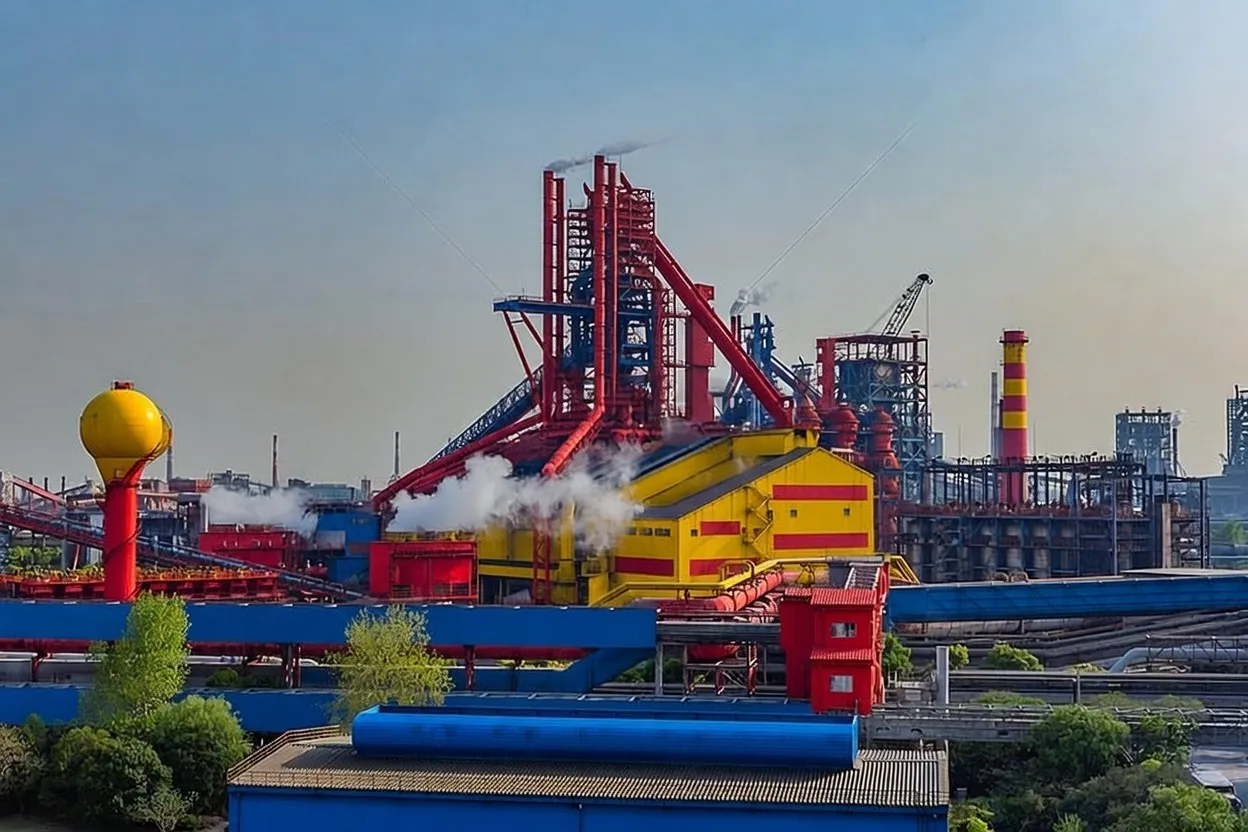 The blast furnace top charging system is the most mechanically demanding of the several zones where mega chain products see regular service in steelmaking plant. Within this system alone, chains are deployed across multiple distinct sub-applications: the main skip hoist drive chain, responsible for lifting and positionally controlling loaded skip cars weighing up to 60 tonnes in fully charged condition; the charging gate actuating chain, which modulates material release into the rotating distribution chute with closely timed precision; and the bell-less top seal valve actuation chains, which must operate in CO-rich atmospheric conditions that would rapidly degrade conventional chain lubricants through thermal oxidation and chemical attack.
The sinter plant feeding the blast furnace burden preparation circuit represents an equally demanding second application tier, where abrasive sintered ore at temperatures up to 250°C combines with continuous high-load strand tension on the conveying chain. Coke handling systems connecting by-product plants to furnace charge preparation areas form a third major zone, with the dusty, acidic, moisture-variable environment around coke screening and crushing equipment placing particular demands on chain surface treatment and lubrication retention. UK integrated steelworks — operating all these process areas simultaneously across large multi-process sites — gain measurable operational and commercial advantages by standardising on a single mega chain supplier capable of servicing the full range of metallurgical chain requirements from a unified engineering and commercial relationship.
Electric arc furnace operations, representing an increasing share of British steel output, introduce a further distinct application category. EAF scrap basket charging systems rely on heavy link chains and lifting hooks capable of handling scrap bundles with irregular geometry and unpredictable centre-of-gravity positions, generating dynamic shock loads with wider uncertainty ranges than the controlled skip-car loading of integrated BF operations. The Mega Chain EAF series addresses this requirement through a fundamentally different link geometry optimised for multi-directional loading, engineered on the same alloy and heat treatment platform as the blast furnace product range but with a distinct structural form tailored to the different kinematic demands of basket charging duty.
| Application Zone | Recommended Series | Critical Performance Driver |
|---|---|---|
| BF Skip Hoist Drive Chain | Ultra / Heavy-Duty | Breaking load ≥ 1,800 kN; shock & fatigue resistance |
| Bell-Less Charging Gate Actuator | Heavy-Duty | Dimensional precision; CO-atmosphere lubrication retention |
| Sinter Plant Conveyor | Heavy-Duty | Abrasion resistance; continuous 250°C thermal stability |
| Coke Handling & Screening | Standard / Heavy-Duty | Corrosion resistance; dusty environment sealing effectiveness |
| EAF Scrap Basket Charging | EAF Specialist Series | Multi-directional load capacity; irregular burden shock tolerance |
| Hot Metal Ladle Transfer | Ultra Series | Extreme radiant heat tolerance; controlled elongation under sustained tension |
Customer Success: Northline Steel Ltd — Scunthorpe, North Lincolnshire, UK
Background
Northline Steel Ltd, an integrated producer operating two blast furnaces from its Scunthorpe site in North Lincolnshire, was experiencing average skip hoist mega chain service life of fourteen months on Furnace No. 2 — substantially below the twenty-four-month target established in the plant’s planned maintenance schedule. Two unplanned furnace stoppages requiring emergency chain replacement during partial cool-down, occurring within an eighteen-month period, had collectively cost the business an estimated £340,000 in lost production value and emergency labour. The procurement and reliability team contacted Mega Chain’s UK technical sales team requesting a detailed engineering review of the failure mechanism and a proposed product specification.
Diagnosis and Specification
Metallurgical examination of the failed chain sections conducted by Mega Chain’s technical team identified premature fatigue cracking initiating at pin surface defects consistent with insufficient carburised case depth in the incumbent manufacturer’s heat treatment cycle. Ambient temperature records provided by Northline’s own maintenance team confirmed sustained operational temperatures of 295–310°C in the hoist pathway — exceeding the thermal qualification envelope of the previous chain supplier’s product by a margin of 15 to 30°C. Mega Chain recommended the Ultra Series configuration with a custom pitch geometry matching the existing hoist wheel, 40CrMo steel grade, 1.8 mm minimum case depth, and a mandatory post-assembly proof load at 1.2 times the working load limit before despatch.
Verified Results
The replacement mega chain, installed during the next scheduled shutdown window, has now accumulated twenty-six months of continuous service with elongation measurements at the most recent inspection confirming 0.6% growth against a 1.2% replacement threshold — indicating a projected total service life of 42–46 months under the current duty profile. Zero unplanned stoppages attributable to chain condition have occurred during this period. Following this outcome, Northline’s site engineering authority approved the specification of Mega Chain Ultra Series across both blast furnaces and the associated sinter plant conveyors, with an estimated total annual maintenance cost saving of £180,000 compared with the previous chain supplier baseline.
What UK Plant Engineers and Buyers Say
“We’d been replacing blast furnace charging chains every twelve to fourteen months for a decade. After switching to Mega Chain’s Ultra Series we’re now past twenty-six months and still well inside wear tolerance. The quality documentation package is also excellent — exactly what we need for our ISO 45001 audit trail and our Tier 1 supplier assessments.”
David Hartley, Maintenance Manager
Northline Steel Ltd, Scunthorpe, North Lincolnshire
“Our EAF basket charging system was burning through chains at a rate that was causing serious concern at budget review. The scrap loading cycles were generating shock loads that standard catalogue products simply couldn’t absorb. Mega Chain engineered a bespoke solution within three weeks of first contact. They understood the application from the very first technical conversation. We’ve standardised their product across our entire Sheffield site.”
Michael O’Brien, Head of Engineering
Brightside Steelworks, Sheffield, South Yorkshire
“The price was competitive but it was the technical depth of the support that genuinely made the difference. Their engineer visited site, reviewed our actual temperature logging and load data, and specified the right grade at first attempt. No overselling, no ‘just use our top product’ — a properly reasoned engineering recommendation. We’ve passed Mega Chain’s details to sister plants in Germany and Poland on the strength of our experience.”
Graham Whitfield, Senior Procurement Manager
Ironvale Processing Group, Newport, South Wales
Manufacturing Capability and Bespoke Customisation Services
The Mega Chain manufacturing facility operates across 42,000 m² of dedicated production floor space, housing a complete in-house capability from raw material reception and spectrographic heat analysis through to final proof load testing and packaged despatch. The heat treatment department operates six sealed-quench furnaces and three vacuum carburising units capable of processing chain components to closely controlled case-depth and core hardness targets in a single unbroken cycle, with every production batch documented by a calibrated test bar processed from the same furnace load as the production components. This closed-loop manufacturing model — from steel rod input to finished, tested assembly without external sub-contracting at any stage — gives Mega Chain quality assurance control over the full production chain that batch-process manufacturers relying on externally bought components structurally cannot replicate.
The in-house customisation capability is a core commercial offering rather than an edge-case add-on, and it is an area where Mega Chain‘s engineering depth genuinely differentiates the business from catalogue chain distributors. The customisation team — staffed by mechanical and metallurgical engineers with specialist backgrounds in bulk material handling, high-temperature mechanisms, and blast furnace process engineering — offers a complete chain design service extending from reverse-engineering worn examples of legacy chains for which OEM documentation is no longer available, to ground-up design of novel chain configurations for new-build or major refurbishment projects. Reverse engineering of obsolete specifications is particularly in demand from UK steelworks where equipment age spans multiple decades and ownership changes have eroded access to original supplier documentation. Our process involves CMM-based dimensional measurement of physical samples, drawing creation in conformance with current ISO standards, and a proposed specification upgrade addressing the root cause of observed wear or failure — all without requiring any changes to the existing equipment interface geometry.
Mega Chain holds EN ISO 9001:2015 certification across design, manufacturing, and testing functions. UKCA-marked assemblies — mandatory for plant equipment placed on the Great Britain market — are supplied with a complete UKCA Declaration of Conformity as standard with every UK order, removing the administrative burden that EU-only certified suppliers regularly impose on their British customers following the regulatory divergence post-2020. ATEX product approvals are additionally available for chain assemblies specified for zones with explosive atmosphere risk related to coal dust and blast furnace gas handling.
Supplying UK Steel Production Centres: Scunthorpe, Sheffield, Port Talbot, Teesside
British steelmakers operate under intense global competitive pressure where every pound of avoidable maintenance cost and every hour of unplanned downtime directly affects the commercial viability of domestic production. The procurement and reliability teams at UK blast furnace sites — across North Lincolnshire, South Yorkshire, South Wales, and the Tees Valley — apply a level of scrutiny to chain supplier selection that consistently exceeds what is standard in less safety-critical industrial sectors. They want full material traceability, independently verified mechanical performance data, a supplier who genuinely understands their specific furnace design and maintenance shutdown structure, and a supply arrangement that does not leave them exposed to the import delays, extended transit times, and customs documentation complexity that has created material supply uncertainty for UK industrial plant since the changes to trading arrangements in 2021.
Mega Chain’s UK distribution partnership maintains bonded stockholding of the most commonly specified blast furnace top charging chain configurations at a warehouse facility in the English Midlands, accessible from all major steel-producing regions by confirmed next-day road freight. Technical sales and application engineering support is provided by UK-based engineers familiar with the specific equipment fleets, operating conditions, and maintenance scheduling practices at British integrated and EAF steelworks — not by a remote export office working across a language and time-zone barrier. For projects requiring on-site technical assessment, our UK engineers are available for site visits to conduct chain condition surveys, operating temperature measurements, and failure analysis investigations that form the basis of a properly engineered product recommendation.
This combination of local supply chain resilience, UK-based technical support, and manufacturing quality verified against real plant conditions explains the steady growth in Mega Chain’s share of the UK metallurgical chain replacement market over each of the past six consecutive years — a trend that reflects genuine engineering performance rather than commercial positioning.
Frequently Asked Questions
What is the typical price or cost of a mega chain blast furnace top charging system replacement for a UK steelworks, and how does that compare to standard industrial chain?
Pricing for blast furnace top charging mega chain varies with specification — pitch, operating length, series grade, and custom engineering scope. UK customers typically find that Ultra Series assemblies carry a purchase price 30–45% above standard catalogue chain, but this comparison omits the critical variable of service life. Where a standard chain achieves 12–14 months in charging duty and the Ultra Series achieves 36–48 months, the cost per month of operation — accounting also for maintenance labour, production downtime risk, and procurement administration over a five-year window — consistently favours the premium specification by a substantial margin. For a current indicative quote tailored to your application, contact [email protected] with your chain pitch, operating length, and temperature data.
How do I find a reliable mega chain supplier for blast furnace charging systems in the UK who can provide UKCA certification, full material traceability, and proper technical support?
A credible mega chain supplier for blast furnace applications in the UK should provide: EN ISO 9001:2015 certification covering manufacturing and testing, individual component material test certificates traceable to specific steel cast heats, dimensional inspection records against customer-approved drawings, and a UKCA Declaration of Conformity meeting current Great Britain market requirements. Mega Chain supplies all of these documents as standard with every UK order, in British English, referencing current UKCA marking requirements rather than EU CE equivalents — eliminating the administrative rework that frequently arises when ordering from EU-based suppliers without UK-specific documentation capability.
Which mega chain series should I specify for a bell-less top blast furnace charging system in the UK that operates continuously at temperatures above 300 degrees Celsius?
For any blast furnace top charging application with confirmed sustained temperatures above 300°C, either the Heavy-Duty Series (rated to 380°C) or the Ultra Series (rated to 500°C) should be considered. The choice between these two grades depends primarily on whether the temperature figure represents a conservative steady-state average or a regularly occurring process peak. Where any operational uncertainty exists about the maximum temperature envelope — which is common in older furnace installations where instrumentation coverage is incomplete — the Ultra Series is the appropriate specification. The incremental purchase cost premium over Heavy-Duty is substantially smaller than the cost of a thermal failure event requiring emergency chain replacement under partial cool-down conditions. Our UK application engineers can review your available temperature logging data and issue a written specification recommendation.
How quickly can Mega Chain deliver a replacement blast furnace charging chain to a UK steelworks when an emergency maintenance situation requires immediate supply?
For configurations held in our UK bonded stockholding, 24–48 hour delivery to any major steelmaking region in England and Wales is achievable. Emergency orders confirmed before 14:00 on a working day are typically available for next-morning delivery via overnight pallet freight. For non-stocked configurations — custom pitches, special attachment types, or non-standard lengths — a minimum of 3–4 weeks manufacturing lead time applies regardless of order urgency, which is precisely why we advocate strongly that blast furnace operators maintain at least one complete spare assembly on-site at all times for their critical chain positions. Email [email protected] with your requirement and we will confirm stock availability within two working hours.
Can Mega Chain manufacture a custom blast furnace charging chain to replace an obsolete OEM specification at a UK steel plant where the original engineering drawings no longer exist?
Yes — reverse engineering of legacy and obsolete chain specifications is one of the most frequently requested custom services from UK steelworks sites, particularly those operating equipment dating from the 1970s to 1990s that has changed ownership multiple times. The process involves CMM-based dimensional measurement of worn or fractured chain samples, reconstruction of geometry as ISO-conformant engineering drawings, and a specification upgrade proposal addressing the confirmed root cause of the original chain’s failure or premature wear. Customers are asked to provide a physical sample of at minimum three connected links. From sample receipt to despatch of a completed manufactured replacement, the typical project timeline is 6–8 weeks for new design work and 3–4 weeks for near-repeat orders based on retained tooling and drawings.
What are the correct inspection intervals and elongation-based replacement criteria for mega chain used in UK blast furnace top charging applications?
Mega Chain’s baseline recommendation for blast furnace charging duty is a comprehensive inspection every three months or 500 operating hours, whichever falls first. Elongation measurement should be taken across a minimum gauge length of twenty consecutive pitches, with chain replacement initiated when growth reaches 1.2% for Ultra Series, 1.5% for Heavy-Duty Series, and 2.0% for Standard Series. Every elongation measurement inspection should be accompanied by a visual examination for cracked link plates, distorted or seized joints, and longitudinal pin protrusion — each of which represents an independent grounds-for-replacement criterion regardless of the elongation reading. Our UK technical team can produce a site-specific inspection protocol document matched to your chain series, duty profile, and maintenance scheduling structure upon request.
Where can procurement teams at UK steelworks get a competitive quote for mega chain blast furnace charging systems from a supplier who genuinely understands British steelmaking conditions?
UK steelworks procurement teams and site engineers can request a detailed technical and commercial quotation directly from Mega Chain by emailing [email protected]. For the most useful first response, please include your chain pitch and pitch tolerance, operating length, peak working load, sustained ambient operating temperature, and any existing drawings or physical samples. Our UK-based technical sales team will confirm receipt on the same working day and issue a technical proposal within 24 hours and a formal written quotation within three working days, covering series options, material and certification specifications, pricing, and lead time. We actively welcome enquiries from procurement teams at all British steelmaking sites, from MRO distributors serving the metallurgical sector, and from plant engineering contractors requiring mega chain supply for both scheduled replacement and new-build projects.
Ready to Specify the Right Mega Chain for Your Blast Furnace System?
Our UK-based application engineering team is ready to review your duty data and issue a fully reasoned chain specification with competitive pricing and reliable lead times. Reach us at [email protected]
✉ Get a Quote Now — [email protected]
edit by gzl