
Product Description
| Category | Chain |
| Material | Alloy steel |
| Surface treatment | Self colored, black oxide finish, yellow painted, red painted |
| Technology | Welded, made by full- automatic machine |
| Size | 6mm-25mm |
| Color | According to Customers’ Requirements |
| Feature | High Strength |
| Quality | Good |
| Export Market | Global |
| HS Code | 73158200 |
| MOQ | 100meter |
| Supply ability | 50Ton per month |
| Packing | 1. Nude packed: Packed in bundles |
| 2. Packed in iron drums then on pallets | |
| 3. Packed in woodencase | |
| 4. As Request of the cllent | |
| Delivery time | As the quantity in order, 15-30days |
| Payment term | 30% deposit prepaid after confirmed PI, the balance against copy of BL before cargo arrival. Or negotiated with clients |
| Main products | Anchor chains, NACM standard chains, CZPT lifting chains, G100 lifting chains, DIN5685 /DIN766/DIN763 chains decoretive chains. Shackles, turnbuckles, wire rope clips, pulley blocks, load binders, bolts and nuts, quick links, snap hooks, swivels, wire rope thimbles, ferrules and sleeves |
| Origin | HangZhou China |
| Trade Term | FOB, CFR, CIF |
| DIN763 Link Chain: | ||||||||
| Size | Inside Length | Outside Width | Working Load | Test Load | Breaking Load | |||
| MM | ±MM | MM | ±MM | MM | ±MM | KG | N | N |
| 2 | 0.5 | 22 | 1 | 8 | 0.4 | 25 | 800 | 1250 |
| 2.5 | 24 | 1.1 | 10 | 0.5 | 40 | 800 | 2000 | |
| 3 | 26 | 1.2 | 12 | 0.6 | 55 | 1050 | 3200 | |
| 3.5 | 28 | 1.3 | 14 | 0.7 | 80 | 1540 | 3850 | |
| 4 | 32 | 1.5 | 16 | 0.8 | 100 | 2500 | 6000 | |
| 4.5 | 34 | 1.7 | 18 | 0.9 | 128 | 3000 | 6300 | |
| 5 | 35 | 1.8 | 20 | 1 | 160 | 4000 | 10000 | |
| 5.5 | 38.5 | 1.8 | 22 | 1.1 | 195 | 4200 | 9500 | |
| 6 | 42 | 2 | 24 | 1.2 | 224 | 5000 | 14000 | |
| 7 | 49 | 2.5 | 28 | 1.4 | 300 | 7500 | 18000 | |
| 8 | 52 | 2.5 | 32 | 1.6 | 400 | 10000 | 25000 | |
| 8.5 | 56 | 2.8 | 34 | 1.7 | 460 | 15710 | 22500 | |
| 9 | 59 | 3 | 36 | 1.8 | 530 | 10500 | 32000 | |
| 10 | 1 | 65 | 3.2 | 40 | 2 | 630 | 16000 | 40000 |
| 11 | 72 | 3.4 | 44 | 2 | 790 | 15800 | 47500 | |
| 12 | 78 | 3.6 | 48 | 2.3 | 940 | 18800 | 56500 | |
| 13 | 82 | 4 | 52 | 2.5 | 1000 | 25000 | 63000 | |
| 16 | 100 | 5 | 64 | 3.2 | 1600 | 40000 | 100000 | |
| 18 | 113 | 5.2 | 70 | 3.2 | 2120 | 42300 | 127000 | |
| 19 | 119 | 5.6 | 72 | 3.4 | 2370 | 47300 | 142000 | |
| 20 | 120 | 6 | 75 | 3.8 | 2500 | 50000 | 160000 | |
| 22 | 127 | 6 | 82 | 4 | 3170 | 63300 | 190000 | |
| 25 | 140 | 6.6 | 88 | 4.2 | 4090 | 81700 | 245000 | |
| Chain Types We Can Produce |
| Lifting Chain/Hoist Chain |
| DIN5685A/C,DIN764,DIN763,DIN766,DIN5686 Link Chain |
| High Test Chain for Mining |
| Ordinary Short,Medium Link Chain |
| Lashing Chain |
| Korean Standard Link Chain |
| Three Link Chain for Mining |
| ASTM80 Standard Link Chain |
| Fishing Chain |
| Norwegian Standard Link Chain |
| Debarking Chain |
| Australian Standard Link Chain |
| Hatch Board Chain |
| NACM1990 Standard Link Chain |
| Boom Chain |
| NACM1996/2003 Standard Link Chain |
| Chain with Clevis/Eye Grab Hooks On Both End |
| Animal Link Chain |
| USA Standard Chain with Hooks |
| Stainless Steel Link Chain |
| Chain with CZPT Ring and Grab Hook Each One End |
| Weldless Link Chain |
| 1/2″ Pear Link with 3/8″ Eye Grab Hook |
| G80 Link Chain |
| G43 Link Chain |
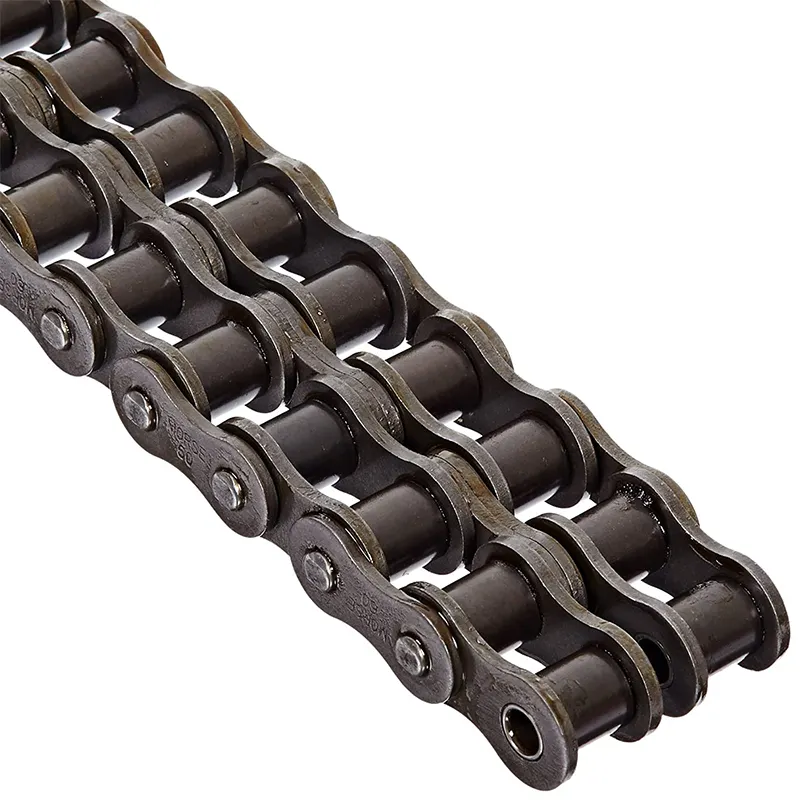
| Usage: | Transmission Chain, Drag Chain, Conveyor Chain, Dedicated Special Chain |
|---|---|
| Material: | Alloy |
| Surface Treatment: | as Request |
| Feature: | Heat Resistant |
| Chain Size: | 1/2"*3/32" |
| Structure: | Roller Chain |
| Samples: |
US$ 0/Piece
1 Piece(Min.Order) | |
|---|
| Customization: |
Available
| Customized Request |
|---|
What are the future trends and advancements in industrial chain technology?
Industrial chain technology is continuously evolving to meet the changing needs of various industries. Here are some future trends and advancements that can be observed in industrial chain technology:
- Increased Automation: Industrial chains are becoming an integral part of automated systems. The advancement of robotics, IoT (Internet of Things), and artificial intelligence is driving the integration of industrial chains with smart technologies. This includes features such as remote monitoring, predictive maintenance, and real-time data analysis for optimizing chain performance and overall system efficiency.
- Improved Materials and Coatings: Ongoing research and development efforts are focused on developing advanced materials with enhanced properties for industrial chains. This includes materials with superior strength, durability, corrosion resistance, and wear resistance. Additionally, the development of advanced surface coatings and treatments further enhances the performance and lifespan of industrial chains.
- Energy Efficiency: Energy efficiency is a growing concern in industrial applications. Future industrial chains are likely to incorporate designs and features that reduce energy consumption, such as optimized chain profiles, reduced friction coatings, and improved lubrication systems. These advancements aim to minimize power losses and improve overall system efficiency.
- Integration with Digital Technologies: Industrial chains are expected to be increasingly integrated with digital technologies for seamless communication and data exchange. This integration enables better monitoring of chain performance, real-time diagnostics, and the ability to make data-driven decisions for maintenance and optimization. Digital twins, virtual simulations, and augmented reality (AR) are also emerging trends that allow for improved chain design, testing, and troubleshooting.
- Enhanced Safety Features: Safety remains a top priority in industrial settings. Future industrial chains may incorporate advanced safety features such as integrated sensors for detecting chain wear, overload conditions, or abnormal operating parameters. These features can provide early warning signs and help prevent accidents or equipment failures.
The future of industrial chain technology is driven by the need for increased efficiency, reliability, and safety. The integration of smart technologies, improved materials, energy efficiency measures, digitalization, and enhanced safety features are expected to shape the advancements in industrial chain technology in the coming years.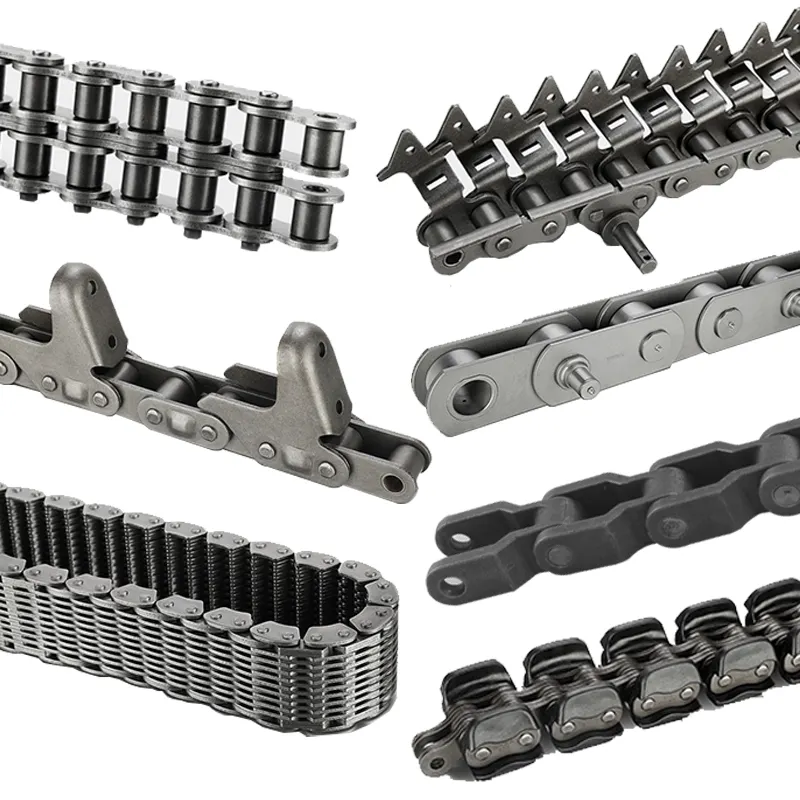
Can an industrial chain be used for vertical lifting applications?
Yes, industrial chains can be used for vertical lifting applications. However, several factors need to be considered to ensure safe and efficient lifting operations:
- Chain type and strength: The industrial chain selected for vertical lifting applications must have the appropriate strength and load capacity to safely lift the intended load.
- Safety factors: It is crucial to consider the safety factors and ensure that the selected chain is capable of handling the maximum expected load without exceeding its rated capacity.
- Overhead clearance: Sufficient overhead clearance is necessary to accommodate the length of the chain and prevent any obstructions during the lifting process.
- Proper tensioning: The chain must be properly tensioned to prevent slippage or excessive slack, which can compromise the lifting operation.
- Guidance and control: Proper guidance and control mechanisms should be in place to ensure smooth and controlled vertical movement of the load.
- Maintenance and inspection: Regular maintenance and inspection of the chain are essential to identify any signs of wear, damage, or fatigue that may compromise its integrity and lifting capability.
It is important to consult industry standards, regulations, and specific manufacturer guidelines to determine the suitability of an industrial chain for a vertical lifting application. Additionally, working with experienced professionals and following established safety protocols is crucial to ensure the safe and effective use of the industrial chain in lifting operations.
How do you properly tension an industrial chain?
Tensioning an industrial chain is a critical step to ensure its proper functioning and longevity. Here are the steps to properly tension an industrial chain:
- 1. Check the manufacturer’s specifications: Refer to the manufacturer’s guidelines or technical documentation to determine the recommended tension range for your specific industrial chain.
- 2. Identify the tensioning points: Locate the appropriate tensioning points on the industrial chain system. These are typically found near the chain’s drive sprocket or pulley.
- 3. Loosen the tensioning device: If there is an existing tensioning device, such as an adjusting bolt or tensioning screw, loosen it to create slack in the chain.
- 4. Apply tension: Apply tension to the chain by either moving the tensioning device or adjusting the position of the chain’s drive sprocket or pulley. The goal is to remove any slack in the chain while maintaining it within the recommended tension range.
- 5. Verify tension: Once the tension is applied, check the tension using a tensioning tool or by applying a moderate force to the chain at a midpoint between the sprockets. The chain should have a slight amount of deflection but should not sag or be excessively tight.
- 6. Lock the tensioning device: Once the proper tension is achieved, secure the tensioning device in place to maintain the tension. This may involve tightening the adjusting bolt or screw or using a locking mechanism specific to your tensioning device.
- 7. Recheck and readjust: After a period of operation, recheck the chain’s tension to ensure it remains within the recommended range. If necessary, make further adjustments to maintain proper tension.
It’s important to follow the manufacturer’s recommendations and guidelines for tensioning procedures specific to your industrial chain. Proper tensioning ensures optimal performance, reduces wear and elongation, and prevents excessive stress on the chain and its components.


editor by CX 2023-09-05