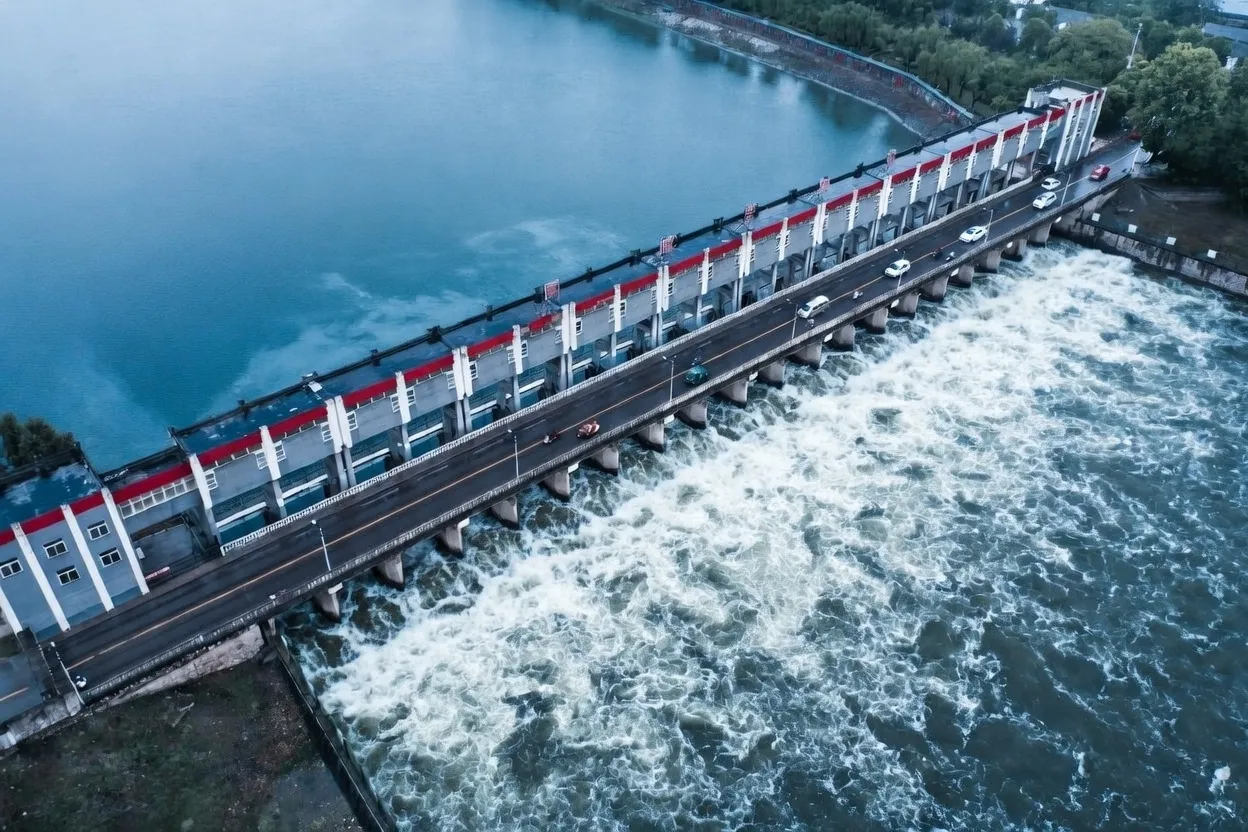
 Water is both the most valuable and the most unforgiving substance in power generation. At every hydropower station — whether a run-of-river plant on the River Severn or a pumped-storage facility in the Scottish Highlands — the mechanical systems that control water flow must perform without compromise, year after year, under enormous hydraulic loads and in permanently hostile environments. Among all the components in a gate hoist system, the drive chain bears the highest combination of tensile stress, cyclic fatigue, and environmental exposure. Getting that chain wrong does not simply mean a component replacement; it can mean hours of unplanned outage, regulatory scrutiny from the Environment Agency, and in extreme cases, a structural incident with consequences that reach far beyond the plant boundary.
Mega chain — a class of heavy-duty, precision-pitch engineering chain manufactured to exacting standards — has steadily become the preferred specification for hydropower gate hoist applications across the UK. The reasons are technical, commercial, and operational all at once. Unlike standard roller chain or agricultural-grade drive chain, mega chain is engineered around the specific load profiles, duty cycles, and corrosion environments found in dam gates, penstocks, weir sluices, and flood-defence barriers. It is not an off-the-shelf commodity; it is a performance product, and understanding why it outperforms alternatives is the key to making the right procurement decision.
This in-depth guide covers the engineering fundamentals, material science, application parameters, real-world performance data, and the bespoke customisation services that make mega chain the trusted choice for gate hoist engineers from Cornwall to Caithness.
📧 Get a Quote — [email protected]
Custom specifications · Fast lead times · UK delivery
What Is Mega Chain and Why Does It Matter in Gate Hoist Engineering?
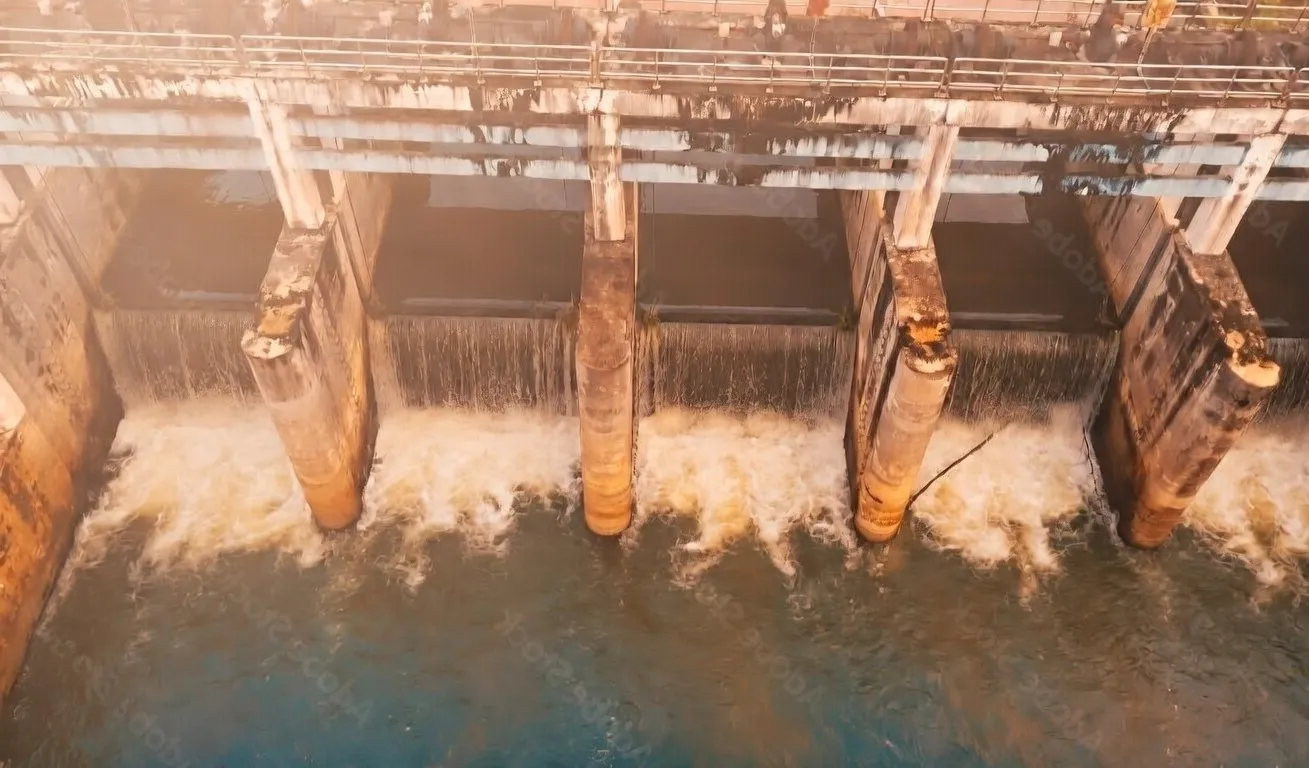 Mega chain refers to a family of large-pitch, heavy-series engineering chains designed for power transmission and lifting applications where standard chain products cannot meet the required safety factors or service life. In the context of hydropower station gate hoist systems, mega chain typically operates in either a rack-and-chain arrangement or a direct-lift chain drive, where it must raise and lower gates weighing anywhere from a few tonnes to several hundred tonnes against full hydrostatic head pressure.
A gate hoist chain faces a uniquely challenging combination of loads: the static weight of the gate structure itself, the dynamic hydraulic forces pressing against the gate face, the inertial forces generated during starting and stopping, and the long-term fatigue cycling that accumulates over thousands of open-and-close operations. On top of these mechanical demands, the chain is permanently exposed to water — often river water carrying silt, biological matter, and dissolved minerals — which would cause rapid deterioration in a less engineered product. Mega chain addresses all of these challenges through a combination of optimised geometry, high-strength alloy steel, precision heat treatment, and surface protection systems developed specifically for wet and corrosive environments.
Across the UK, installations at major hydroelectric schemes — including pumped-storage plants in Wales and Scotland, run-of-river stations on the Thames and Tyne, and tidal barrier projects on the Humber and Mersey — have progressively replaced older chain types with mega chain systems, driven by the demanding availability requirements that national grid contracts place on generating assets.
Working Principle, Material Science, and Construction
Chain Geometry and Pitch Engineering
Mega chain for gate hoists uses large-pitch configurations — typically ranging from 50 mm to 200 mm pitch — that allow for the accommodation of substantial pin diameters, thick side plates, and robust bushings. The geometry is calculated through finite element analysis to distribute stress evenly across each link articulation point, preventing the stress concentrations that lead to fatigue fracture. The chain pitch is matched precisely to the sprocket tooth profile to eliminate impact loading during engagement, which is a primary cause of early failure in standard chain products used in gate hoist retrofit applications.
Alloy Steel and Heat Treatment
The inner and outer plates of a mega chain for hydropower use are typically manufactured from medium-carbon chromium-molybdenum alloy steel — commonly 42CrMo4 or equivalent British Standard grades — which provides an excellent balance between tensile strength, toughness, and resistance to hydrogen embrittlement. Each plate is through-hardened or case-hardened to a controlled depth, with Rockwell C hardness specifications maintained within ±2 HRC to ensure consistent performance across every link in the chain assembly. Pins and bushings receive additional surface treatments, including carbonitriding or nitriding, to achieve surface hardnesses above 58 HRC while retaining a tough core that resists shock loads.
Corrosion Protection Systems
Permanent water exposure demands multi-layer corrosion protection. Mega chain products for gate hoist service are available with hot-dip galvanising, dacromet coating, electro-zinc plating, or stainless steel construction (316L grade) depending on the specific chemistry of the water environment. For estuarine and tidal installations where chloride concentrations are elevated, a combination of stainless steel pins with galvanised carbon steel plates has proven highly effective in UK coastal sites, providing corrosion resistance comparable to full stainless construction at a significantly lower cost per metre of chain.
Technical Performance Parameters — Mega Chain Gate Hoist Series
The table below presents representative specifications for the GH-Series mega chain range most commonly specified for hydropower gate hoist applications in the UK. Custom designs beyond these parameters are available on request.
| Parameter | GH-50 | GH-80 | GH-100 | GH-150 | GH-200 |
|---|---|---|---|---|---|
| Pitch (mm) | 50.8 | 76.2 | 101.6 | 152.4 | 203.2 |
| Min. Break Load (kN) | 320 | 680 | 1050 | 2200 | 3800 |
| Working Load Limit (kN) | 64 | 136 | 210 | 440 | 760 |
| Plate Material | 42CrMo4 alloy steel / 316L stainless (optional) | ||||
| Pin Hardness (HRC) | 58–62 (surface) / 38–42 (core) | ||||
| Safety Factor (min.) | 5:1 (standard) · 8:1 (lifting duty) | ||||
| Operating Temperature | -30 °C to +120 °C | ||||
| Corrosion Protection | Hot-dip galv. / Dacromet / Electro-zinc / SS316L | ||||
| Design Life (cycles) | >500,000 at WLL · proof-load certified | ||||
| Certification | CE Marking · ISO 1977 · BS EN 818 | ||||
| Custom Length Available | Yes — cut to drawing, matched sets supplied | ||||
Why Hydropower Engineers Across the UK Specify Mega Chain
Procurement decisions in hydropower engineering are rarely made on price alone. The total cost of ownership, the consequences of failure, and the ease of maintenance over a multi-decade service life all factor into the specification. Mega chain consistently delivers on every one of these dimensions.
Exceptional Fatigue Life
Gate hoist chains undergo thousands of load cycles over their service life. The precision geometry and controlled metallurgy of mega chain products ensures that fatigue crack initiation — the primary failure mode in cyclic lifting applications — is deferred by a factor of three to five compared with standard roller chain. Long-term fatigue life translates directly into reduced inspection intervals, fewer planned replacements, and higher plant availability over the asset life cycle.
Precision Pitch Consistency
Mega chain is manufactured to pitch tolerances of ±0.15% per link, which is substantially tighter than general-purpose engineering chain. In gate hoist applications, this matters because accumulated pitch error causes uneven load distribution across the sprocket teeth and introduces dynamic impacts that can exceed the nominal chain load by a significant margin. Consistent pitch means smooth, vibration-free operation that protects both the chain and the hoist gearbox from premature wear.
Corrosion Resistance in UK River Environments
British river water presents a wide spectrum of corrosion challenges. Highland rivers in Scotland carry acidic, peat-stained water with low pH values that attack zinc coatings rapidly. Lowland rivers in England and Wales may carry agricultural run-off with elevated nitrate and phosphate levels. Estuarine installations face chloride concentrations that accelerate galvanic corrosion. Mega chain’s layered protection options — tailored to the specific water chemistry of each site — ensure that the protective system matches the environmental aggressor rather than relying on a one-size-fits-all approach.
Proven Traceability and Certification
Every metre of mega chain supplied for gate hoist duty comes with full material certificates (EN 10204 3.1 or 3.2), heat treatment records, proof-load test certificates, and dimensional inspection reports traceable to the specific batch. For UK installations subject to Environment Agency oversight, CERN safety assessments, or internal asset management frameworks, this documentation package eliminates the uncertainty that comes with generic chain products and simplifies the audit trail required during formal safety reviews.
Low Elongation Under Load
Chain elongation — the gradual stretching of the chain under sustained or repeated loading — is one of the most insidious forms of wear in gate hoist systems because it changes the effective gear ratio between the drive motor and the gate, introduces timing errors in automated control systems, and eventually causes chain-sprocket misalignment. Mega chain’s tightly controlled pin-bushing clearances and case-hardened bearing surfaces deliver elongation rates substantially lower than standard chain, maintaining precise gate positioning accuracy throughout the inspection interval.
Drop-In Replacement Compatibility
Many UK hydropower stations operate gate hoist systems that were installed in the 1970s and 1980s using now-discontinued chain specifications. Mega chain products can be manufactured to match legacy pitch dimensions, attachment configurations, and end-connection details, making a like-for-like replacement possible without structural modifications to the hoist frame or replacement of the drive sprockets. This retrofit capability significantly reduces the cost and downtime associated with scheduled chain replacement programmes at older stations.
Application Scenarios Across the UK Hydropower Sector
The range of hydropower infrastructure in the UK spans a remarkably wide spectrum of operating conditions. Mega chain has been successfully applied across all of the following gate and barrier types, with configurations tailored to each application’s specific duty cycle and environment.
| Gate / Barrier Type | Typical UK Location | Key Chain Requirement | Recommended Series |
|---|---|---|---|
| Intake penstock gate | Scottish Highlands, Welsh valleys | High proof load, emergency stop duty | GH-100 / GH-150 |
| Weir sluice gate | River Severn, Thames, Trent | High cycle count, silt abrasion resistance | GH-50 / GH-80 |
| Pumped-storage bypass valve | Dinorwig, Cruachan, Ffestiniog | Rapid actuation, low elongation | GH-80 (SS316L pins) |
| Tidal flood barrier gate | Humber, Tyne, Mersey estuary | Marine chloride resistance, heavy gate weight | GH-150 / GH-200 (SS316L full) |
| Irrigation control sluice | East Anglian fens, Somerset Levels | Corrosion resistance in brackish water | GH-50 (galvanised) |
| Run-of-river bypass gate | Northern England, Lake District | Low-temperature performance, peat acidity | GH-80 (dacromet) |
All gate configurations are subject to site-specific engineering review. Contact our applications team for a detailed proposal.
Customer Success: Loch Rannoch Hydro Scheme, Perthshire, Scotland
Project Background
A mid-sized independent power producer operating a 12 MW run-of-river hydroelectric scheme in Perthshire contacted our UK applications team following a chain failure at their intake gate hoist. The original chain — a standard industrial roller chain installed during a 2006 refurbishment — had experienced two separate link fractures within eight months, both occurring at the same point in the load cycle during autumn flood events when gate actuation frequency increased dramatically.
Engineering Investigation
Our engineering team conducted a site visit and load analysis. The investigation revealed that the existing chain was operating at 78% of its catalogue working load during normal duty and reaching 94% during emergency stop conditions — a situation that left essentially no safety margin for corrosion-induced degradation or fatigue accumulation. The pitch error on the worn sprocket was also contributing to dynamic overloading at the point of engagement.
Solution Implemented
We supplied a matched pair of GH-100 mega chain assemblies manufactured to the existing pitch dimensions, with 316L stainless steel pins to address the site’s naturally acidic Highland water chemistry. The sprockets were re-profiled to the corrected tooth geometry to eliminate the impact loading that had been accelerating wear on the previous installation. Full documentation — including material certificates, proof-load test records, and an engineering report — was provided for the client’s asset management system and insurance records.
Outcome
The new mega chain installation has now been in service for over three years, through three successive autumn flood seasons, with zero unplanned maintenance interventions. The 12-month inspection found less than 0.08% elongation — well within the recommended replacement threshold of 2%. The client has since specified the same mega chain series for a sister installation at a second Perthshire site and has incorporated our chain specification into their standard engineering procurement schedule for future projects.
What Our Clients Are Saying
We had recurring issues with our original hoist chain elongating and causing false position readings in the SCADA system. After switching to mega chain, the problem disappeared completely. Three years on, our elongation measurement at annual inspection is still inside 0.1%. The documentation package was exactly what our compliance team needed.
James Hargreaves
Senior Mechanical Engineer · North Pennines Hydro Ltd, County Durham, England
We operate a tidal barrier on the Humber where the salt environment is extremely aggressive. Previous chain products were showing visible corrosion pitting within eighteen months. The GH-200 mega chain with full stainless construction has now been operating for two full tidal seasons without any visible degradation at our quarterly visual inspections. Lead time was competitive and the application support from the technical team was genuinely helpful in finalising the specification.
Dr. Fiona McAllister
Principal Asset Engineer · Humber Coastal Flood Authority, East Yorkshire, England
Our penstock gates at Dinorwig-class power density demand absolute reliability during rapid load-following cycles. We were sceptical that any chain product could meet our actuation frequency requirements without excessive wear, but the GH-80 mega chain exceeded expectations. The custom pitch matching to our existing sprockets saved us a complete sprocket replacement programme that would have cost significantly more than the chain itself.
Rhys Davies
Operations Director · Welsh Highland Power Generation Ltd, Gwynedd, Wales
Manufacturing Capability and Custom Engineering Services
Standard catalogued mega chain covers the majority of gate hoist applications encountered across the UK hydropower sector. However, the reality of infrastructure procurement is that a significant proportion of projects — particularly refurbishments of older plant, upgrade programmes at legacy dam sites, and bespoke new-build schemes — require chain assemblies that deviate from standard dimensions, attachment configurations, or material specifications. This is where our manufacturing capability distinguishes us from distributors offering only catalogue products.
✍ Custom Pitch & Plate Design
Any pitch from 25 mm to 300 mm, side plates profiled to customer drawing or reverse-engineered from sample chain supplied by the client.
🔧 Matched Pair & Set Supply
Gate hoist systems typically use twin-chain arrangements. We supply matched pairs from the same production batch, verified to within ±0.05% pitch consistency between chains.
📋 Bespoke Attachment Links
Special connecting links, anchor blocks, clevis attachments, and transition pieces fabricated to customer specifications and included in the proof-load test certificate.
🔍 Finite Element Analysis Support
For novel applications or high-consequence installations, our engineering team can provide FEA-backed load capacity confirmation and fatigue life prediction as part of the supply package.
⛈ Cold-Climate & Low-Temperature Grades
For Scottish Highland installations subject to sub-zero winter temperatures, impact-toughness-optimised steel grades certified for Charpy testing at -40 °C are available on request.
📜 Full Quality Dossier
Complete traceability documentation prepared to EN 10204 3.1/3.2 standard, including material test reports, heat treatment records, dimensional inspection, and proof-load test certificates signed by a third-party notified body on request.
📧 Get a Custom Quote — [email protected]
Our UK-based applications team responds within one business day · No-obligation enquiries welcome
Serving Hydropower Gate Hoist Projects Across England, Scotland, Wales, and Northern Ireland
The United Kingdom operates one of Europe’s most geographically diverse ranges of hydropower infrastructure, from the large pumped-storage facilities in Snowdonia and the Scottish Highlands to the extensive network of river weir and sluice installations managed by the Environment Agency, Natural Resources Wales, and SEPA. Each of these operating environments presents distinct engineering challenges that demand chain products specified and supported by engineers who understand the sector.
We supply mega zincir to gate hoist projects throughout the UK — including replacement programmes at existing stations, component supply for new-build micro-hydro schemes registered under the UK Smart Export Guarantee, and emergency replacement stock held by water utility companies and hydropower operators for rapid deployment during unplanned maintenance events. Our logistics capabilities enable next-day dispatch for standard catalogue items from our UK-held stock, and our custom manufacturing lead times are structured to fit within typical plant outage windows planned in advance with National Grid and distribution network operators.
Whether you are managing a historic stone-arched dam in the Lake District, a modern underground pumped-storage cavern in Wales, an estuarine tidal defence scheme in the East of England, or a remote highland run-of-river plant accessible only by forestry track in Argyll, our applications team can provide a chain solution that meets your duty, environment, and documentation requirements. We are familiar with the procurement frameworks used by UK utilities, water management authorities, and independent power producers, and we can work within contract templates including NEC4, JCT, and bespoke framework agreements.
Frequently Asked Questions
Answers to the questions our UK engineering customers ask most often about mega chain for gate hoist applications.
Ready to Specify? Talk to Our UK Applications Team
Custom mega chain for hydropower gate hoist · Fast UK delivery · Full certification documentation
edit by gzl