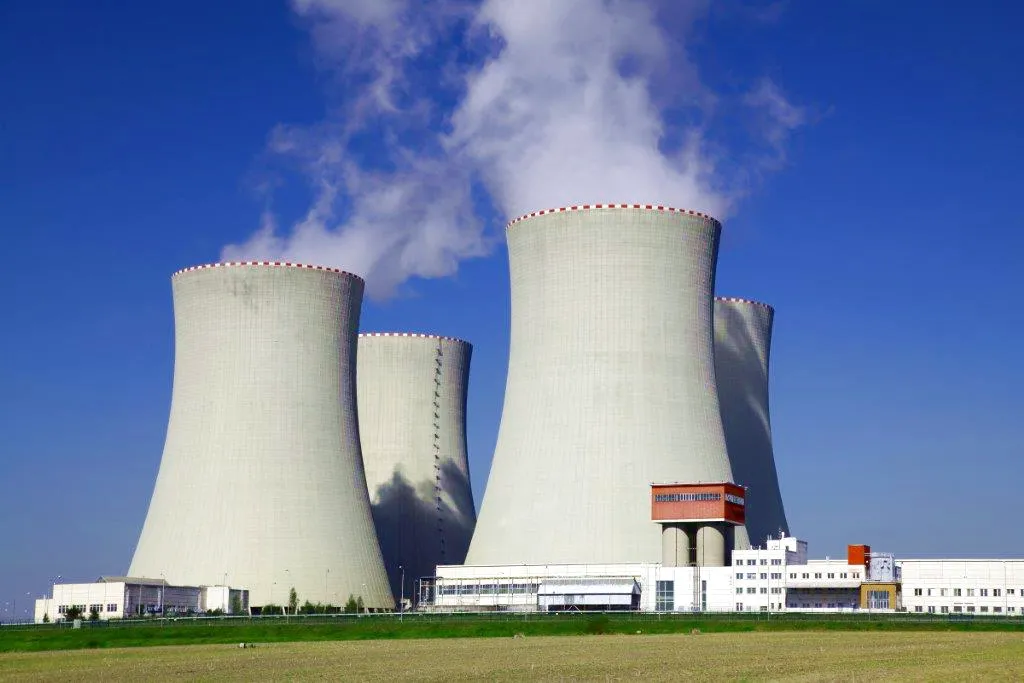
 From Advanced Gas-cooled Reactor refuelling machines at Heysham and Torness to the pressurised water systems at Sizewell B, the nuclear fuel handling chain you specify is never just a mechanical component — it is a safety-critical element that must perform without deviation, cycle after cycle, decade after decade.
Why the Nuclear Fuel Handling Chain Is a Category of Its Own
No other chain application on earth combines the same concentration of hazard, regulatory scrutiny, and mechanical demand as the nuclear fuel handling chain. Inside a reactor building, the refuelling machine or fuel pond transfer crane must guide fuel assemblies weighing several tonnes with positioning accuracy measured in fractions of a millimetre, all within an environment of ionising radiation, elevated temperature, and — in the case of AGR stations — pressurised carbon dioxide gas. The chain drive system embedded in these machines must resist radiation-induced embrittlement, maintain dimensional stability across thousands of operating cycles, and produce no particulate contamination that could migrate to primary circuits. Mega Chain has invested eighteen years in developing dedicated nuclear-grade chain families that address precisely these requirements, drawing on metallurgical research, fatigue testing to BS/ISO standards, and direct collaboration with UK power station maintenance engineers. The result is a product line where every link, every pin, and every roller is engineered to the edge of what precision manufacturing can achieve — because in a nuclear setting, that margin is never negotiable.
The Regulatory Landscape Shaping UK Nuclear Chain Procurement
Procurement of a nuclear fuel handling chain in the United Kingdom is governed by a layered regulatory framework that extends well beyond standard industrial purchasing. The Office for Nuclear Regulation enforces its Safety Assessment Principles across all safety-class components, and nuclear site licensees must demonstrate compliance with nuclear-specific quality assurance programmes — typically aligned with RCC-M, BS EN ISO 9001, and nuclear-sector supplements. EDF Energy, Magnox Ltd, and other site operators require documented material traceability, independent inspection records, and controlled document packages for every chain order. Mega Chain operates a fully documented quality management system with dedicated nuclear-supply procedures, enabling us to provide complete material mill certificates, dimensional inspection reports, load-test certificates, and full batch traceability from raw bar stock to finished assembly. For UK procurement teams working under strict compliance obligations, this documentation infrastructure is not a peripheral nicety — it is the foundation that allows a nuclear fuel handling chain order to progress through the supplier qualification process without delay or rework.
Positioning Accuracy and Fatigue Life: The Twin Pillars of Fuel Handling Chain Performance
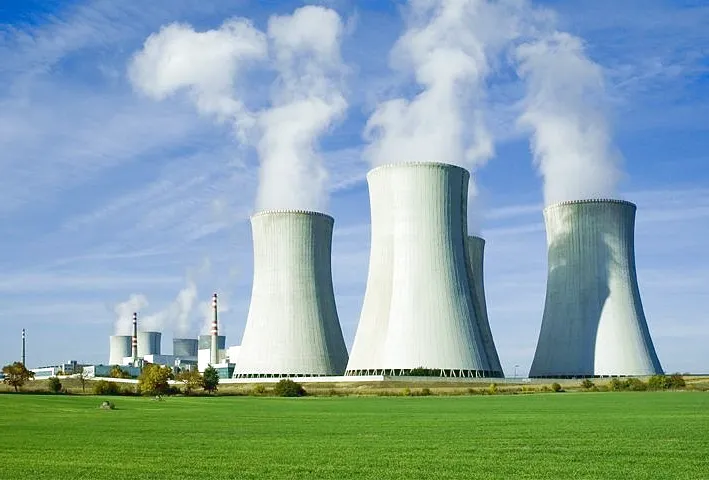 When a fuel handling machine lowers a replacement fuel stringer into an AGR reactor channel or positions a PWR fuel assembly on the transfer flask, the chain drive must deliver repeatable, predictable movement with zero ambiguity. Any elongation beyond the permitted tolerance window changes the effective pitch of the sprocket engagement, introduces chordal action that manifests as positioning error, and in worst cases causes the gripper head to miss the seating datum by a margin that triggers an automatic trip. The nuclear fuel handling chain families manufactured by Mega Chain are engineered with an extended pitch accuracy specification tighter than the ISO 606 standard, pin-bore interference fits verified by CMM measurement, and roller clearances selected to minimise velocity irregularity in indexing drives. These dimensional controls, combined with a controlled-atmosphere heat treatment process that yields consistent through-hardness in pins and bushes, produce a chain whose elongation curve remains predictable across the full design life — enabling maintenance planners at UK nuclear stations to schedule inspections by calendar rather than by unplanned discovery.
The Materials Science Behind a Nuclear-Grade Chain Drive
Metallurgy • Surface Engineering • Dimensional Control
Alloy Steel Pin Composition
Nuclear-grade pins are machined from low-alloy steel to a composition that limits cobalt content below 0.01 wt% to suppress Co-60 activation, while maintaining the mechanical properties required to carry rated tensile loads. Controlled induction hardening produces a surface hardness of 58–62 HRC on the pin bearing surface, transitioning to a tough core that resists brittle fracture in cold or irradiated conditions.
Radiation-Stable Surface Treatment
Conventional mineral oil and grease lubricants degrade rapidly under gamma and neutron flux, forming carbonaceous deposits that accelerate abrasion and generate contaminated debris. The Mega Chain nuclear fuel handling chain range is supplied with a dry film lubricant system based on PTFE-free, radiation-stable compounds verified to DIN 51819 under neutron flux. This surface treatment maintains boundary lubrication performance to a cumulative dose exceeding 10^6 Gy, preserving elongation rates that remain within specification through an entire reactor operating cycle.
Chordal Action & Pitch Uniformity
The inherent chordal velocity variation in chain drives becomes a critical parameter in indexing fuel handling machines where position repeatability is paramount. Mega Chain addresses this by holding inner and outer link plate pitch to ±0.008 mm over a 50-link assembly, combined with bush-bore roundness within 0.003 mm. At the sprocket interface, these tolerances translate to a chordal action amplitude below 0.15% of pitch — sufficiently low that even a direct-coupled resolver on the drive shaft cannot detect a meaningful positioning error attributable to the chain geometry.
Corrosion Resistance in Reactor Environments
In PWR fuel pond environments, the nuclear fuel handling chain must resist borated water at elevated pH while excluding galvanic couples that could accelerate pitting corrosion. Mega Chain’s duplex stainless steel variants use a balanced ferrite-austenite microstructure that provides pit resistance equivalent (PREN) values above 35 — well above the threshold for long-term immunity in concentrations typical of spent fuel storage. For AGR gas-circuit applications, a proprietary phosphate conversion treatment forms the diffusion-barrier layer that resists the oxidising chemistry of hot CO2 at 650°C, validated through 5,000-hour exposure testing.
Technical Specification: Nuclear Fuel Handling Chain Series
All dimensions to ISO 606:2015 with nuclear-sector enhanced tolerances. Available in custom pitch and extended configurations on request.
| Series | Pitch (mm) | Min. Breaking Load (kN) | Max. Elongation (% at 10M cycles) | Temp. Range (°C) | Radiation Tolerance (Gy) | Material (Pin/Plate) | Surface Treatment |
|---|---|---|---|---|---|---|---|
| NFC-08B-NQ | 12.70 | 17.8 | ≤ 0.80 | -30 to +200 | 5 × 10⁵ | 17-4PH SS / 316L SS | Dry Film PTFE-free |
| NFC-12B-NQ | 19.05 | 29.0 | ≤ 0.75 | -30 to +250 | 1 × 10⁶ | 17-4PH SS / 316L SS | Electrolytic Ni-P |
| NFC-16B-NQ | 25.40 | 60.0 | ≤ 0.70 | -40 to +300 | 5 × 10⁶ | Low-Co Alloy / 316L SS | Phosphate + Dry Film |
| NFC-24B-NQ | 38.10 | 134.0 | ≤ 0.65 | -50 to +350 | 1 × 10 | Low-Co Alloy / Duplex SS | PVD Ceramic Coat |
| NFC-Custom | Per spec. | Per spec. | Per spec. | Per spec. | Per spec. | Any nuclear-approved alloy | Customer-specified |
ⓘ All NFC-series chains supplied with full material mill certificates, CMM dimensional report, proof-load test certificate, and traceability package compliant with nuclear procurement requirements.
Six Engineering Advantages That Define the Mega Chain Difference
Performance • Compliance • Lifecycle Value
Complete Batch Traceability
Every link in every Mega Chain nuclear fuel handling chain can be traced back to its originating heat of steel. This full traceability chain — from raw material mill certificate through machining, heat treatment, surface finishing, and inspection — satisfies the documentation demands of UK nuclear site quality assurance audits and enables rapid incident investigation if a non-conformance is ever identified in service.
Sub-Millimetre Positional Accuracy
When refuelling machine gripper heads must align to within ± 0.5 mm of the fuel channel datum, the cumulative pitch error of the nuclear fuel handling chain drive is the dominant variable. Mega Chain’s enhanced-tolerance manufacturing protocol, verified by laser CMM on every production batch, ensures that pitch accumulated error over a 2-metre chain run is held to within 0.12 mm — well inside the control limit for safe fuel assembly handling.
Proven Radiation Stability
Independent third-party irradiation testing at the National Nuclear Laboratory has confirmed that our low-cobalt alloy pin material retains greater than 95% of its room-temperature tensile strength after exposure to a cumulative gamma dose of 10⁷ Gy. The dry film surface treatment shows no measurable loss of lubrication performance to 10⁶ Gy, making Mega Chain nuclear fuel handling chain the technically preferred choice for in-core and near-core fuel handling environments.
Reduced Lifecycle Cost
A lower-specification chain that requires replacement at half the interval does not save money in a nuclear context — it doubles the number of outage windows spent in controlled conditions, doubles the associated radiation dose uptake, and doubles the volume of radioactively contaminated waste generated. Mega Chain nuclear fuel handling chain is designed and priced as a lifecycle investment, with extended inspection intervals that directly reduce the total cost of chain management over a twenty-year plant operating period.
Regulatory Compliance Ready
Mega Chain operates a nuclear-sector quality plan aligned to the requirements of IAEA NS-G-2.4, ONR Safety Assessment Principles, and the RCC-MR code for mechanical nuclear components. Every nuclear fuel handling chain order is processed under this quality plan, with independent inspection hold points and a release authorisation from a qualified nuclear inspector, providing the paperwork package that UK nuclear site procurement teams need to close a purchase order without supplier audit follow-up.
UK Nuclear Supply Chain Expertise
With direct supply experience to nuclear sites across England and Scotland — including Heysham, Hartlepool, Hinkley Point, Torness, and Sizewell — Mega Chain understands the specific logistical and documentary requirements of UK nuclear procurement. Express delivery of nuclear-qualified stock to UK addresses within five working days, combined with a dedicated technical account manager, means that urgent outage replacement needs are addressed with the speed and precision that site teams require.
Material Selection Guide: Matching Chain Specification to Reactor Environment
Consult Mega Chain’s technical team to confirm the optimal specification for your specific application. The guide below provides a starting framework for initial specification discussions.
| Reactor / Environment | Primary Hazard | Recommended Series | Key Specification Feature |
|---|---|---|---|
| AGR (CO2 gas circuit) | Oxidising gas at 650°C, high gamma flux | NFC-16B-NQ / NFC-24B-NQ | Phosphate barrier + PVD ceramic coat; ALARP cobalt content |
| PWR (borated water pond) | Boric acid corrosion, galvanic couples | NFC-12B-NQ (duplex SS) | PREN > 35; no zinc, no cadmium plating |
| High gamma flux (refuelling machine) | Polymer degradation, lubrication failure | NFC-16B-NQ / NFC-24B-NQ | PTFE-free dry film; radiation-stable compounds verified to 10⁶ Gy |
| Dry transfer (maintenance) | Contamination migration; dose uptake | NFC-08B-NQ / NFC-12B-NQ | Smooth-bore roller; electro-polished surfaces; decontaminable |
| Decommissioning (NDA) | Legacy contamination; unknown service history | NFC-Custom + full heritage documentation | Reverse-engineered from legacy drawings; full OEM spec-equivalent documentation |
Where Mega Chain Nuclear Fuel Handling Chain Operates
Six Critical UK & International Application Environments
On-Load Refuelling Machine, Heysham & Hartlepool
British AGR stations uniquely refuel at power, requiring the refuelling machine to grip, raise, move, and lower fuel stringers while the reactor operates. The nuclear fuel handling chain on these machines must deliver positioning fidelity in an environment of elevated CO2 pressure, gamma flux, and vibration from the charge pan. The NFC-24B-NQ series was specifically dimensioned to match the original Parsons/Babcock charge machine chain specification.
Fuel Transfer System, Sizewell B, Suffolk
At Sizewell B — the UK’s only PWR — fuel assemblies are transferred between the reactor pressure vessel and the spent fuel pool via an underwater transfer machine. The nuclear fuel handling chain drive on this equipment operates continuously submerged in borated water at temperatures of 30–50°C, demanding the duplex stainless steel variant with electrolytic nickel-phosphorus surface treatment to prevent boric acid degradation over an 18-month fuel cycle.
Hinkley Point C New Build Programme, Somerset
Hinkley Point C is the most significant nuclear construction project in the United Kingdom in a generation, deploying EDF’s EPR technology. The fuel handling systems for HPC require nuclear fuel handling chain manufactured to French RCC-MR code alongside UK ONR requirements — a dual-code compliance challenge that Mega Chain’s quality management system accommodates directly, providing documentation in both English and French as required by the project quality plan.
Spent Fuel Pond Overhead Cranes, Sellafield
The overhead cranes serving the legacy spent fuel ponds at Sellafield use chain drives for vertical travel and hoist balancing functions. In these environments, the nuclear fuel handling chain operates in a radioactive liquid medium with occasional exposure to elevated activity pond water. The smooth-bore, electro-polished NFC-12B-NQ variant is specifically suited to these conditions, combining low surface roughness to minimise contamination retention with full decontaminability under standard pond decon procedures.
Rolls-Royce SMR Fuel Handling System, UK
The Rolls-Royce Small Modular Reactor programme represents the next chapter of UK nuclear generation, with a compact factory-built reactor format requiring fuel handling machines designed for high frequency deployment across multiple sites. The compact machine envelope of the SMR concept places premium value on the mechanical space efficiency of the nuclear fuel handling chain drive, where Mega Chain’s narrow-series variants deliver maximum force transmission in the smallest possible pitch line.
NDA Legacy Fuel Route Decommissioning
The Nuclear Decommissioning Authority’s programme to clear legacy Magnox fuel routes from shutdown stations presents a unique challenge: fuel handling chain replacements for machines designed in the 1960s, where original supplier documentation may no longer exist. Mega Chain’s custom reverse-engineering capability, combined with our dimensional survey and materials analysis service, allows us to produce a modern equivalent nuclear fuel handling chain that matches original machine geometry while meeting current nuclear quality requirements — backed by a complete new traceability package.
Nuclear Sector • United Kingdom
Resolving an AGR Charge Machine Chain Elongation Crisis at Heysham
Heysham Nuclear Maintenance Services Ltd • Heysham, Lancashire • EDF Energy Supply Chain
The Challenge
In the spring inspection window prior to a planned ten-day Heysham 1 power reduction outage, the maintenance engineering team at Heysham Nuclear Maintenance Services Ltd identified progressive elongation of the reactor 4 charge machine’s primary nuclear fuel handling chain. Elongation had reached 1.42% of nominal pitch length — exceeding the station’s internal caution limit and approaching the technical specification hold point that would have triggered a formal safety case revision. The existing chain had been in service for four fuel cycles and showed evidence of accelerated elongation that the maintenance team attributed to lubricant degradation under cumulative radiation dose. With 14 weeks to the scheduled outage and a compressed procurement window, the team needed a qualified nuclear fuel handling chain replacement that could pass through the station’s supplier qualification process, receive nuclear-inspector sign-off, and be available for installation within the outage window — a requirement that standard industrial lead times could not accommodate.
The Mega Chain Response
Mega Chain’s nuclear applications team accepted the technical enquiry and provided a preliminary engineering assessment within 48 hours, confirming that the NFC-24B-NQ series could be configured to match the charge machine’s existing sprocket geometry and chain attachment points. A formal quotation incorporating full documentation schedule was issued within five working days. The manufacturing programme was sequenced to prioritise heat treatment and CMM inspection during an accelerated 7-week production window. The completed nuclear fuel handling chain order — comprising twelve matched chain assemblies with connecting links and documentation package — was dispatched from our facility 11 weeks after purchase order placement. The documentation package, including material mill certificates, full CMM dimensional reports, proof-load test certificates, and nuclear inspector release note, was accepted by the station quality team at the first review without requests for additional information, enabling installation planning to proceed on schedule. Post-installation measurement at the first-cycle inspection confirmed an elongation rate 42% lower than the replaced chain, and positional accuracy of ±0.4 mm at the fuel channel datum over 1,200 operating cycles — within the station’s 0.5 mm control limit with clear margin.
What Nuclear Maintenance Engineers Say About Mega Chain
Direct feedback from procurement and engineering professionals across the UK and Europe
The documentation package Mega Chain delivered for our charge machine nuclear fuel handling chain order was the most complete I have seen from any chain supplier. The CMM reports, material certifications, and inspector release note were all accepted first time by our nuclear QA team — no queries, no hold points. That matters enormously when you are working against an outage window.
We had been struggling for two years to find a replacement nuclear fuel handling chain for our Flamanville fuel transfer machine that met French RCC-MR code. Mega Chain provided dual-language documentation and a specification comparison matrix against our existing Framatome chain within two weeks of first contact. Impressive technical depth and a supplier that clearly understands nuclear procurement.
We source nuclear fuel handling chain for CANDU refuelling machines that operate continuously at full power — perhaps the most demanding continuous duty chain application in the world. Mega Chain’s low-cobalt alloy pin material and radiation-stable dry film lubricant combination has extended our inspection interval from 6 months to over 24 months across three reactor units. The lifecycle cost saving has been substantial.
Bespoke Nuclear Chain Manufacturing & Customisation
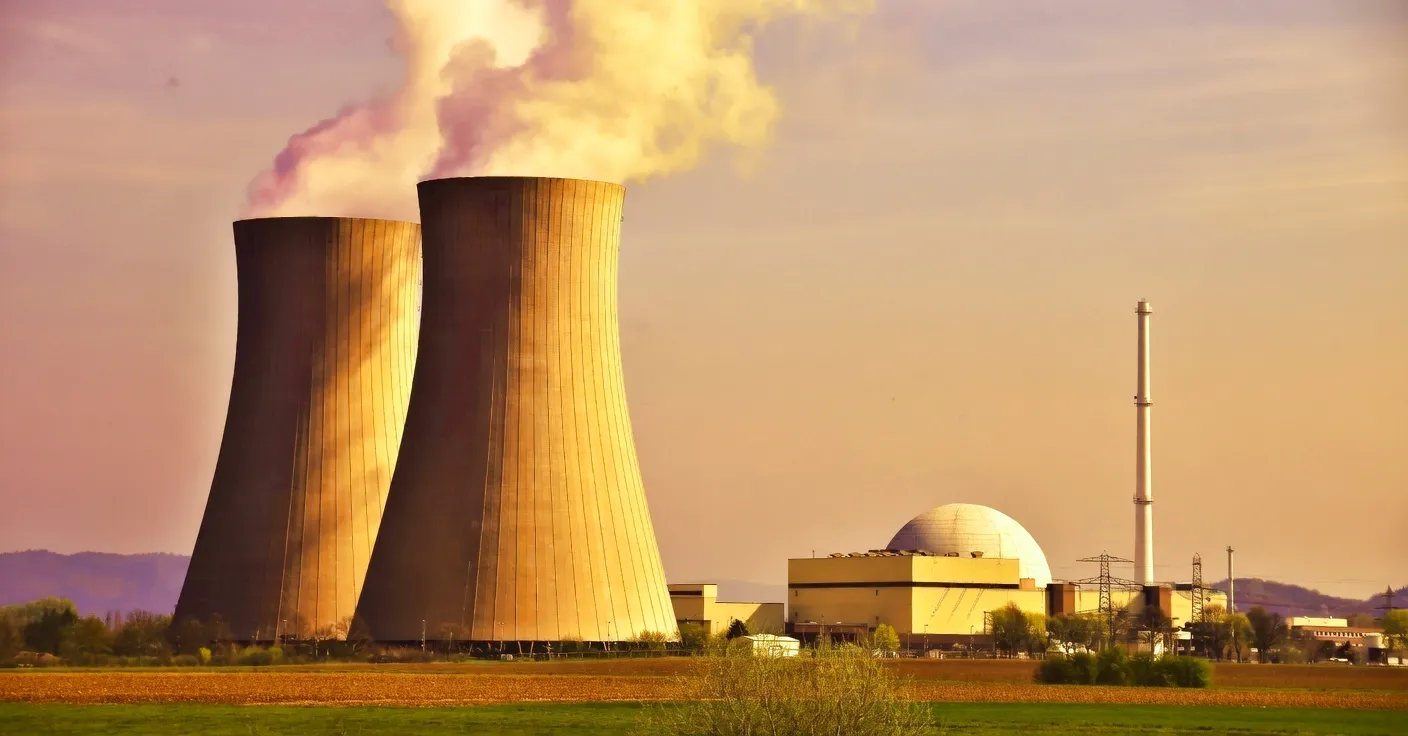 No two nuclear fuel handling machines are identical. Legacy equipment from original equipment manufacturers including Babcock, Parsons, NEI, and Hiatchi may use non-standard pitch dimensions, custom attachment designs, or proprietary connector configurations that have not been in production for decades. Mega Chain’s bespoke manufacturing division specialises in producing single-unit through full-batch nuclear fuel handling chain orders to customer-supplied drawings or reverse-engineered from physical samples, with no minimum order quantity for nuclear-sector clients.
Our investment in CNC precision grinding, CMM measurement, and nuclear-qualified inspection infrastructure means that custom nuclear fuel handling chain can be manufactured, inspected, documented, and dispatched within lead times that support the compressed schedules of planned outage windows — typically 8–12 weeks for complex custom orders, or 3–5 weeks for standard series with modified attachment plates.
Our Custom Capability Covers:
Frequently Asked Questions
Technical and procurement questions from UK nuclear maintenance engineers and supply chain professionals
Ready to Specify a Nuclear-Grade Chain Drive Solution?
Contact Mega Chain’s nuclear applications team to discuss your requirement. We respond to all nuclear fuel handling chain enquiries within 24 hours, with a preliminary technical assessment and indicative lead time provided free of charge.
📧 Contact Mega Chain Nuclear Team
© Mega Chain • Nuclear Sector Chain Drive Specialists • United Kingdom • [email protected] • edit by gzl